
Charlene Badasie
Rewatching some old movies as an adult comes with a very specific kind of whiplash. You go in expecting nostalgia, and instead, it leaves you questioning your entire moral compass. Characters you once hated suddenly feel reasonable. And the ones you rooted for seem a little selfish, slightly immature, and sometimes just straight-up wrong. I think a lot of that comes down to perspective.
When we're younger, we gravitate toward big gestures, romance, rebellion, and chasing our dreams no matter what. But with a bit more life behind you, you start realizing the importance of things like boundaries and accountability. That's why revisiting old faves (on platforms like Netflix, HBO Max, and Disney+) feels like finding a totally different story hiding under the one we thought we knew. Here are six movies that made us pick the wrong villain.
The Devil Wears Prada (2006)
The Devil Wears Prada begins when Andy Sachs (Anne Hathaway) gets a job at Runway magazine, working under the famously demanding Miranda Priestly (Meryl Streep). Andy is completely out of her depth at first and feels like her boss is impossible to please. When she eventually adapts and starts enjoying her work, her personal life starts to fall apart.
Miranda is positioned as the villain because she expects Andy to be on call 24/7, which her boyfriend, Nate (Adrian Grenier), absolutely hates. He also starts to resent the change in Andy, dismisses her work, and frames her ambition as a personality flaw. So the real antagonist is not Miranda. It's Nate for making Andy feel guilty for wanting to stay in a job that will advance her career.
The Devil Wears Prada no longer feels like a "takedown of a monster boss" story. It's really about how uncomfortable people get when a woman starts putting herself first. Miranda isn't warm, sure, but she's not pretending to be. That honesty feels a lot less villainous than Nate's passive-aggressive disappointment. If you like workplace dramas like The Intern (2015), this movie is a must.
The Karate Kid (1984)
The Karate Kid begins when Daniel LaRusso (Ralph Macchio) moves to a new town and quickly finds himself at odds with Johnny Lawrence (William Zabka), who happens to be a skilled karate student. With the help of Mr. Miyagi, Daniel trains to defend himself and ultimately enters a karate tournament. Johnny is presented as the classic bully, but the situation is more complicated than that.
Daniel randomly shows up in Johnny's life, escalates conflicts, and refuses to back down even when he arguably should. But neither of them is the bad guy. The real problem is the toxic philosophy of the Cobra Kai dojo, which uses aggression and manipulation to motivate its students. Strike first, strike hard, no mercy is a cool catch phrase, but it is a little problematic.
Rewatching it now, The Karate Kid feels less like a simple underdog story and more like a clash of perspectives. Johnny isn't innocent, but he's also not the one-dimensional villain we remember. And Daniel isn't without his flaws either. That shift makes the whole story more interesting. The 2018 series Cobra Kai explores this in more detail.
Mrs. Doubtfire (1993)
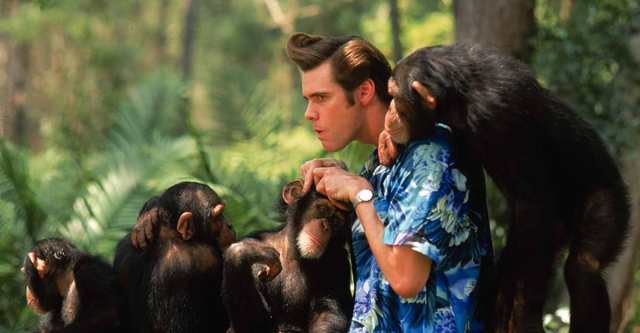
Mrs. Doubtfire follows Daniel Hillard (Robin Williams), a fun-loving father who loses custody of his children after a messy divorce from Miranda (Sally Field). Desperate to stay in their lives, he disguises himself as a British nanny, Mrs. Doubtfire, to get back in their good graces. Miranda initially feels too strict and is made to feel like the bad guy in the family's dynamic.
But the reality is she's just parenting, which means holding everything together while Daniel undermines structure at every turn. And let's not forget that he literally deceives his entire family while pretending to be the nanny. When you add that to his refusal to grow up and be the parent his kids need him to be, he becomes the problem.
The film is still a fun watch because Williams is genuinely funny. But there's an undercurrent that feels a bit uncomfortable, like we're being asked to laugh at something that's actually kind of invasive. That vibe makes it more complicated than it first appears. Fans of comedies like Liar Liar (1997) will love this movie, flaws and all.
My Best Friend's Wedding (1997)
My Best Friend's Wedding follows Julianne Potter (Julia Roberts), who realizes she's in love with her best friend Michael O'Neal (Dermot Mulroney) just days before he's set to marry Kimmy Wallace (Cameron Diaz). Determined to stop the wedding and win him over, she manipulates situations and lies like a pro. Meanwhile, Kimmy is framed as the obstacle who is the too-perfect, slightly naive fiancée.
But she's actually the most emotionally honest person in the film. Julianne, on the other hand, is deeply selfish, and Michael doesn't help matters by entertaining the emotional ambiguity instead of setting clear boundaries. If anything, the real villain is this dynamic where no one is being fully honest except the person being painted as the problem.
This is what makes My Best Friend's Wedding so fascinating. It doesn't try to fully redeem Julianne, and it lets her live with the consequences of her actions. It's a rom-com, but it's also kind of brutal about what unreciprocated love can turn into. The movie is perfect for fans of complicated, slightly uncomfortable romance like 2009's 500 Days of Summer.
The Social Network (2010)
The Social Network chronicles the life of Facebook creator Mark Zuckerberg (Jesse Eisenberg) during his college days. The story details the rapid rise of a platform that changes everything. Meanwhile, Mark's relationship with Eduardo Saverin (Andrew Garfield) deteriorates as business pressures mount. At the same time, Cameron and Tyler Winklevoss (Armie Hammer) accuse him of stealing their idea.
Mark is often framed as cold and calculating. But the more you think about it, the more it feels like he's just exposing the entitlement and opportunism in everyone around him. Depending on your point of view, the ethics lawsuits leveled at Mark are just about a group of people all trying to claim ownership over something none of them fully controlled.
What makes this film so sharp is that it doesn't offer a clean moral answer. Mark isn't exactly likable, but he's also not uniquely terrible either. He's just the one who succeeded. And in most cases, that makes him the easiest target. The Social Network is perfect for viewers who enjoy dialogue-heavy dramas like Steve Jobs (2015).
Gone Girl (2014)
Gone Girl begins when Nick Dunne (Ben Affleck) becomes the prime suspect after his wife Amy (Rosamund Pike) goes missing. As the police investigate, the media frenzy intensifies, and cracks in their marriage begin to show. What follows is a series of twists that completely reframe everything we thought we knew. And Amy is painted as the bigger red flag than her husband.
Amy's revenge actions are really extreme and often downright diabolical. But Nick's dishonesty, infidelity, and emotional disengagement created the conditions for what she did and everything that followed. So the real villain isn't just him or her. It's a relationship built on resentment, distrust, and many unspoken expectations.
This is what makes Gone Girl so effective. It doesn't let you settle into comfortable judgment. It keeps changing, which basically forces you to question not just the characters, but the idea of "sides" altogether. It's a great pick for anyone who enjoys dark, psychologically messy movies about relationships like Marriage Story (2019).