10 Shows That Perfectly Capture The 'Chainsaw Man' Vibe

Since its debut in 2018, Chainsaw Man (2022) has been unlike any other Shonen Jump series. While most Jump titles have some air of positivity and optimism in their stories, Chainsaw Man is nothing like that. It’s nihilistic, gloomy, and all too eager to subject its cast to horrific amounts of suffering and anguish. It’s unnerving to say the least, but it’s helped make Chainsaw Man one of the most popular manga of the past several years, with a hit anime releasing in 2022 and a theatrical continuation of the series coming with Chainsaw Man - The Movie: Reze Arc (2025).
Because of that, there’s a lot of excitement surrounding the return of Denji and the members of Tokyo Special Division 4. Fans have been eagerly awaiting the next arc of the series, and seeing it get the cinematic treatment from animation studio MAPPA bodes well. But what comes after? What happens when you’ve seen Chainsaw Man - The Movie: Reze Arc, but you still want more of that bleak and rage-fueled action? Well, you may want to consider watching any of these 10 shows on Crunchyroll, Netflix, and more. They may fill that Pochita-shaped hole in your heart.


If there’s one thing that defines Chainsaw Man, it’s how dark it can be. It’s still regarded as one of the members of Shonen Jump’s “Dark Trio,” alongside Jujutsu Kaisen (2020) and Hell’s Paradise: Jigokuraku (2023). Still, none of these three can compare to the darkness of Berserk.
There’s a certain beauty in the horrors of Berserk. Much like Chainsaw Man, many of Berserk’s true horrors come from how humans interact with dark, unspeakable forces to gain untold power. Violence and suffering are common in Midland. Apostles frequently assault peasants, and the nobles are only interested in furthering their own gains. Even our heroes are often filled with selfish desires, none more apparent than Griffith. It’s a dark fantasy not unlike Castlevania (2017), but while that series, and to an extent Chainsaw Man, show frequent glimmers of hope for humanity, Berserk wallows in the worst that humans are capable of. Nihilists and cynics, be delighted, Berserk is here to reaffirm your negative beliefs about mankind.


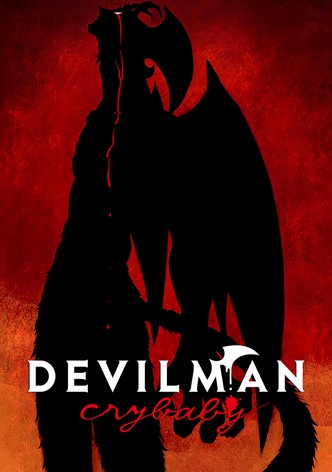
The name Go Nagai may not exactly be well-known nowadays, but the man is one of the most prolific mangakas of all time. From titles like Cutie Honey (2018) and Mazinger Z (1972), he was a pioneer in establishing multiple genres. However, Devilman Crybaby would be his magnum opus.
A reboot of Nagai’s ‘70s manga, Devilman Crybaby wants you to know that the world sucks. It’s a world filled with copious amounts of moral greyness, with humans and demons both equally capable of destruction. It’s a miracle that our protagonist Akira retains his empathetic nature in spite of all of his hardships, but even he succumbs to the ever-encroaching darkness of this 10-episode OVA. To its credit, it is beautifully depicted, thanks to Masaaki Yuasa’s Science Saru, and feels like an elevation of crass and violent titles like Demon City Shinjuku (1988). Devilman Crybaby isn’t afraid to make viewers regret the decision they made watching the show, but the artistry present will make it a worthwhile decision nonetheless.




In a lot of ways, Chainsaw Man is a modern reinvention of the schlocky titles that littered video rental stores in the late ‘80s and early ‘90s. At its core, though, it’s still a juvenile action series that revels in violence, and if that’s your speed, then give Gleipnir a shot.
If you like so-bad-it’s-good offerings like Cyber City Oedo 808 (1990), then you’ll be right at home with Gleipnir. It’s edgelord trash in all the best ways. There’s excessive violence, rampant fanservice, and Gleipnir takes delight in reveling in all its base desires. If Denji were allowed to be as immature as he wants to be, then he would be a perfect fit for the series. There’s not a whole lot of substance to it, but it doesn’t have to have much to say. Glepinir delights in just being a darkly enjoyable action series, and sometimes, that’s enough.






As the most recent title on this list, Gachiakuta has a certain energy that makes it exciting. Its punk aesthetic and vibes may not seem to have a lot in common with Chainsaw Man, but its oppressive worldview most certainly does. Gachiakuta is a world of haves and have-nots. It plays with class divide in a way that fans of Alita: Battle Angel (2019) should immediately identify with.
The protagonist Rudo is filled with so much rage at what the people of the Sphere did to him before he was cast down to the Pit that it’s hard not to sympathize with him and his plight. Like in Chainsaw Man, he quickly fits in with a group of hunters, all with their own unique powers, and the places they visit and the people they interact with often show the dark side of human nature. Gachiakuta is not nearly as sophomoric as Chainsaw Man, but it's a more accessible series for those interested in seeing an anime that isn’t afraid to critique society, but doesn’t want the true horrors of the world on full display.


There’s no denying that Chainsaw Man takes some inspiration from the horror genre. The Devils and Fiends of the series all have monstrous designs, and even our heroes have their own disturbing abilities. If you’re craving more of those horror vibes, consider giving Elfen Lied a try. With a special breed of creatures called Diclonii, Elfen Lied is all too eager to throw our heroes into ultra-violent brawls with gallons of blood. Is it excessive? At points, yes, and undeniably mean-spirited in the same way that A Clockwork Orange (1971) is. But there’s no denying that watching Elfen Lied is fun in the same way that watching a horror movie like Evil Dead II (1987) is.
There are plenty of great moments of gore and such cartoonishly vile characters that you can’t help but root for the monstrous Diclonii to eviscerate them. Horror fans, and fans of slashers in particular, will definitely find a lot to appreciate over Elfen Lied’s 13-episode run. Fans of Chainsaw Man will also find something to like about Elfen Lied’s dark depictions of the human species.


If there’s one thing that defines the members of Tokyo Special Division 4, it’s the suffering they all endure. Each member goes through their own personal hell, and if you love watching characters hit rock bottom, then you should also give Cyberpunk: Edgerunners some love. While you may only be initially invested in the series because of its video game inspiration, it quickly becomes apparent that the soul of Cyberpunk: Edgerunners lies in its cast.
The edgerunners all have wonderful chemistry together, which makes it all the more tragic when the reality of Night City crushes them under its heel. Like Chainsaw Man, and to a lesser extent, titles like Akame ga Kill! (2014) and Attack on Titan (2013), this is a series where you can never grow too attached to the cast. If you do, the heartbreak you’ll feel as they slowly lose everything dear to them will be too crushing to bear. It’s a series that will leave you hollow by the time its 10-episode run airs, but for those who are willing to open themselves up to devastation, Cyberpunk: Edgerunners is calling.


It’s easy to argue that Chainsaw Man is a dystopian series. While the world may seem relatively normal, the presence of Devils and Fiends leads to horrible suffering, and humanity is constantly teetering toward the edge. If you’re looking for another dystopian series, then perhaps you should give Alice in Borderland a shot.
While the series is live-action, it’s based on a manga that has a lot of anime trappings within it. On the surface, it shares a lot of similarities to Squid Game (2022), but it has more in common with Battle Royale (2000), complete with over-the-top kills, colorful characters, and games that are chock full of spectacle. Yes, Chainsaw Man is a fairly minimalist show by comparison, but it dabbles in some larger-than-life eccentricities in the same way that Alice in Borderland does. Chainsaw Man can be gloomy, which is why Alice in Borderland is the perfect palate cleanser. Sure, there’s misery aplenty, but it’s just so much fun to watch!


Chainsaw Man isn’t a series entirely predicated on its disdain for people. It’s also a show about how a young man just wants to be with a woman. He wants kisses, hand-holdings, and fantasizes about just how good sex is. In that case, Scott Pilgrim Takes Off may be perfect if you want another series about young adults learning about healthy relationships.In a way, Scott Pilgrim seems like a more well-adjusted Denji. Both are emotionally stunted young men, but Scott never really escaped high school and perfectly embodies the slacker energy of characters like Barry from High Fidelity (2000) and Randal from Clerks (1994). Denji is a slacker, too, but unlike Scott, he doesn’t know how to interact with women in a way that doesn’t revolve around sex.
Scott Pilgrim Takes Off may not focus solely on Scott, but it does showcase how the need for intimacy drives both Scott and Ramona. Denji can learn a thing or two from them, but then again, he’s so immature that he probably wouldn’t understand the emotional undertones of their relationship.


Platinum End is a contentious title to say the least. It’s a series that has a lot to say about a myriad of topics, and it arguably manages to fumble nearly every one of those themes. And yet, there’s something so compelling about it since, like Chainsaw Man, it isn’t afraid to examine the fundamental nature of society. While Chainsaw Man goes to great lengths to explain how the power of Devils directly corresponds to human fear, Platinum End claims that the power of God is determined by the belief that the people have in them. In that way, Platinum End is the Ying to Chainsaw Man’s Yang. Chainsaw Man doesn’t have nearly as much interesting dialogue, but then again, Chainsaw Man also doesn’t contain one of the most hilariously bad endings of all time.
Platinum End is a great watch, not only if you want to see a series attempt to have elevated discussion of morality and cosmology like Death Note (2006), but also if you want to watch a series effortlessly shoot itself in the foot at the last possible second and undermine nearly everything it built up over 24 episodes.






At the end of the day, there’s no denying Chainsaw Man changed the shonen landscape. Following its release, more and more series began to have darker examinations of their genre, and the grandaddy of all dark genre explorations is undeniably Neon Genesis Evangelion. Evangelion didn’t reinvent the mecha genre, but it added some much-needed darkness to the proceedings. While it starts off well enough, by the time we reach the end of the 24-episode series and get closer to the infamous The End of Evangelion (1997), it becomes more and more obvious that Shinji Ikari and Denji are two sides of the same coin. They both loathe themselves, and the war path these two go on when untethered is apocalyptic.
It may be glorious to watch, but it’s also deeply horrific. The esoteric storytelling of Evangelion is reminiscent of great psychological series like Serial Experiment Lain (1998), but laced with the nihilism and resignation of Devilman Crybaby. Both Chainsaw Man and Neon Genesis Evangelion are classics, and they are must-watch titles if you consider yourself an anime fan in any regard.