All 'Final Fantasy' Movies And TV Shows In Order

Final Fantasy is one of gaming’s biggest names, extending across over 16 main series releases and dozens of spin-offs. Square Enix’s RPG juggernaut is no stranger to movies and TV, either, as it’s inspired several anime, films, and even a couple of live action projects.
For longtime fans of the franchise, these movies and TV shows are a way to see the Final Fantasy world in a new way—or, in some cases, see how Final Fantasy has impacted the world. This guide will go over every Final Fantasy movie and TV so far. Note that, because the franchise is an anthology where most numbered entries are set in completely different timelines, these are primarily in release order and don’t require you to have seen or played any other Final Fantasy media unless specified.


This 1994 series marks the first attempt to adapt Final Fantasy as an anime. Final Fantasy: Legend of the Crystals is set in the world of Final Fantasy V; 200 years after the events of the game, three of the four elemental crystals have been stolen and Mid, one of the handful of recurring Final Fantasy characters, sends new heroes Prettz and Linaly to deal with the evil Deathgyunos.
While it was initially received positively, most critics and fans these days find Legend of the Crystals to be a weak adaptation of a beloved franchise. If you love anime that’s not afraid to get zany, you’ll have fun with it. However, those who are attached to Final Fantasy V and its characters might be disappointed.


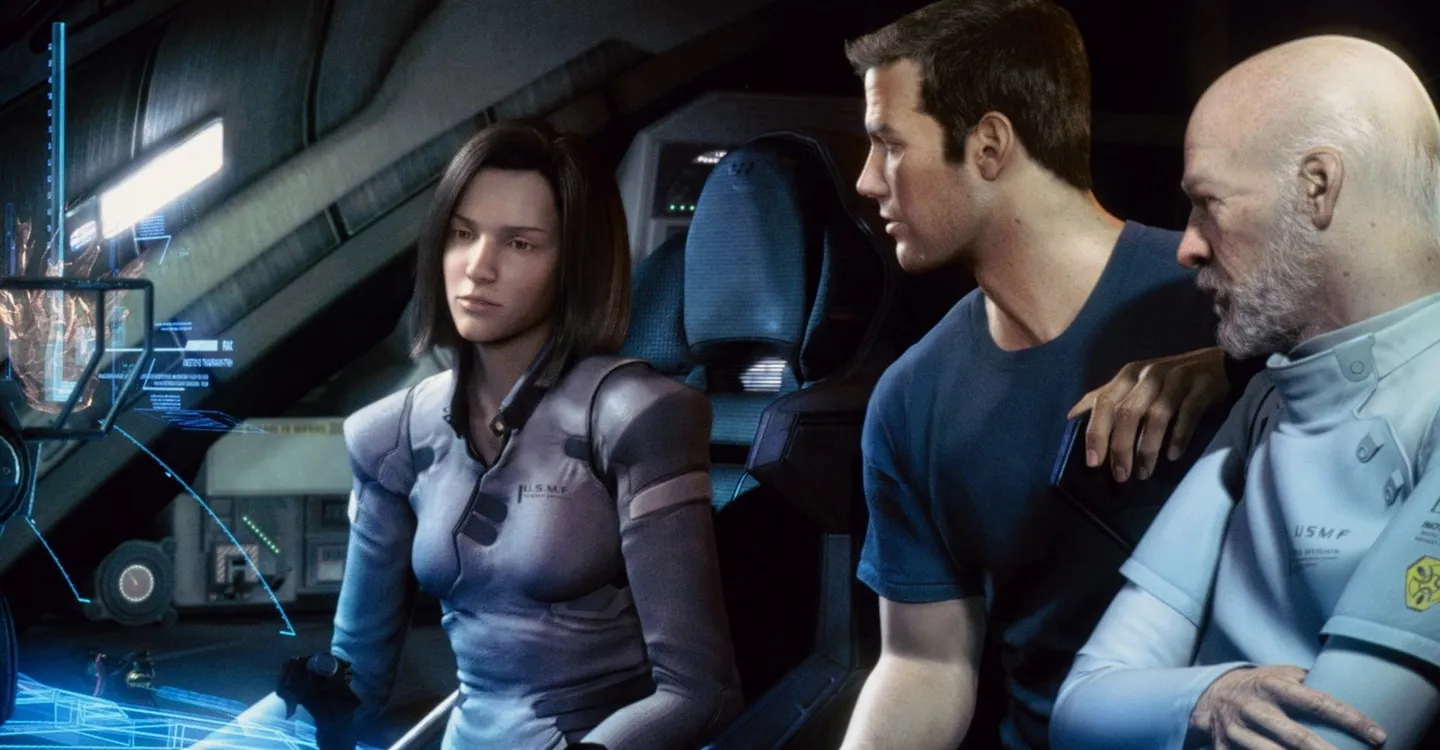
The next Final Fantasy adaptation is a bizarre case, even by the standards of a franchise that includes a race of gourmands and a boss fight against a literal house. Final Fantasy: The Spirits Within is a photorealistic animated film with a star-studded cast that includes Ming Na-Wen, Alec Baldwin, Donald Sutherland, and Steve Buscemi. The sci-fi film impressed many critics and audiences with its then-groundbreaking visuals, though fans of the games were disappointed by how little it actually has to do with Final Fantasy.
Unfortunately for the filmmakers, Final Fantasy: The Spirits Within remains one of the biggest box office bombs of all time and resulted in the closure of Square Pictures. Still, while the animation shows its age, it remains impressive and holds up better than many other attempts at computer animation from 2001. If that has you curious, The Spirits Within is worth a watch; otherwise, Final Fantasy fans won’t be missing much by skipping it.












Final Fantasy: Unlimited is the second anime to attempt to capture the magic of the games. It follows 12-year-old twins Ai and Yu Hayakawa as they enter a mysterious fantasy world to find their parents. The show is clearly aimed toward younger viewers, which disappointed many fans of the games.
Both low ratings and The Spirits Within’s financial failure resulted in Final Fantasy: Unlimited’s planned 52-episode run being slashed to just 25. Fortunately for fans, the anime’s story has been continued through novels, manga, and more. Unlimited is a fun and kid-friendly series, though not particularly memorable as far as Final Fantasy media is concerned.


The success of Final Fantasy VII has led to a still-growing sub-series centered around Cloud Strife and his world. A 25-minute long prequel to the 1997 game released as a bonus feature for Final Fantasy VII: Advent Children, Last Order: Final Fantasy VII depicts two events referenced in FFVII: Sephiroth’s destruction of Nibelheim and Zack and Cloud escaping from Shinra. Though generally well-received by fans, some of the OVA’s changes were so controversial that the developers of the 2007 FFVII prequel game, Crisis Core, were careful to retcon them.
Given that Last Order is so tied to Final Fantasy VII, it’s not worth watching if you haven’t played the game, nor is it a good entry point for those new to the sub-series. For those who have played FFVII, though, Last Order is a treat, even if the Nibelheim portion has been removed from canon.


Final Fantasy VII: Advent Children is a sequel to the beloved 1997 game set two years after the defeat of Sephiroth. It follows Cloud Strife as he tries to save kidnapped children infected with Geostigma, a mysterious disease he is also suffering from.
Advent Children is notorious among fans for its bizarre, confusing plot that only those who have played through all of FFVII have even a chance of following. Still, its visuals and action sequences are pretty solid even 20 years later, so it’s worth a watch for anyone who can’t get enough of Cloud, Sephiroth, and the rest of the game’s characters.



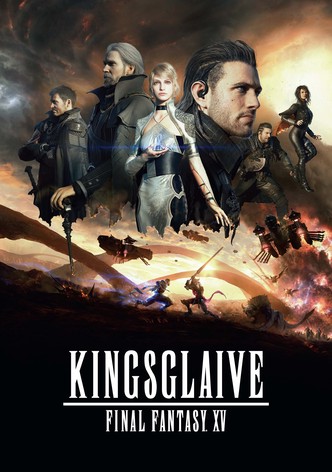
With Final Fantasy XV, Square Enix explored different ways of expanding the story outside of the game itself. The results of that were the miniseries Brotherhood: Final Fantasy XV and the film Kingsglaive: Final Fantasy XV, the latter of which takes place at the same time as the beginning of the game. Kingsglaive focuses on Regis Lucis Caelum CXIII, King of Lucis and father of FFXV protagonist Noctis, as he tries to make peace with the invading empire of Niflheim. The English dub cast features some big names, with Sean Bean, Lena Headey, and Aaron Paul playing major roles. Unfortunately, the film was poorly received by critics, who praised the visuals but took issue with the writing, particularly how the story handles its female characters.
If you’ve played Final Fantasy XV, Kingsglaive is pretty much essential viewing considering how much context it adds to the game’s story. For those who want to start FFXV, the film was initially released four months before the game itself, making it a good place to start.



Set during the events of Final Fantasy XV, Brotherhood: Final Fantasy XV explores the backstories, personal lives, and relationships of the game’s cast. The five episode miniseries reveals how Noctis met Prompto, Gladiolus, and Ignis, as well as how one particular childhood memory still affects him.
Brotherhood was warmly received overall, especially in comparison to other Final Fantasy movies and shows. Really, the only problem with the series is that it doesn’t make sense unless you’ve played FFXV. If you already love Noctis and his companions, though, you’ll enjoy learning more about their backstories and how they became friends.


Unlike the rest of the movies and shows on this list, Final Fantasy XIV: Dad of Light is set in the real world rather than a fantasy realm—at least for the most part. It tells a sweet story about a young man who uses the massively multiplayer online role-playing game (MMORPG) to anonymously reconnect with his distant retiree father.
Inspired by a blog post written by an FFXIV player who introduced their father to the game, the miniseries mixes live-action scenes with footage captured in-game. If you’re a fan of charming and wholesome shows about how media can foster and repair family connections, this one’s for you—no knowledge of Final Fantasy needed.


Based on the same premise and blog post, Brave Father Online: Our Story of Final Fantasy XIV is a film adaptation of Dad of Light. Though it makes some changes, such as adding more characters who play the game, it tells the same story of a young man using the MMORPG to interact with his father. This time, thanks to technological improvements to the game and Square Enix giving the filmmakers their own server to capture footage on, the FFXIV sections look better in the movie while still delivering a wholesome and powerful family story.
Really, the main difference between Brave Father Online and Dad of Light is that one is a two-hour long movie and the other is an eight-part miniseries, so the decision of which to watch comes down to how much time you want to spend with this sweet story.