Movies, for all of their artistic integrity and creativity, are a business. Thanks to rigorous film shoots, months of editing, publicity, marketing, and licensing deals, they can also cost a lot of money. Some films become box office hits and make back their initial budget, some are more modest hits, while others can underperform and cost a studio a few million dollars in lost revenue.
And then there are the flops. The bombs. The disasters. The films that did so poorly that studios lost hundreds of millions of dollars because of them, and are remembered solely for how big a failure they are. They merely exist as historical curiosities on streaming services like Disney+ and Amazon Prime Video. While 2025 had some painful bombs like Snow White (2025) and TRON: Ares (2025), they pale in comparison to how poorly the following ten movies performed financially. And hey, as we go through them, maybe we can find out how and why they failed as badly as they did.
Mars Needs Moms (2011)
In the mid-2000s, acclaimed director Robert Zemeckis was fascinated with the growing trend of animated movies made entirely with CGI. With the assistance of Simon Wells, who had directed the wonderfully underappreciated The Prince of Egypt (1998), the two created Mars Needs Moms, and almost immediately, people wanted it erased from their minds.
The plot of the film, about a kid trying to travel to Mars to save his mom from Martians, is perfectly fine, if a bit predictable. No, what repelled audiences from Mars Needs Moms was its uncanny animation. The film did utilize motion-capture to try to accurately replicate human movement, but between the facial animations and the rubbery textures, it made the characters look like abominations. Audiences agreed, and the film cost Disney anywhere between $143 to $206 million in losses. The film may try to capture the same warmth and heart of The Polar Express (2004), but it wasn’t the mid-2000s anymore. This was 2011, and animated films had moved well past what Zemeckis and Wells were serving.
Battleship (2012)
Hasbro has tried, and oftentimes succeeded, at creating huge film franchises based on its properties. Transformers (2007) was one of the biggest blockbuster hits of its time, but for each success, there were failures, and nothing was quite as bad as Battleship.
Battleship is a stupid movie, but not in a fun way. It’s a two-hour and 11-minute soulless action film that takes itself way more seriously than it has any right to. I mean, the plot only kicks into gear because the main character tries to steal a Hot Pocket. That should make the film feel like a dumb thrill ride in the same vein as a Roland Emmerich movie, but it feels as droll as Pearl Harbor (2001). The only thing that Battleship had was its impressive explosions and special effects, but they had the same impact as jingling keys. Audiences were quick to mock the film, and it wound up racking up $81 to $210 million in losses for Hasbro and Universal. It can be nice to just sit back and watch some incredibly loud explosions go off, but outside of that, there shouldn’t be a surprise why Battleship failed as badly as it did.
Strange World (2022)
Disney has had a rough couple of years. Following the pandemic, it seems that an animation studio once known for producing consistent hits had become far more inconsistent in its output. Movies like Zootopia 2 (2025), which became a smash box office success, are now the exception, and failures like Strange World have become the rule.
The sad part is that Strange World didn’t deserve to lose Disney $197 to $217 million. Its animation, characters, and fantastical sci-fi world were all very well handled, and it’s easy to imagine a kid watching it and being enamored with its sense of adventure that channeled old-school pulp-era sci-fi movies like Flash Gordon (1980). However, because Disney was aggressively pushing for audiences to expect new films to be released on Disney+ instead of in theaters, it’s no wonder people didn’t show up. To make matters worse, the film became a casualty of culture war politics since Disney decided to make one of its main characters gay, which caused the film to be mired in plenty of unnecessary controversy that further harmed its box office performance. Strange World was a failure, but it leaves a bad taste in my mouth calling it that.
Sinbad: Legend of the Seven Seas (2003)
Today, Dreamworks Animation is known as one of the best animation studios around, and that’s almost entirely due to their well-polished and kinetic use of CGI. But they didn’t always use solely CGI to make their movies; thanks to the failure of Sinbad: Legend of the Seven Seas, they stopped utilizing hand-drawn animation.
Sinbad: Legend of the Seven Seas was a very traditional fantasy adventure movie that serves as a great companion piece to Disney’s Treasure Planet (2002). Both are reinterpretations of literary classics with a modern twist to them. Sinbad has plenty of magic, action set pieces, and hefty doses of mythologies drawn from multiple cultures. It reviewed well and had positive word of mouth, so why did it cause Dreamworks to lose $219 million dollars? Well, it did release one week before Pirates of the Caribbean: The Curse of the Black Pearl (2003), a film that was also a swashbuckling adventure with plenty of magical elements that appeal to both kids and teenagers, instead of solely kids. Sometimes a movie fails through no fault of its own, but because of bad timing.
Cutthroat Island (1995)
Speaking of swashbuckling disasters, for the longest time, Cutthroat Island was considered to be the biggest box office bomb of all time, costing MGM $222 million by the time it left theaters. In 1995, such a loss would be catastrophic, so how on Earth did that happen?
In short, the film was a production nightmare. Most of the crew quit mid-production, the director, Renny Harlin, wasted money on unnecessary expenses, like shipping cases of V8 vegetable juice to Thailand, where Cutthroat Island was being filmed, and the numerous on-set incidents required the production to pause for extended periods of time. It was an arduous shoot, and that comes across in the film. It’s only a little over two hours long, but it feels way more than that. There’s very little excitement, joy, or energy present in the film, and it tries so hard to capture the energy of The Three Musketeers (1993) but just isn’t able to. Just think, if Harlin had successfully pitched this film to Disney as he intended, this would have been the first Pirates of the Caribbean movie. Thank God he failed.
Mortal Engines (2018)
Peter Jackson is a man who knows how to create impressive visuals. He did so in The Lord of the Rings: Return of the King (2003), King Kong (2005), and while he only produced and wrote the screenplay for Mortal Engines, it's clear that he wanted the film to be a grand spectacle like his prior films.
From a visual perspective, Jackson and Christian Rivers, the film’s director, delivered on that goal. They clearly were trying to make the film feel like a teenage-friendly version of Mad Max: Fury Road (2015), complete with ludicrous vehicles and chase sequences. The setting of Mortal Engines, where gigantic city-like vehicles go to war with one another, is striking, but outside of the monumental scale of these mobile cities, there’s not really enough to keep audiences hooked for its two-hour and eight-minute runtime. It had a chance to make its hefty budget back, but like Sinbad: Legend of the Seven Seas, it released only a few weeks before two other box office hits, Aquaman (2018) and Mary Poppins Returns (2018). There was little hope for it long-term, and it went on to cost Universal anywhere between $133 and $249 million dollars, spelling the end for this burgeoning YA franchise chock full of sci-fi grit.
The 13th Warrior (1999)
In a lot of ways, The 13th Warrior was the progenitor of the big-budget Hollywood flop. While it was a film filled with plenty of lofty ambition, its high budget and production woes spelled doom for the film before it was even released.
That doesn’t make The 13th Warrior a bad film. It’s just a very niche one. Imagine taking the dark Nordic violence of The Northman (2022), but giving it the ‘90s energy that pervaded Xena: Warrior Princess (1995). The film juggles a lot of tones, throwing in one-liners between emotional and devastating character deaths, but it still creates a memorable experience. So how did the film lose anywhere between $133 and $249 million? Well, the original director, John McTiernen, was booted after terrible test screenings, and thanks to extensive reshoots led by Michael Chricton, the budget ballooned to absurd degrees. Plus, since Chricton and McTiernen had vastly different ideas on how to end the film, both endings were oddly included, making the film’s 100-minute runtime feel longer than it needed to be. Fans of Nordic mythology and the Beowulf myth will definitely find something to love in The 13th Warrior, warts and all.
The Marvels (2023)
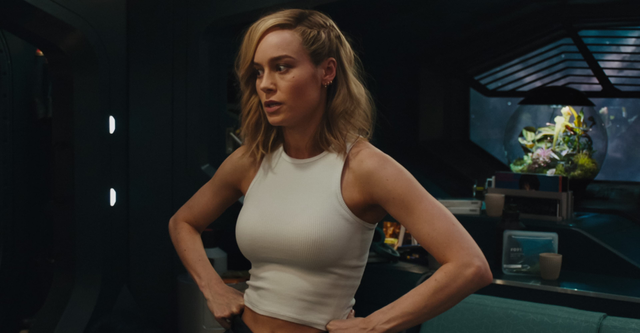
Since Avengers: Endgame (2019), Marvel has struggled to keep momentum and interest in the MCU. Still, the failure of The Marvels was something entirely different. It shouldn’t have cost Disney $210 to $250 million, and yet it did, mostly thanks to a combination of factors.
Marvel, rather infamously, was focused on quantity and not quality following Endgame. Plenty of TV shows and movies were pumped out each year, so a lot of the buzz surrounding The Marvels was lost in the chatter around other MCU projects. In fact, there was barely any buzz to begin with, since the film launched right at the end of the 2023 SAG-AFTRA, meaning none of the cast could do any publicity for the film. The Marvels is still an okay superhero movie, one with a neat sci-fi bend to it that has a fun teleportation gimmick ripped straight out of Jumper (2008), but audiences didn’t care about it. They felt like understanding what happened in this 105-minute movie required too much homework, and very few people cared about the core trio of Captain Marvel, Ms. Marvel, and Monica Rambeau. It’s still a fun and very family-friendly superhero movie, but without any enthusiasm and excitement leading to its release, it was doomed to die.
The Lone Ranger (2013)
Nostalgia is always bankable, right? People are always eager to relive their childhood and think fondly about movies, shows, and games from when they were kids. But nostalgia has a finite shelf-life. Case in point, The Lone Ranger.
It’s easy to see why Disney thought that people would want to see a modern reinvention of The Lone Ranger (1949). Westerns used to be the go-to genre of Hollywood action movies, and Johnny Depp, who played Tonto in the film, was still incredibly popular thanks to his stint as Jack Sparrow. But Westerns hadn’t been popular for decades, and people were getting sick of Johnny Depp, and that’s not even touching on the negative publicity he received for playing a native American. Add it all together, and it’s no wonder the film lost Disney anywhere between $221 and $263 million. The film had clear ambitions to be a fun and comedic Western like Wild Wild West (1999), but it seems like everyone involved forgot that Wild Wild West was also a huge bomb at the box office. Like Cutthroat Island, The Lone Ranger was a throwback to a bygone era of Hollywood nobody wanted.
John Carter (2012)
There are box office bombs, and then there’s John Carter. Adjusted for inflation, the film lost Disney anywhere between $157 and $280 million, making it the biggest box office bomb of all time. It’s the kind of failure that’s been studied extensively, and it’s not hard to see why.
Much like Strange World, John Carter has nothing but respect and adulation for pulp-era sci-fi movies. The film is based on a comic series of the same name, and it tried to turn a series that had more in common with Conan the Barbarian (1982) into Star Wars (1977). Unbeknownst to the filmmakers, Disney was already engaged in discussions to buy Lucasfilm, resulting in Disney not putting enough effort into John Carter’s publicity, and it shows. Inept marketing campaigns, poor trailers, needless name changes thanks to the failure of Mars Needs Moms, and intentionally changing the release date to compete with The Hunger Games (2012) were just a few of the problems facing John Carter. Add in an impossibly large budget and reviews that were very middle-of-the-road, and it’s clear that there was no hope for the film. It’s a decent sci-fi adventure that capably lives up to its forebears, but it had everything going against it.