This 4-Second Scene Took Over A Year To Create - Here's Why

Animation is one of the most meticulous and time-consuming art forms in cinema. It requires painstaking attention to detail and, regardless of the form, often takes years and hundreds of hours of labor to perfect. With hand-drawn animation, artists draw every frame by hand. Even with technological advances, 3D animation requires a different but still high level of detail and commitment, due to complex rendering. Pixar films, for example, require an estimated 24 hours to render a single frame, while most scenes average 24 frames per second.
Hence, it’s not unusual for animated films and shows to take years to create. Even so, we don’t expect a single scene to take an entire year to develop. However, some animated projects have done just that: creating such detailed, meticulous, and groundbreaking art that years of work went into producing what audiences view in mere seconds. One of the most famous examples is Studio Ghibli’s four-second crowd scene.
This Studio Ghibli Scene Took A Year And Three Months To Create
Hayao Miyazaki, the founder of Studio Ghibli, is one of the most revered names in animation. He is known for sticking to traditional hand-drawn animation, giving his films a gorgeous, vibrant, and enchanting touch. You might think that preserving hand-drawn animation, as much of the industry goes digital, might hold him back in some respects. However, he and his studio have managed to create increasingly complex scenes with hand-drawn animation.
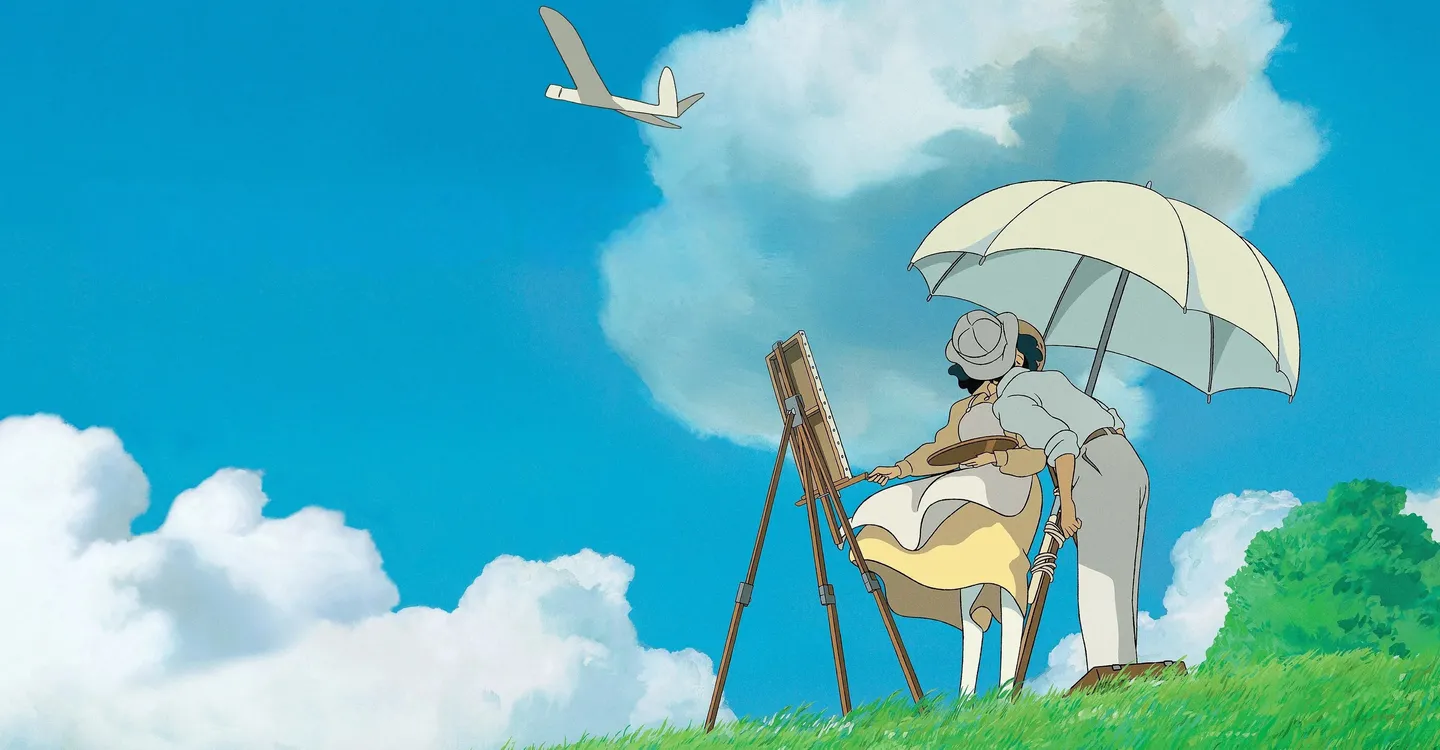
Studio Ghibli demonstrated its dedication to hand-drawn animation in a particular scene from The Wind Rises (2013). The film, which is loosely based on a true story, is noticeable for its historical premise, central love story, and political themes, as it follows Jiro Horikoshi’s engineering career through World War II. Early in the movie, The Wind Rises depicts the harrowing Great Kantō earthquake in 1923.
In the aftermath of the quake, one scene captures the sheer chaos as crowds swarm the streets. Numerous civilians scramble to find help and shelter, with some riding horses, carrying luggage, or pushing wagons. Jiro and Nahoko are lost in the crowd of faces etched with panic and frustration. Miyazaki insisted the scene be hand-drawn, with animator Eiji Yamamori taking on the animation.
The scene took Yamamori a year and three months to animate. It meant hand-drawing and water-painting each person for each frame, conveying realistic fluid movement, and the body language and facial expressions of numerous people. If you look closely, you’ll see countless little stories playing out in those few seconds as civilians heave their belongings on their shoulders or as a parent and a child or a couple become separated and reach for each other in the crowd.
If the scene runs at the typical 24 frames per second of animation, it means Yamamori painstakingly hand-drew and painted 96 frames. Day after day, week after week, he drew virtually the same image, but with subtle movement and changes, for an entire year. As Miyazaki stated after the scene was completed, following 15 months of work, “it was worth it.”
Other Incredible Animation Feats
Whether it’s hyperrealistic scenes or memorable scenes that took years to make, animators are always finding ways to make their art even more innovative. Even before The Wind Rises, Studio Ghibli garnered attention for its complex hand-drawn animation. In 2008, Studio Ghibli produced Ponyo (2008), which was nearly 100% hand-drawn and among the most complicated productions of the time, featuring a staggering 170,000 hand-drawn frames to bring the ocean’s motion and fluidity to life.
Sony’s Spider-Man: Across the Spider-Verse (2023) is also known for its cutting-edge animation. The film blends numerous animation styles to create a wholly unique, vibrant form of art with a comic book aesthetic. If you want an idea of how much effort went into this film, just take a look at Spider-Punk (Daniel Kaluuya). Animators spent three years designing Spider-Punk alone, experimenting with numerous styles to convey his punk aesthetic and visually represent his energy.
The fun thing about animation is that it’s always the things you wouldn’t expect that turn out to be the most complex. For The Wind Rises, it was a four-second crowd scene. For Disney’s Tangled (2010), it was Rapunzel’s (Mandy Moore) hair. One of the reasons for Tangled’s enormous $260 million budget was the complexity of animating realistic hair.
Rapunzel’s golden locks consisted of over 100,000 individual hairs, making them one of the hardest things to computer-animate. It wasn’t just the actual rendering that was complex; the animators had to don helmets with 70 feet of fishing line attached and practice walking and running to understand how hair of that length flows and affects body movement. Hair has only grown more complex for Disney, with Elsa (Idina Menzel) boasting 400,000 individual CGI hairs in Frozen (2013).
Hair is far from Disney’s only impressive feat. From rendering 10,000 balloons individually for every frame featuring Carl Fredickson’s (Ed Asner) floating house in Up (2009) to hand-drawing an estimated million unique bubbles for The Little Mermaid (1989) in a job so tedious the studio outsourced work to China, Disney’s animated movies are riddled with extensive animation feats. Disney, Studio Ghibli, and Sony demonstrate the endless possibilities for animation, and the fact that no matter how many times you watch these films, you’ll probably never really be able to grasp the extensive amount of detail and dedication that went into every single frame.