What Makes 'Heated Rivalry' Such A Triumph For The Romance Genre

Outlander (2014) made headlines when it first began airing on Starz, but there was nothing quite like the reception of Bridgerton (2020) when it first aired at the height of the COVID-19 pandemic as a series that pushed many viewers to pick up the books the Netflix series is based on. And as the genre that's ultimately the reason book sales are booming worldwide, it's still shocking that we don't have nearly as many adaptations as we should.
And respectfully, I'm not talking standard romantic comedies with all white heterosexual leads. I'm talking about inclusive shows, from books written by BIPOC authors, that give us unique, well-rounded stories and joy that also don't end in tragedy for members of the LGBTQ+ community.
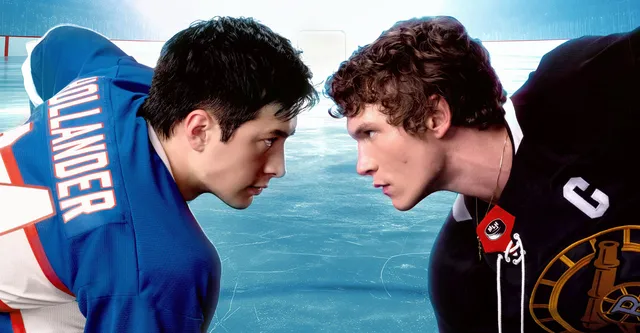
Often, when there's critical recognition or even awards hype with love stories, it centers on films like Call Me By Your Name (2017) or shows like Fellow Travelers (2023). And while they're both beautiful in their own right, it's high time shows like Heated Rivalry (2025) remind people that joy and romance are also deeply profound in their narratives. Now playing on Crave and HBO Max, Heated Rivalry is an undeniable triumph in more ways than one.
‘Heated Rivalry’ Is A True Game Changer For LGBTQ+ Romance Adaptations
Based on the romance novels by Rachel Reid, the reception of Heated Rivalry is revolutionary. I haven't seen this much fanfare around a show on social media all year, save for The Pitt (2025), which, in its own way, was a game-changer for medical dramas. The weekly distribution for Heated Rivalry also ensures that fans get online after every episode to deconstruct their favorite parts and geek out with each other, proving that we've been begging for more shows like this, and we'll show up for them.
And despite the fact that paperback copies have been sold out everywhere, Rachel Reid still hit the New York Times Best Sellers list in the Combined Print and E-Book Fiction category because the demand is all there. Networks and executives often underestimate the sheer power of social media campaigns, and we have proof yet again of all the ways fans and critics are willing to show up. (If I could only write about Heated Rivalry for the rest of the year and onward, I happily would.)
Again, while there are excellent and joyful LGBTQ+ romances out there like Heartstopper (2022) and Red, White, and Royal Blue (2023), the approach that Jacob Tierney takes with Heated Rivalry allows it to feel cinematic. Visually, tonally, and narratively, it tells a breathtaking story that not only involves one couple but two through a lens that deserves big-screen reception.
The Layers In ‘Heated Rivalry’ Brilliantly Prove How Nuanced The Romance Genre Is
People love to throw around phrases like "mindless smut" when it comes to the romance genre, but the level of character building that occurs within every page is unlike anything else I've seen. All of this boils down to one vital component that's present in each of them, which is that the romance genre isn't afraid of allowing its characters to be vulnerable.
Sex and intimacy can, at times, be mindless, sure—and there's nothing wrong with that approach—but more often than not, there are layers to two people getting to know each other through their bodies. Despite the progress we've seemingly made in Hollywood and around the world to break gender norms, toxic masculinity is still very much at large. Kindness and gentleness are often seen as weaknesses, whereas stoicism is revered as a strength. When grief gets tangled with villainy or some sort of dark aftermath, then it's perceived as a profound human emotion in film or TV.
Yet, where the romance genre is concerned, strength is present in all the quiet moments and loud ones, too. Moving through grief and feeling the pangs of loss are welcomed without someone wanting to burn down the entire world in a nihilistic manner. Characters—whether male, female, or non-binary—aren't punished for crying or feeling frustrated.
The common ground we all share as human beings is our capacity to love, and no genre explores this with as much detail as romance. Now, here's the thing, sitcoms and dramas often do this, too, and I'm not saying they don't. But there's a frequent misconception, especially with dramas, that if there's a happy ending instead of a tragedy, it'll be too easy—too cliche. Sitcoms often go in the opposite direction, thankfully, but at the same time, they aren't always taken as seriously as dramas.
It's a double-edged sword as there's a lot of hypocrisy floating around, but everything Heated Rivalry accomplishes proves that people simply aren't looking close enough to decipher how much depth lies in a story that's centered around two people sharing their lives. From the directing to the writing, along with every performance, Heated Rivalry delivers a masterful depiction of how vulnerability and openness that result in joy can consistently initiate heartfelt conversations, all while evoking profound, much-needed hope at a time when it feels like everything else hurts too much.