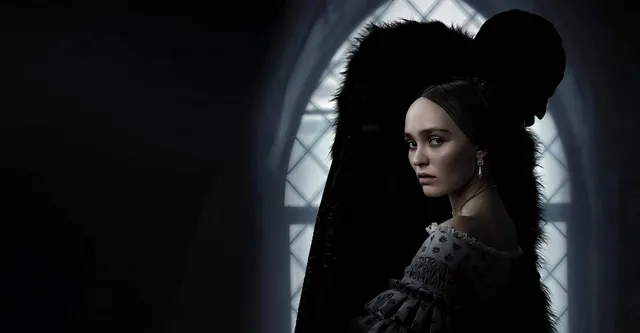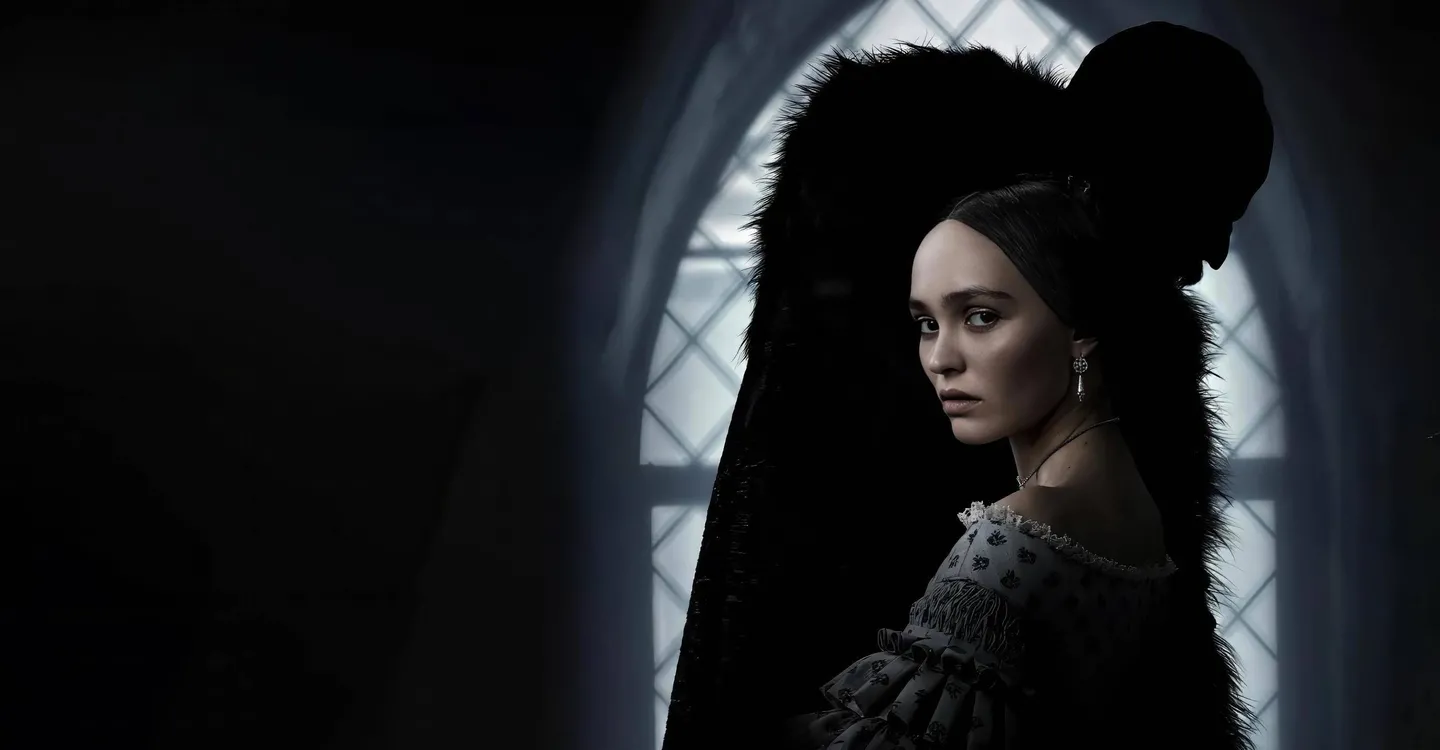
'Nosferatu 2': Is Eggers' New 'Werewulf' Movie Actually A Sequel?
In early 2025, just weeks after the wide release of his smash hit, Nosferatu (2024), director Robert Eggers announced his latest project: Werwulf (2026). Eggers, known for his supernatural, gothic, and period horror, took on the challenge of remaking the influential German Expressionist film Nosferatu (1922). The remake proved wildly successful, paying homage to the original’s style and vision while adding depth to the story.
Nosferatu also earned Eggers many new fans, who were excited to see his first post-Nosferatu project. Hence, the announcement that Eggers is making a new period horror movie focused on supernatural creatures piqued viewers’ interest and even raised hopes of a Nosferatu sequel. Viewers can use our guide to find out everything they need to know about Eggers’ Werwulf.
What We Know About ‘Werwulf’ So Far
Like Nosferatu, Werwulf will capitalize on a Christmas Day release, landing in theaters on December 25, 2026. Eggers co-wrote the script with Sjón, with whom he previously collaborated on The Northman (2022). Eggers and Sjón set the film in 13th-century England and will add authenticity by utilizing Middle English dialogue. They are already using Old English in the title, with the spelling “Werwulf” rather than “Werewolf.” However, there will be annotations if you’re not familiar with Middle English.
Aside from the setting and dialogue, Eggers has kept the plot details of Werwulf under wraps, describing it to Bleeding Cool simply as a “medieval werewolf movie.” He also described the plot as dark. He stated, “And it’s also the darkest thing I’ve ever written. By far.” If you watched Nosferatu, you may be surprised by that statement. A lot of critics and audiences described Nosferatu as “repulsive” due to the extremely dark, bleak, and macabre subject matter, including necrophilia. In general, Eggers’ movies are dark, so to describe Werwulf as the darkest of all “by far” is quite interesting.
The media has also confirmed several actors slated to appear in Werwulf. While their roles remain undisclosed, Lily Rose-Depp, Aaron Taylor-Johnson, Willem Dafoe, and Ralph Ineson will star in Werwulf. All four of these actors had previously collaborated with Eggers on Nosferatu.
Is ‘Werwulf’ A ‘Nosferatu’ Sequel?
Werwulf and Nosferatu have many similarities. They are both horror movies featuring supernatural creatures, share the same director, and have much of the same cast. However, Werwulf is not a sequel to Nosferatu. The films are set in different places and time periods, and Eggers has dismissed the idea that they’re related.
Although he denied trying to start a shared universe, Eggers admitted that the films are “companion pieces.” Werwulf isn’t a proper sequel to Nosferatu, but it is a “spiritual successor,” due to its thematic and stylistic similarities. They are period horror films with folklore-based stories that put Eggers’ signature gothic take on supernatural creatures. He told Bleeding Cool, “But yeah, both films are me trying to commune with folk culture of my past and are me and my brother’s take on New England folk tales.”
How Eggers’ Films Echo Universal’s Failed ‘Dark Universe'
Eggers is adamant that he’s not going to create the “Robert Eggers Cinematic Universe.” However, we still can’t help but notice the parallels between Eggers’ movies and Universal’s failed “Dark Universe.”
In the early 2010s, inspired by the success of the Marvel Cinematic Universe, Universal planned to revive its Universal Monsters (1913-1956) franchise, a collection of monster adaptations and crossovers, with a proper shared universe: the Dark Universe. The Dark Universe would consist of interconnected films featuring Universal’s classic monsters. It kicked off with the 2017 remake of The Mummy. Unfortunately, The Mummy marked an infamous critical and commercial failure for Universal, prompting the studio to pause all future Dark Universe films, such as remakes of Bride of Frankenstein (1935) and Creature From the Black Lagoon (1954).
Many projects fell through, and Universal has since shifted to standalone movies, abandoning the shared-universe concept. Now, I don’t believe the Dark Universe failed due to a lack of interest in a shared universe featuring monsters. After all, the Monsterverse has fared tremendously well. Universal’s shared universe had lots of potential, but it fell apart because the franchise pushed the idea too harshly. The Mummy overreferences other films and strives so hard to establish a universe that it hardly stands on its own.
The reason the Dark Universe failed, though, could be the same reason that Eggers’ films succeed. He’s not interested in creating a shared cinematic universe or setting up a franchise. Instead, he wants to give his take on folklore and horror tales, keeping the essence of these classic stories rather than letting franchise ambitions overshadow them.
To be fair, Universal’s Dark Universe has its own unique audience, too. The Mummy was a standard Tom Cruise action thriller that offered viewers stunning visuals and plenty of fun. For some, finding every monster reference and catching every detail intended to set up the Dark Universe was fun. If you love big-budget, stylish, and action-packed films, The Mummy is the perfect watch.
However, Eggers’ films offer a slightly greater depth for audiences. Viewers seeking authentic adaptations of classic horror stories will be drawn to Nosferatu and Werwulf. Eggers pays meticulous attention to detail and historical accuracy, to the point of writing actual Middle English dialogue. He remains true to the spirit of folklore horror while expanding the story in meaningful ways by digging deeper into its themes and adding layers of darkness, seductiveness, and horror for hardcore horror fans. His authentic approach to period horror and his refusal to force a shared cinematic universe might just be what Hollywood needs.