5 Crucial Details In ‘Spider-Noir’ You Probably Missed

The following contains spoilers for Spider-Noir.
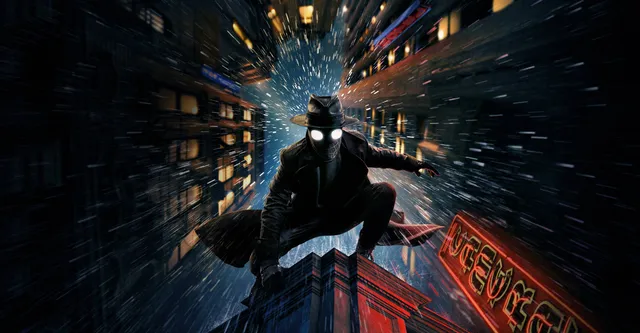
Spider-Noir (2026) is a fun riff on classic noir tropes, all filtered through the superhero genre. The Prime Video series stars Nicolas Cage as a private investigator version of the Wall-Crawler, dealing with his own hang-ups and the dangers posed by his powers while also contending with gangsters and femme fatales. For the most part, the series works well as a self-contained superhero story told in a new genre.
However, fans might have missed some key elements of the show upon the first watch. This includes the show's potential connection to the larger Marvel multiverse, the way it reimagines some classic elements of the Spider-Man mythos, and even how it leans more into noir than superheroics by the end of the run. Here are 5 key elements of Spider-Noir that you might have missed on your first watch through.
‘Spider-Noir’ Isn't A Spider-Verse Crossover

Nicolas Cage's Spider-Noir wouldn't be happening without Spider-Man: Into the Spider-Verse (2018), where Cage also played a black-and-white 1930s detective take on the Wall-Crawler. However, despite the same actor playing nominally the same character, it's important to note that the Spider-Noir who appears in the Prime Video series isn't the same version of the character who was in those animated films. The Ben Reilly of the Prime Video show is a more openly tragic, as well as older, character, who is primarily contending with gangsters.
Meanwhile, the noir Spider-Man of Spider-Verse is identified as Peter Parker, and his primary enemies are Nazis. Their origins are slightly different—the animated Noir was bitten by a spider, while the live-action version was bitten by a mutated Man-Spider. While USA Today has confirmed that Nicolas Cage is set to reprise his animated version in Spider-Man: Beyond the Spider-Verse (2027), it won't be a continuation of the character audiences got to know in the mystery detective.
Man-Spider Is A Scary Warning For Peter Parker

One of the creepiest moments in Spider-Noir comes during a flashback to Ben Reilly's origin story. Instead of being bitten by a radioactive spider like most variants of Spider-Man, Ben was accosted by one of the experiments in a German POW camp during World War I. This man had transformed into a horrifying Man-Spider. The mutated hybrid is a reference to a potential final state for Spider-Man if his powers continued to mutate him, with the live-action version bearing some creepy similarities to the Man-Spider seen in other adaptations like Spider-Man: The Animated Series (1994).
It's also a worrying transformation for fans of the MCU Peter Parker. The upcoming film Spider-Man: Brand New Day (2026) has been teased to focus on Tom Holland's Peter Parker as his powers begin to mutate and evolve in unexpected ways, potentially setting the stage for a Man-Spider transformation. If that's really the case, then the Man-Spider that appears in Spider-Noir could be seen as a very creepy tease for the potential fate awaiting the MCU Peter Parker if he can't reverse the effects of his transformation.
Ruby Williams Is Unique To The Show But Not The Mythos

Ruby Williams is one of the more tragic elements of Spider-Noir. Introduced only in flashback, Ruby is Ben's former fiancée, whose death years prior to the events of the series left Ben in a very grim place mentally. While Ben's other love interest Cat Hardy is directly inspired by Spider-Man's frequent frenemy/love interest, Black Cat, Ruby has no counterpart in other versions of Spider-Man. However, she does have plenty of parallels.
Ruby is clearly modeled after other Spider-Man love interests, especially Gwen Stacy. While the exact nature of their deaths is different, she is shown falling to her demise while her superhero love interest fails to save her—much the same way that Peter Parker fails to save Gwen in The Amazing Spider-Man 2 (2014). She's also the person who gives Ben the "With Great Power Comes Great Responsibility" moral, something she shares with Uncle Ben in most incarnations of the story and Aunt May in Spider-Man: No Way Home (2021)
‘Spider-Noir’ Doesn’t Have One Of Spider-Man’s Biggest Rules

One of the things that helps Spider-Noir stand out from other takes on the Marvel superhero is the fact that this is a Spider-Man variant without one of the biggest moral restraints that the hero usually has. In most incarnations, Spider-Man has a very strict no-kill policy. It's a key element of the original comic character—and has been an understated element of most adaptations that came to the forefront in No Way Home's climax.
By contrast, Ben Reilly doesn't have that same hang-up. As a former soldier, Ben is suggested to have earned a kill count even before he got his powers. In Spider-Noir, the character uses his powers to take out multiple enemies, uses henchmen as human shields, and even ends the season by killing one of his last remaining super-powered enemies by throwing him in front of a train. It speaks to the ways that different Spider-Heroes can approach their mission.
‘Spider-Noir’ Could Be One-And-Done—Or Go On For A While

One of the important tonal beats of Spider-Noir might actually be the key to the show's future. As reported by AOL, there currently isn't a confirmed Season 2 for the superhero show. This means that this season could be a one-and-done adventure for Ben Reilly. However, the ending of the series was specifically designed to reflect the mystery genre trope where another case could easily come into Ben's office and catch his attention.
This is likely why Spider-Noir wraps up so many plotlines instead of leaving too much unresolved. Cat and Ben's relationship, the danger posed by Silvermane, and the mysteries surrounding Ben's powers are all concluded by the end of the show. This means Spider-Noir could easily be done after one season—or, similar to shows like Poker Face (2023), a new mystery could pop up and force Ben back into the field. Given the strength of the show, we can only hope that Nicolas Cage gets to don the trenchcoat and mask again down the line.