What Is X-Factor In 'X-Men '97'?

X-Men ‘97 Season 2 is coming to Disney+ on July 1, 2026, and with it comes even more mutant teams for audiences to get acquainted with. Aside from X-Force, there’s also X-Factor, a team modeled after a specific iteration from the ‘90s that made waves for how it operated in the world. But X-Factor has never been just one team, and the name itself has taken on different meanings.
So, let‘s explore the X-Factor team, as well as some of its iterations and who was on the team during its most important eras. But most importantly, how the team differentiates itself from the traditional X-Men team and what they bring to the story in X-Men ‘97.
X-Factor Started as a Separation From the X-Men

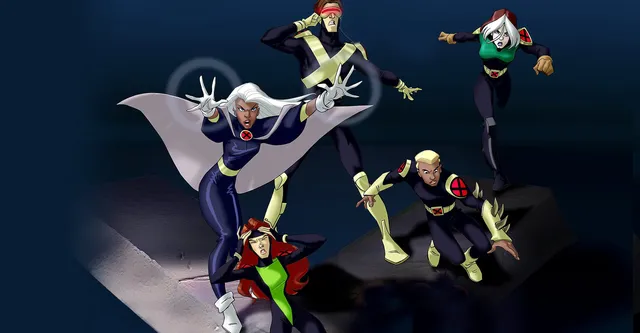
X-Factor was first created and comprised of the original five X-Men: Cyclops, Jean Grey, Beast, Iceman, and Angel. Unhappy with Professor X making Magneto the leader, they went out on their own as a team, doing exactly what the Professor taught them and protecting young mutants.
They advertised themselves as Mutant-hunters, even though they were anything but, and they still crossed over with the X-Men for various events. In the end, as the original members began to rejoin the team, the X-Factor title was abandoned and changed to focus on a new angle. This era of the team was important because it showed what the X-Men could be like as tried-and-true superheroes working under secret identities and trying not to get caught. It was just as much about superheroing as it was furthering the mutant cause, and it was a great way for the original team to grow and evolve before returning to the X-Mansion once again.
The X-Factor Roster Has Evolved Over the Decades with New Teams

Following the original five’s departure, X-Factor became a government-funded team comprised of Havok, Polaris, Multiple Man, Wolfsbane, Strong Guy, and Quicksilver. During this time, the series got a major tonal overhaul and also focused more on character development. X-Factor #87 by Peter David and Joe Quesada was a perfect example of this, as the entire issue focused on the team getting therapy to untangle past events.
This team would eventually grow even darker and add new members like Forge, Mystique, Wild Child, and Val Cooper as the only human member. Over time, the team would evolve once again and instead become a detective agency made up of Multiple Man, Strong Guy, M, Rictor, Siryn, and Layla Miller.
While future members would join this team, like Polaris, Wolfsbane, and Shatterstar, the team would evolve two more times as a corporate team made up of Gambit, Quicksilver, Polaris, Cypher, Warlock, and Danger. It would then become the detective agency of Krakoa with Daken, Polaris, Northstar, Prodigy, Eye-Boy, and Prestige, capping off a legacy that has changed more than the X-Men themselves.
‘X-Men ‘97‘ Season 2 Gives Us a Look at a Classic X-Factor Team

With so many options to choose from and the knowledge that X-Men ’97 Season 2 would also focus on more modern team iterations like Grant Morrison’s New X-Men, the sky was the limit on how X-Factor would be portrayed. But rather than try something new, the series stuck to continuity.
X-Factor had appeared before in X-Men: The Animated Series (1992), with its ’90s government roster that had Havok leading. That same team, made up of Havok, Polaris, Multiple Man, Wolfsbane, Strong Guy, and Quicksilver, stayed and has garnered the ire of characters like Cable. The idea of selling out to the government sticks heavily with the team, separating them from the titular X-Men heavily.
One thing the show has done well so far is give its members time to shine, specifically Polaris and Havok, who have a bit more screen time than the other members. Considering how easy it can be to confuse them with other X-Men, it makes sense, as this team is vastly different. They are more brutal, more inclined ot take orders from the government, and think their methods will help the greater mutant cause, even if it causes more division.
X-Men ’97 has always been great at establishing teams and characters most casual fans don’t know in a way that makes sense, and that is even more true for X-Factor. Hopefully, by seeing them in X-Men ’97, fans will fully understand that while they seem like the X-Men, the brutality and willingness to take orders make X-Factor more of a fighting force than a superhero team.