The 10 Most Controversial Movies Of All Time

Controversial films have a way of sticking in your memory, but not always for the reasons you might expect. They tackle taboo subject matters like violence, politics, and sexuality in a way that defies traditional and conventional norms and values. But pushing boundaries of artistic expression often comes with heated debates, protests, and bans being elicited, making these movies memorable not only for their plot, but also for the reactions they spark by testing the limits of what audiences were willing to accept at the time of their release.
With this list, we’ll break down the ten most famous controversial movies of all time, and how they became flashpoints in cinematic history. These movies are listed in release order, from D.W. Griffith’s The Birth of a Nation (1915) until The Passion of the Christ (2004).


When D.W. Griffith’s The Birth of a Nation came out, it was impossible to ignore. The silent epic tells the story of the American Civil War and Reconstruction from the perspective of white Southern families. While the camera techniques and large-scale battle sequences were unlike anything audiences had seen before, the way it portrayed Black Americans and openly glorified the Ku Klux Klan (KKK) made it controversial from the moment it premiered.
Civil rights groups like the NAACP organized protests across multiple cities in the US, arguing that the film encouraged racial hatred and incited violence, and hence needed to be censored. In fact, some local governments even tried to block screenings outright; nevertheless, The Birth of a Nation was a massive box office success, possibly because of prominent public figures endorsing it. The real world impact at that time was also what made this movie controversial, with the film playing a role in the resurgence of the KKK in the following years, where screenings were reportedly used to attract new members. A century later the movie lives on as a complicated piece of cinematic history, and as an example of how harmful depictions can leave behind a damaging message.











If there’s one film that can be recognized purely by its name, it’s Stanley Kubrick’s Lolita, adapted from Vladimir Nabokov’s novel of the same name. It tells the story of 36-year-old Humbert Humbert, a self-justifying man who becomes obsessed with a 12-year-old girl he calls “Lolita.”
As an adaptation of one of the most controversial novels of all time, Kubrick’s Lolita was inevitably going to be controversial as well. Nabokov’s novel was already banned in several countries, and Kubrick also faced scrutiny while developing the adaptation, as a filmmaker drawn to morally challenging themes, and the promotional materials were criticized for downplaying the seriousness of the story. For its theatrical release, the movie’s poster included the promotional tagline, “How did they ever make a movie like Lolita?”
The subject matter itself is so controversial that Nabokov had reportedly tried to destroy his own manuscript because of its taboo content. The movie can be incredibly difficult to digest, not only because of the themes of manipulation and abuse, but also because of how the movie is told from Humbert’s point of view—where he reframes the narrative as a love story.
Lolita avoids explicit imagery, but the horror unfolds more quietly, and viewers who aren’t aware of what the film’s more subtle implications could misinterpret the film as romantic, when it’s anything but. Over the years, Lolita has been a film people have continued to gravitate towards, not because they think the content is entertaining, but because it forces them to wrestle with how disturbing behavior is portrayed on screen, especially with an unreliable narrator at the helm.




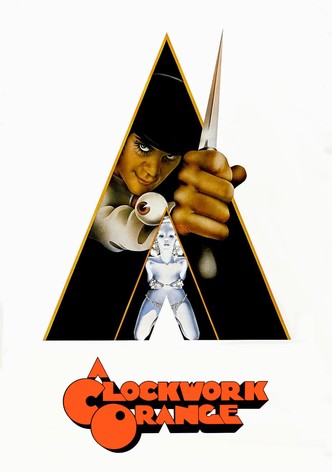
Another Stanley Kubrick creation, A Clockwork Orange, is a striking, unsettling story about a delinquent youth who becomes the subject of a government “reform” program. From the start, it wasn’t meant to be a comfortable viewing experience. Upon its release, the movie was immediately met with debate, especially in the United Kingdom, where the film was accused of glamorizing violence. In fact, during several high-profile copycat crime court trials, the perpetrators referred to A Clockwork Orange as an influence.
Even in other countries, cuts and restrictions were imposed on the movie, and in the US, some of the most graphic scenes were replaced by Kubrick himself. Some people argued the movie was meant to be satire, whereas others found the content extremely uncomfortable, raising questions about responsibility and the limits to artistic freedom. This divide was so extreme that Kubrick and his family received threats, and the controversy escalated to a point where Kubrick withdrew the film from circulation and requested Warner Bros. to stop distributing it in the UK, where it remained unavailable until after his death.








Exploring themes of loneliness and grief, Bernardo Bertolucci’s Last Tango in Paris centres on an intense relationship between two strangers in Paris who agree to meet without names, keeping things anonymous. Though the film was marketed as a serious adult drama, the controversy began swiftly after its release.
The strongest reaction came from Bernardo Bertolucci’s own country, Italy, where the film was banned after the explicit content became the subject of public scrutiny, with protests being led outside theaters and bomb threats temporarily halting showings. Courts ruled the movie as obscene, and all copies of the movie were ordered to be destroyed. Bertolucci was even briefly stripped of his civil rights for 5 years, which was a rare and extreme legal consequence for a filmmaker. However, censorship was only one part of the film’s controversy. The film’s production practices were brought to light when the lead actress made statements about consent and power dynamics on set, raising additional ethical questions. The bans were eventually overturned, but Last Tango in Paris’s reputation was cemented as one of the most provocative films ever made in Europe.


William Friedkin’s The Exorcist tells the story of the priests who attempt to save a young girl believed to be possessed by a demon. What seemed to be a normal supernatural movie on paper, sparked surprising reactions from audiences when they watched it in theaters, giving it a reputation as something far more intense than a typical horror movie. The movie became notorious due to many reports of viewers feeling ill, fainting, throwing up, and even walking out, leading several countries to demand edits to the movie or further restricting screenings.
Adding fuel to the fire, the film’s marketing capitalized on the religious subject matter. It was released a day after Christmas, and leaked rumors of injuries and death from the set to heighten the sense of dread. While it caused a media frenzy, some religious figures admitted that it inspired more people to attend church and reignite their faith. In spite of the polarizing response to the movie, The Exorcist emerged as a major box office hit and left a lasting impression on horror cinema, inspiring countless sequels and remakes for decades to come—although none of them were ever as controversial as Friedkin’s original.




Adapted from Marquis de Sade’s infamous work, Pier Paolo Pasolini’s Salò, or the 120 Days of Sodom, is set during the days of fascist Italy where a group of youngsters are subjected to extreme cruelty by those in power. Pasolini claimed the movie was symbolic commentary on the horrors of totalitarianism, and that the extremity wasn’t meant to titillate or provoke, but many viewers found it nearly impossible to separate the message from the disturbing content.
The controversy surrounding Salò was not confined to Italy, where it was first released and then seized by authorities. The movie was banned or heavily restricted in many other countries too, and its graphic content led to protests and public outcry. For decades, it remained largely inaccessible to audiences.


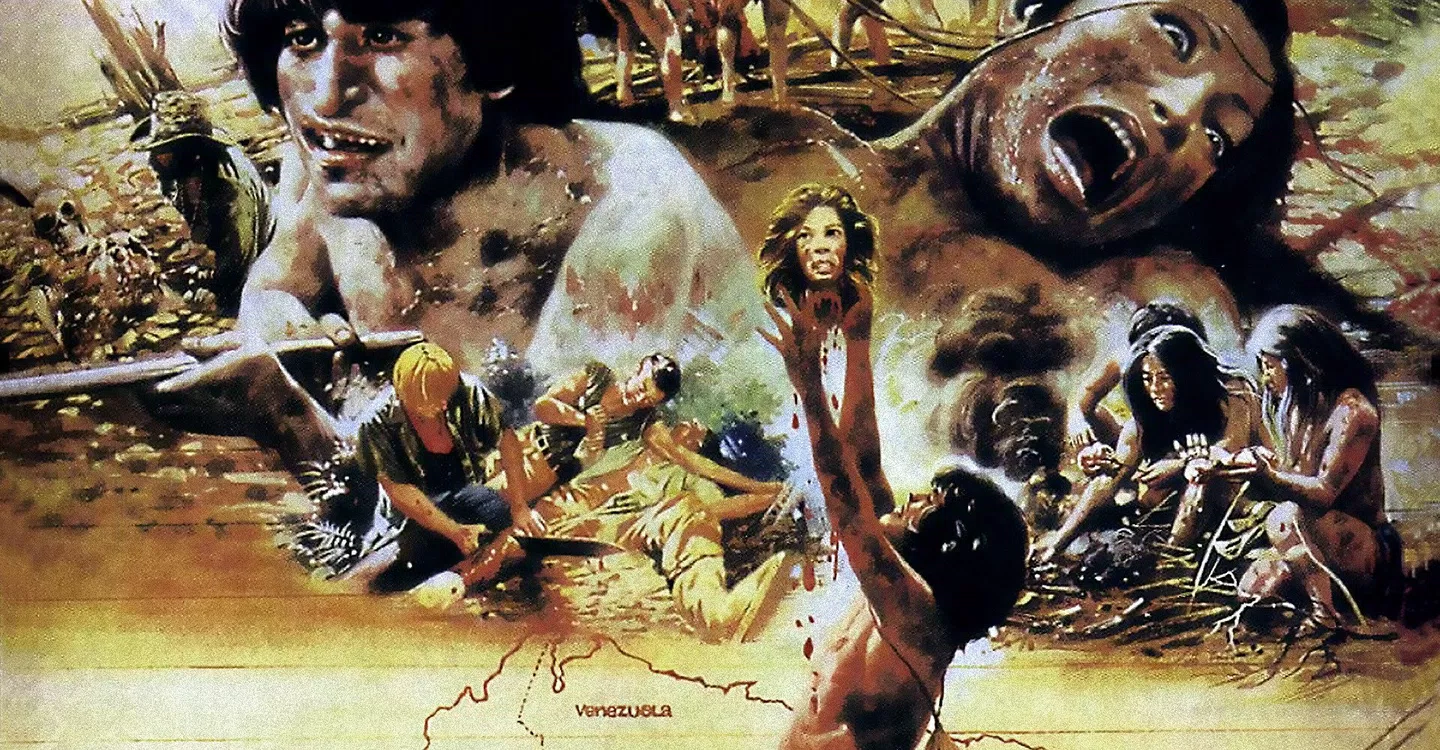
Before The Blair Witch Project made the ‘found footage’ narrative popular in America, Ruggero Deodato’s Cannibal Holocaust was making waves. The Italian horror film follows a group of documentary filmmakers who go missing after encountering a cannibal tribe in the Amazon. The found footage style was designed to feel authentic, and that realism is what audiences in 1980 weren’t prepared for.
When the movie was released, Italian authorities launched a criminal investigation, suspecting that some of the on-screen deaths were real. Deodato had to prove in court that his actors had survived, and the movie was seized and banned in over 50 countries. Even though the legal issues were later resolved, the movie was heavily censored. This led to multiple versions in circulation with different degrees of edits, especially because of the graphic violence and the scenes depicting deaths and (real) animal cruelty. Today, Cannibal Holocaust has been credited for the rise of the found footage genre in the horror world, though the film’s notoriety remains.










Martin Scorsese’s The Last Temptation of Christ explores the life of Jesus Christ, focusing on his internal struggles, doubts, and desires. Scorsese’s movie presents a humanized interpretation of its central figure. Although the movie wasn’t meant to be explicitly provocative, it sparked controversy among religious groups who viewed it as offensive and believed it crossed a line. The movie was banned or censored in several countries, and is still restricted in some countries to this day.
The Last Temptation of Christ was originally shelved in 1983 because of protests, but was eventually rereleased years later. Boycotts were organized, Scorsese received death threats, and a theater in Paris was famously set on fire while it was screening the film—injuring people inside. Because of the intense backlash, a disclaimer was included stating that the film was a ‘fictional exploration’ and wasn’t based on the Gospels. Though the movie received positive reviews for the most part (Scorsese received an Academy Award nomination), it remains one of the most talked-about and debated religious movies ever made.


Larry Clark’s Kids was considered controversial the moment it was released. Following a group of teenagers in New York City over the course of a single day, the movie captures their partying, conversations, interactions, and risky activities with an almost documentary-like rawness. The movie’s content caused concern amongst the public, especially due to the explicit depictions of teenage behavior.
Clark insisted that everyone in the cast was over 18, but a follow-up documentary, We Were Once Kids, proved these claims false (the original flyer for the open casting also called for 13 to 19-year-old non-professional actors.) While diving into the controversy, the documentary also highlights the film’s legacy; actors like Chloë Sevigny and Rosario Dawson made a career for themselves, but others struggled to find work after the movie’s release and grappled with their frustrations on not being paid enough.
In the United States, Kids received a NC-17 rating, but it went on to become a cult classic. Because of the uproar it caused, Kids is a film that’s uncomfortable to watch but impossible to ignore when discussing controversial cinema.


The final hours of Jesus Christ’s life was dramatized in Mel Gibson’s The Passion of the Christ. Presented in Aramaic and Latin with subtitles, Jesus’ suffering and crucifixion was shown in stark, graphic detail—making it one of the most controversial movies of the early 2000s.
While some religious groups appreciated its faithfulness to scripture, others criticized the extreme violence, and accused the film of promoting harmful stereotypes while portraying the role of Jewish authorities in Jesus’ death, citing it as antisemitic. After receiving an R rating in the United States, The Passion of the Christ was either edited or banned in many countries for religious reasons; in Malaysia it was restricted, but was then made available for only Christian audiences. Regardless of the reactions it garnered, the movie ended up becoming a huge commercial success, making more than $600 million worldwide. Gibson is working on the sequel, The Resurrection of the Christ, meant to be released in two parts in 2027.