How To Watch Clint Eastwood's Dollars Trilogy In Order

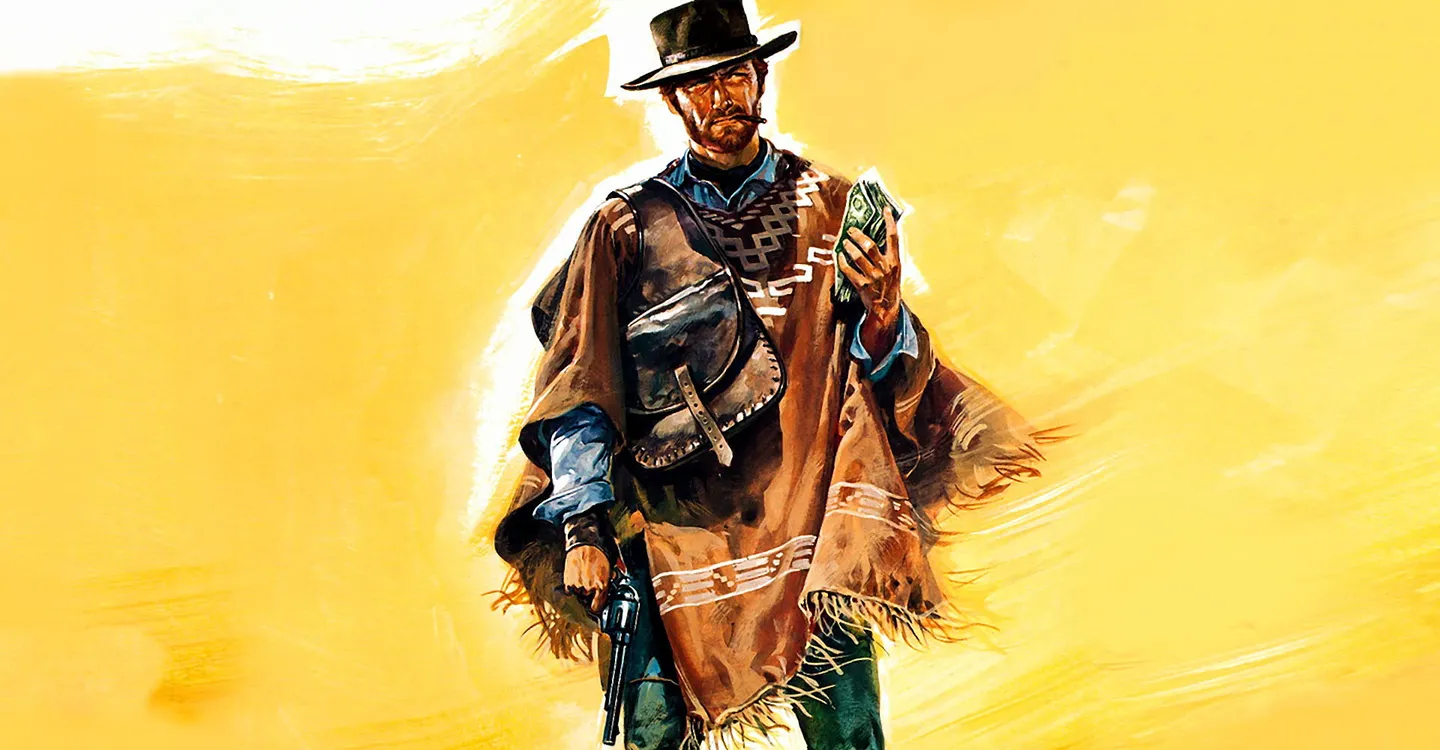
Every Western fan worth their salt has probably seen, or at least heard of, the Dollars Trilogy. Sergio Leone's iconic spaghetti Westerns pioneered the genre by swapping traditional Western heroics for gritty, violent stories with morally gray protagonists in the lead. These were the movies that solidified Clint Eastwood as a star. Long before Dirty Harry (1971) and Every Which Way but Loose (1978), Eastwood strode through sun-drenched deserts as the ultimate mysterious anti-hero. Dripping with rugged masculinity and quietly cool, his portrayal of the "Man with No Name" became a staple archetype in Westerns and beyond.
When it comes to the Dollars Trilogy, the connective tissue lies in Sergio Leone's direction, Ennio Morricone's epic score, and Clint Eastwood's stoic protagonist. Technically speaking, they don't have a linear story and easily work as standalone films. If you want to watch them chronologically, then consider starting with The Good, the Bad and the Ugly for its Civil War setting and working backward. However, the best and easiest way to watch them is by order of release date. Here's how to watch the Dollars Trilogy in order, including where you can find each movie on streamers like Tubi, Prime Video, and more.


A Fistful of Dollars has a unique legacy, releasing with acclaim but also with a lawsuit from Akira Kurosawa after declaring (and winning) the claim that the movie is essentially a remake of Yojimbo (1961). Despite this complicated legal controversy, A Fistful of Dollars went on to become one of the most influential films of all time. It introduces Clint Eastwood as the Man with No Name, a drifter mercenary type who is equally mysterious as he is cool. Here, he gets entangled with rival families, forcing him to use his wits and manipulation skills to ultimately get what he wants: money.
The movie delivers a high-stakes plot filled with all the dramatic close-ups and stylized violence expected from the spaghetti Western genre. With nothing quite like it in the US, A Fistful of Dollars became something of a phenomenon. It traded the typical trappings of the star-spangled, all-American Westerns popularized by John Wayne for grittier, more morally ambiguous storytelling—and audiences ate it up. If you want to see one of the most revered spaghetti Westerns in cinema, you can't go wrong with A Fistful of Dollars.















No matter how you decide to watch the Dollars Trilogy, For a Few Dollars More sits right in the middle. When it comes to reception, that sentiment (mostly) holds true, too. While A Fistful of Dollars and The Good, the Bad and the Ugly spark frequent debate about which is the best, For a Few Dollars More exists as the lovable, unbothersome middle child. This time, the Man with No Name teams up with a rival bounty hunter (Lee Van Cleef) to track down a psychopathic outlaw (Gian Maria Volonté).
While some might consider it more of a slow-burn than its predecessor, Eastwood and Van Cleef's chemistry and banter more than make up for it. That's not to say For a Few Dollars More lacks action; it's just better paced. The other standout here, of course, is Gian Maria Volonté's villain, El Indio. If you appreciate competently written bad guys with chilling, sociopathic edges (think Javier Bardem's Anton Chigurh from 2007's No Country for Old Men), then you'll love For a Few Dollars More.


Eastwood and Van Cleef return for The Good, the Bad, and the Ugly, along with Eli Wallach. Together, the trio play the titular gunslingers who become embroiled in the hunt for stolen gold. Like For a Few Dollars More, The Good, the Bad and the Ugly ups the slow-burn tension while still delivering plenty of Sergio Leone's trademark stylized violence. Many consider it the best of the Dollars Trilogy, but even if you disagree, there's no denying its impact on pop culture. Quentin Tarantino famously homages the movie in Reservoir Dogs (1992), and Stephen King touted the film as a significant inspiration for his Dark Tower series.
Our three protagonists are equally archetypal and complex, and honestly, that's where this movie excels. While Westerns can get lost in the action and tropes, The Good, the Bad, and the Ugly opts for a character-driven story loaded with themes and commentary on human sins like greed. Oh, and the "Mexican standoff" sequence is just one of those scenes every cinephile needs to experience at least once.