What Happens After ‘Dragon Ball Super’: Moro, Granolah & The Super Hero Arcs, Explained
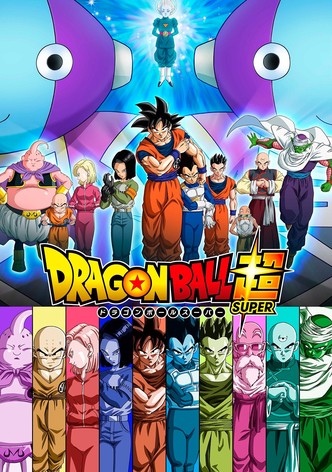
It’s been eight long years since Dragon Ball Super (2015) concluded, but it went out with a bang, with Goku and the rest of Universe 6 defeating Jiren and winning the Tournament of Power. And if you were an anime-only viewer, you would likely think that was it, and the story of Dragon Ball Super ended there. However, that’s not entirely true. Sure, the story of the Dragon Ball Super anime did end, but the manga has been going on ever since. In fact, three whole sagas, or major arcs, have happened since.
With Dragon Ball Super set to return this fall with a remake of its first arc on Crunchyroll, the God of Destruction arc, and an eventual continuation of the series sometime after that, let’s look over exactly what will be covered in those future seasons. Will they capture the spirit of Dragon Ball Z (1996), or will they find a way to balance the action of that series with the goofy humor that defined the original Dragon Ball (1989)? Here’s what you need to know.
What Happened in the Moro Arc of ‘Dragon Ball Super’?

When Dragon Ball Super returns with new content, it’ll be starting with an adaptation of the Galactic Prisoner arc, also known as the Moro arc. It’s the longest arc of Dragon Ball Super by far, lasting 25 chapters and nearly 7 volumes, and for a series that features a lot of sci-fi shenanigans, the Galactic Prisoner arc reintroduces magic in a big way.
Following the events of Dragon Ball Super: Broly (2019), Goku and Vegeta are conscripted by the Galactic Patrol to capture Moro, an extremely powerful sorcerer who escaped from the Galactic Prison. Moro is depowered and doesn’t have access to magic, but even then, he’s so strong that no one was able to kill him for the 10 million years he’s been imprisoned. To make matters worse, Moro makes his way to New Namek to find the Dragon Balls to restore his magical abilities, made all the more dangerous by his ability to absorb the life energy from those he fights.
As far as villains go, Moro is a pretty solid antagonist for the Z-Fighters to fight against. His energy absorption fully realizes the premise of Androids 19 and 20, making him a villain that requires strategy and planning more than simple punching. He may be lacking a bit as far as personality is concerned, but he’s easily the series’ best villain since Perfect Cell in terms of sheer terror. Plus, when he instigates a jailbreak of the Galactic Prison, it forces the Z-Fighters to fight against a cavalcade of colorful villains, which hasn’t happened in the series in quite some time. Sure, the Tournament of Power had a lot of cool characters for Goku and friends to fight against, but they really weren’t villains. Now it’s classic good guys vs bad guys, and it couldn’t be better.
What Happened in the Granolah Arc of ‘Dragon Ball Super’?

Following the Moro arc, the Granolah Survivor arc reinvents a concept that wasn’t really around in Dragon Ball Z; what if Goku had to defeat a revenge-driven antihero?
That’s exactly what happened in the Granolah Survivor arc. In it, We’re introduced to Granolah, a survivor of the Cerealian race that was obliterated by the Saiyans. In fact, Goku’s father, Bardock, was involved in their genocide. Now, decades later, Granolah wants revenge against the last remaining Saiyans, i.e., Goku and his friends, as well as the last surviving members of the Frieza Force. So Granolah, with the assistance of Frieza’s former brokers, the Heeters, attacks Goku, forcing Goku to not only deal with an enemy more powerful than himself, but one that can’t be reasoned with.
There’s surprisingly a lot of nuance with Dragon Ball Super’s Granolah arc. Yes, Granolah is technically the villain, but you can’t deny his motivations aren’t wrong. It’s like rooting against Inigo Montoya from The Princess Bride (1987). Obviously there’s a lot more going on under the surface, mostly with the Heeters and their true goal, but the arc is pretty substantial and ends with a pretty monumental status quo shift that the series has yet to follow up on. Plus, if you’re a Vegeta fan, seeing him achieve the uber-powerful Ultra Ego Mode is delightful in all the best ways.
What Happened in the Super Hero Arc of ‘Dragon Ball Super’?

Out of all of the post-Dragon Ball Super arcs, the Super Hero arc is probably the one most fans of the series will be familiar with. After all, the arc was adapted from Dragon Ball Super: Super Hero (2022).
The arc is a pretty lighthearted affair, with a fair amount of comedy and classic Dragon Ball humor. Once again, the Red Ribbon Army is acting up, and they manipulate Dr. Gero’s grandson, a superhero-obsessed scientist named Dr. Hedo, to send his heroic androids, Gamma 1 and Gamma 2, to defeat Capsule Corp., and by extension, the Z-Fighters. Unfortunately, Goku and Vegeta are off-planet training with Whis, so the work falls to Piccolo and Gohan, two characters who have been vastly underutilized for the majority of Dragon Ball Super.
The focus on Dragon Ball’s supporting cast really does help separate the Super Hero arc from the rest of the series. There are still gigantic threats for Piccolo and Gohan to fight, including new transformations for them to achieve, but the Super Hero arc is generally a much simpler story for fans to follow. Outside of the manga, which fleshes out Goku and Vegeta’s training for their next adventure following the Granolah Survivor arc, the events of this arc are relatively self-contained, making it, as well as the movie it’s based on, good palette cleansers for the series. It can feel a bit like a filler, like Dragon Ball Z: Bojack Unbound (1993), but it’s still a fun arc that remembers that the series shouldn’t just be non-stop action.