'Dragon Ball Super' Ending, Explained
If you want an anime that has inspired generations of fans and still holds up years after its release, look no further than Dragon Ball Z (1996). Since it first graced Western audiences on Toonami nearly three decades ago, it has become the most prolific anime of all time. In fact, Dragon Ball is so popular that it transcends anime, and characters like Goku have become fixtures in modern pop culture, with new series keeping the franchise relevant every few years.
That’s especially true now. Dragon Ball Super (2015) will receive a whole host of new projects, including a remake of the show’s first arc and a new season continuing where the 131-episode first season left off. But maybe it’s been a while since you’ve seen Super’s ending, and you don’t exactly have the time to watch every single episode on Crunchyroll, especially because of just how much filler Super has. If so, here’s a quick recap to get you up to speed before Dragon Ball Super: The Galactic Patrol.
What Was The Final Arc Of ‘Dragon Ball Super’?

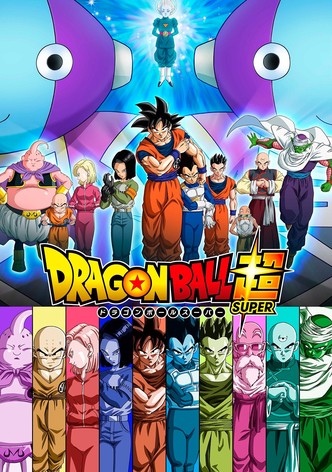
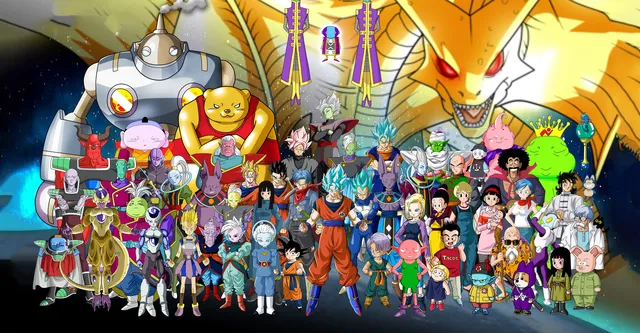
Dragon Ball Super broke down into five arcs, with its final arc, the Universe Survival Saga, being the show’s longest by far, clocking in at 55 episodes and featuring plenty of battles. That’s because the Tournament of Power dominates the Universe Survival Saga. In short, teams of 10 fighters from eight different universes fight for the entertainment of the Zenos, two beings that are effectively gods of the Dragon Ball universe.
However, this isn’t just a simple tournament. The eliminated teams will also have their universes wiped from existence. So, Goku assembles a team to represent his universe, Universe 7, including allies like Vegeta and Gohan, reformed villains like Android 17, and even villains like Frieza, all in an effort to prevent their universe from being erased.
It’s essentially a classic shonen tournament arc on steroids. With each team having 10 fighters, each with their own unique powers and abilities, it’s an animation showcase with plenty of energy beams and martial arts that one would expect from Dragon Ball and modern shonen action series like Jujutsu Kaisen (2020). While most of the fights are generally inconsequential, the arc’s antagonist, Jiren, is established very early on as an unstoppable force, a brick wall that simply can’t be defeated. He may not be the most interesting foe the Z-Fighters fight, but he is by far the strongest opponent in the tournament.
How Did The Tournament Of Power End?

By the time the tournament reaches its climax, it is an all-out brawl between Goku, Frieza, and Android 17 versus Jiren—a battle that quite literally broke the Internet, causing Crunchyroll’s servers to crash after the season finale debuted.
Thanks to Goku and Frieza putting their differences aside, the two are able to defeat Jiren, at the cost of them also being eliminated from the tournament. Thankfully, Android 17 survives and wins the Tournament of Power. As the winner, the Super Dragon Balls grant Android 17 a wish, and he decides to revive the other eliminated universes. All is right in the world, and the Universe 7 team returns home to resume their normal lives, with Goku and Vegeta continuing to train and become stronger. Happy ending, right?
There is one wrinkle with the Tournament of Power ending, though, and that revolves around the fate of Frieza. See, Frieza was temporarily revived to compete in the tournament, much like how Goku was revived to compete in the 25th Tenkaichi Budokai in the Buu Saga. However, due to his selfless actions and how he helped save Universe 7, Beerus, Universe 7’s God of Destruction, asks his angel assistant Whis to permanently revive Frieza. With Frieza back, instead of renouncing his evil ways, he goes right back to reestablishing the Frieza Force, and the post-credits scene implies that he’s planning on getting his revenge on Goku and Vegeta.
How Does The Finale Of ‘Dragon Ball Super’ Set Up Later Arcs?

For the manga, The Galactic Patrol Prisoner Arc doesn’t have a lot of connection to the Universe Survival Saga. Sure, the Galactic Patrol makes the occasional reference to how strong the Z-Fighters were in the tournament, and it was during this tournament that Goku achieved a state of being called Ultra Instinct. Outside of that, the Galactic Prisoner Saga serves as a good jumping-on point for newcomers. The same can also be said for Dragon Ball Super: Super Hero (2022), since it serves as more of a one-off adventure, drawing inspiration from the Cell Saga, and doesn’t connect to the Universe Survival Saga.
The longest-lasting impact from the tournament isn’t that Universe 7 won, but that Frieza returns. Because Frieza is back on the board, he appears in numerous later arcs, including Dragon Ball Super: Broly (2018), where he instigates a fight between Goku, Vegeta, and the Legendary Super Saiyan, Broly, all in an effort to have Goku and Vegeta killed. When that fails, he returns at the climax of the Granolah the Survivor Saga, the arc after the Galactic Prisoner Saga. Heffortlessly kills the arc’s villain, Gas, and defeats Goku and Vegeta in his new form, dubbed Black Frieza.
While the series has been on hiatus following the Granolah Saga, and following the death of series creator Akira Toriyama, when it inevitably returns, Black Frieza will end up being a major threat to the Z-Warriors, and it’s all because Goku decided to work with Frieza during the Tournament of Power.