7 Dark Period Dramas For Tortured Romantics

Normal period dramas with eye contact, yearning, and predictable romances are great. Believe me, I couldn’t live without it. But if you’re someone who once in a while (or always, we don’t judge) likes their romance without the flowers or the flirting, then you’ve stumbled upon the right list. There’s obsession and centuries-old devotion (if you’re Dracula), with morally messy characters who almost always have an ex-wife haunting them in a Gothic mansion (sometimes, literally.)
Though the 2026 adaptation of “Wuthering Heights” got some flack for not being faithful to Emily Brontë’s iconic novel, at least they understood the assignment when it came to the wind-lashed cliffs and smoldering whirlwind of a romance. Long before the recent Catherine-Heathcliff affair hit our screens, these 7 dark period dramas were making waves, proving that a story is far more interesting when it involves romance, murder, startling secrets hidden in a decadent house, and for some reason, attics. A tortured romantic like yourself can go to binge them on Prime Video, AppleTV, and more; I’ll be doing the same from the comfort of my own home because if I had to pick one of these estates to live in, I would say, thank you very much, but I must decline.


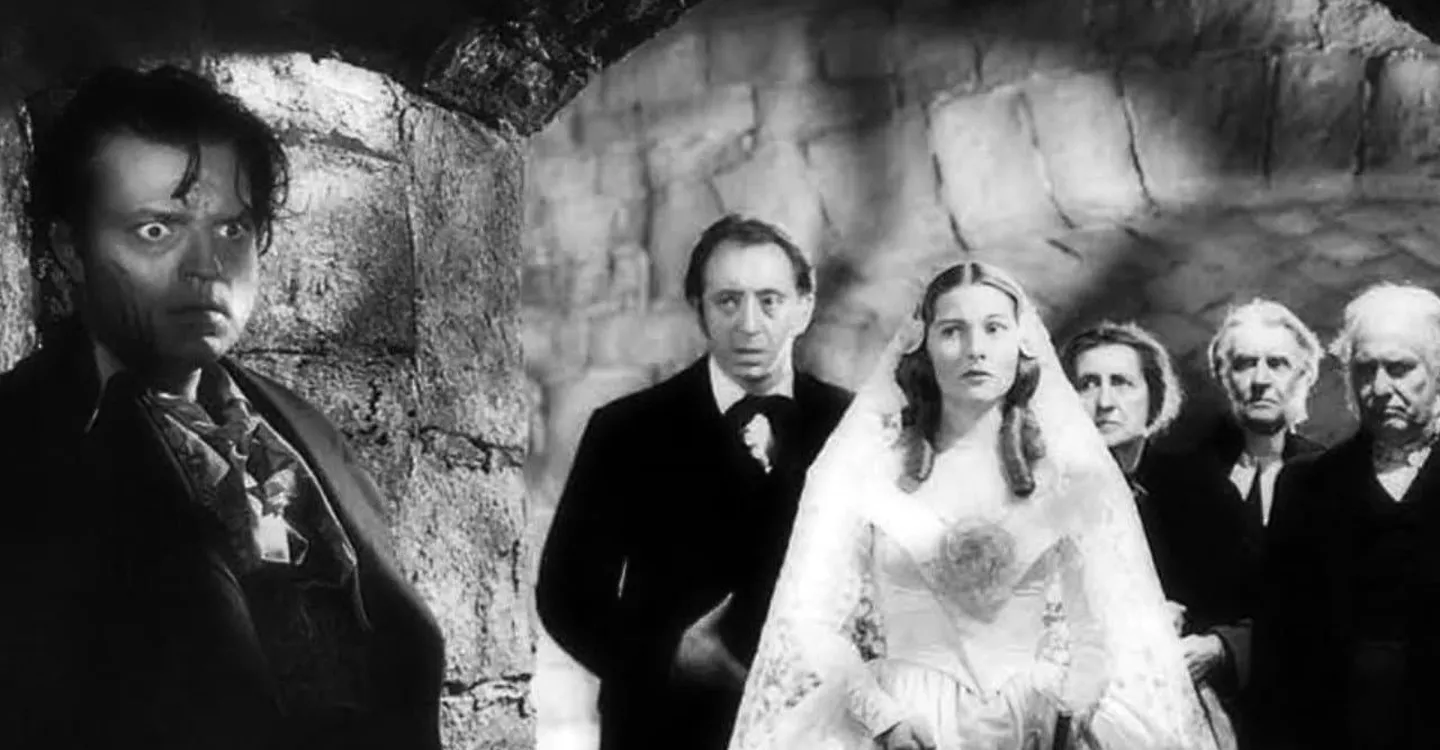
When a governess with a tough childhood falls in love with her enigmatic employer who is 20 years older than her, she finds out there’s a secret from his past that threatens their love. The chemistry between Joan Fontaine’s Jane Eyre and Orson Welles’ Mr. Rochester in Jane Eyre is tense, yet simmering, and the film balances gothic gloom with moments of genuine tenderness. Fans of slow-burn love stories where the heroine has actual boundaries, and where men make brooding their entire personality (though Rochester does redeem himself, so that’s something), will find Jane Eyre to be their kind of black-and-white film.
What I like best about the movie is that instead of succumbing to the pressures of marriage (even with someone she loves), Jane decides to put her dignity first, and this trait makes the entire romance between her and Rochester feel satisfying and earned (and Rochester wasn’t doing himself any favors with that secret is his attic—you know the one.) Three years prior, Joan Fontaine was Mrs. de Winter in Hitchcock’s Rebecca, where we see a lot of the same elements of shadowy hallways, gothic atmosphere, moody heroes, and an ex-wife who refuses to be forgotten.








I know on the surface, a “marriage and murder” scheme doesn’t sound appealing, but Guillermo del Toro’s Crimson Peak manages to make that a riveting, albeit twisted concept. Edith, a budding author marries the charming Thomas, and moves into his family mansion where terrifying secrets come to light (so Jane Eyre isn’t the only movie where the houses contain more than just furniture, huh?) Crimson Peak is the most operatic movie of the bunch, with supernatural as well as emotional stakes.
Fans of movies where romance, mystery, and horror are bundled into one neat package, will enjoy the visually rich, gothic indulgence that is Crimson Peak. Mia Wasikowska’s sharp and brave heroine navigates the (quite literally) haunted halls as her sinister suitor, Thomas and his sister Lucille execute their tried-and-tested unhinged plan (though he actually falls in love with Edith, and well, let’s just say Lucille doesn’t take it very well.) If you’ve never watched this movie before, believe me, the twist will have you squirming in your seat, wondering, “How did I not see that coming?” (I speak from personal experience.)




Put a skeptical New York constable to work in a small town that believes in the paranormal, and you get Tim Burton’s Sleepy Hollow. The film is creepy in the right way, and with every Burton movie comes his trademark visual aesthetic—the foggy woods, gothic chic costumes, and crooked houses. Johnny Depp plays Ichabod Crane with just the right amount of nervousness and brilliance, somehow making the budding romance with Christina Ricci’s Katrina feel understated yet sweet. The deliciously dark and period-appropriate haunted atmosphere is largely thanks to our galloping headless horseman.
Though it’s meant to be a Gothic horror film, some of the scenes are genuinely so funny they had me giggling (I mean, let’s give the scene where Depp gives the horse riding demonstration a round of applause.) It’s clear that Depp’s having a gala time being the awkward oddball constable. Sleepy Hollow has the right mix of suspense and horror, and fans of Gothic tales with offbeat, quirky protagonists will love this campy movie. Shows like The Addams Family and Wednesday bring the same spooky-but-charming vibes, and are must-watches for people who loved Sleepy Hollow.













Death Comes to Pemberley already has an established couple, the famous Elizabeth and Darcy, with the (non-canonical) story picking up years after their wedding in Pride and Prejudice. Anyone who knows me knows I will consume anything Jane Austen or Jane Austen-related, and a drama containing my favorite couple embroiled in a murder mystery is too much for me to resist.
Elizabeth and Darcy’s relationship is already iconic, and here we get a subtle romance, but with a thrilling twist that’ll keep you invested—and it does it all in 3 concise episodes! This delightfully niche miniseries that’s perfect for fans of period dramas, Pride and Prejudice, and mysteries (so basically, me), follows the investigation after the lead antagonist from the original novel, Mr. Wickham, confesses to a murder. Unlike the supernatural tornado of Crimson Peak, Death Comes to Pemberley is firmly rooted in human intrigue, and is guided by character-driven tension. For another exciting, horror-tinged take on Austen’s beloved characters, try Pride, Prejudice, and Zombies next!





While you may think that a man becoming a vampire just to avenge his wife’s death after a priest says she’s going to hell, seems a tad bit excessive, that’s how Gary Oldman as and in Bram Stoker’s Dracula shows his eternal devotion, okay? (And the priest totally didn’t know how to read the room.) Oldman and his on-screen lady love Winona Ryder turn up the passion to overwhelming levels, while being surrounded by a stellar ensemble cast.
This is not your typical moody-guy-in-a-mansion tale like Dragonwyck (more like immortal-guy-in-a-box sort of thing); Dracula brings stunning visuals and peak Gothic romance energy to the forefront, with the kind of off-the-charts yearning that’ll have you rooting for him to triumph on his quest of being with his one-true love (though I’m not really a fan of some of the things he did while on that journey.) If you love movies with an intense romance, tragic love triangles, or swoon-worthy lines like, “I’ve crossed oceans of time to find you,” then you’ve found the film that’ll check all those boxes. After all, who wouldn’t want someone to love them without an expiration date?




Hollywood starlet Ingrid Bergman plays Paula in Gaslight, one of the best-known Gothic romance movies of the ‘40s. When the young woman moves into a London home with her new husband, Gregory, she finds herself slowly manipulated into doubting her own sanity (honestly, I wouldn’t wish her husband on my worst enemies.) Romance is present, but control, suspicion, and mind games override it (though the ultimate unraveling of the villain’s plan was so satisfying.)
Lovers of clever plotting, fast-paced storytelling, and emotionally tense energy with real stakes will be absorbed from the very beginning, making it a compelling film where mood and performance carry almost all the weight. There are no ghosts or headless horsemen here, only more subtle tensions like a flickering lamp, a “missing” brooch, or noises from the attic, which constantly blur the lines between perception and reality (by the end of the film I was starting to feel manipulated by Gregory myself.) Anyone who loves watching films where the bad guy gets his just rewards without getting away, will enjoy the psychological game of cat-and-mouse that Gaslight provides.







When Miranda Wells moves to live with her attractive and rich distant cousin Nicholas at his sprawling estate to take care of his 8-year-old daughter, she discovers that the manor (and the man) harbors secrets (are we even surprised anymore?) amidst a blossoming romance between the two. Though Dragonwyck is a classic in its own right, it does feel like a blend of Jane Eyre and Gaslight at times, with the hidden secrets, falling in love with the master of the house, and a husband who isn’t all who he says he is.
If historical romance with a hint of danger and a looming sense of “something’s not quite right” sounds exciting, then congratulations, Dragonwyck is definitely the film for you. The emotional tension, the romantic stakes, and the final twist, all supported by the impeccable performances and cinematography pulls you into the world of a woman who is dazzled by a luxurious life, and a man who has secret intentions (along with a ghost who plays the harpsichord when doom is imminent in the family—I mean, sure, why not?)