

6 Horror Movies To Watch If You Love Analog Horror

There’s a horror genre for everyone nowadays. Psychological thrillers, gorefests, slashers, and cosmic horror all intermingle with each other, but the past few years have introduced a new subgenre that’s been gaining popularity: Analog horror. These horror movies painstakingly recreate retro aesthetics and tell their stories with intentionally low-fi equipment, aiming to unnerve audiences with something familiar yet uncanny. They have a lot in common with found footage movies, but they’re not quite the same.
Analog horror movies, when done right, give off the impression of finding lost media. It’s something seemingly normal, only to be twisted into something truly terrifying and unfamiliar. That’s not to say that found footage can’t be analog—many are—but it’s very much a case of a square is a rectangle, but a rectangle isn’t a square. Analog horror was birthed through the internet and lets its atmosphere creep into your psyche. It’s a budding horror genre, and with Hollywood now trying to capitalize on the trend thanks to the runaway box office success of one of the most popular analog horror movies, Backrooms (2026), what are the best examples of this new genre to watch that will leave you uneasy and terrified? Find them on Prime Video, Hulu, and more!


Analog horror films, seemingly by design, are at their best when they play off the nostalgia people have for the 20th century, a fact that Buddy loves to exploit throughout its 95-minute runtime.
Set on the set of a children’s TV show styled in the same vein as Barney & Friends (1992), Buddy has fun playing with the style and trappings of old shows to unnerve audiences. Shifting aspect ratios, the use of credits, and even the quality of the film itself are all played with to help sell just how terrifying Buddy the Unicorn is. It also leaves plenty of unanswered questions, but those questions open several tantalizing threads that help the film mimic the fervor that sprung up on the internet discussing the lore of analog horror franchises like Backrooms. On its own though, it’s still a great horror movie, with Buddy making for a very strong slasher villain that would give characters like Jason Voorhees a run for their money, in between moments that make him deeply uncomfortable to be around. Buddy dips its toes into several different subgenres of horror, but the way it utilizes analog horror makes it especially compelling.




The brilliant thing about analog horror is that it mixes well with other genres. Analog horror is a very stylistic branch of horror, with presentation and delivery mattering most, so when a movie like Buffet Infinity comes along and mixes analog with cosmic horror, it works surprisingly well.
Buffet Infinity is one of those horror movies you need to be consistently paying attention to, or you’ll risk losing the plot. Most of its 93-minute runtime showcases a variety of local access TV commercials from a local town. Pawnshops, local lawyers, and used car salesmen vie for airtime, but eventually, a new restaurant called Buffet Infinity bursts onto the scene touting its outrageous deals, great family values, and its supposed high-quality food, all while strange disappearances begin to happen across town. It’s a slow descent into madness, but a descent nonetheless, with the film serving as a warning about the rampant nature of capitalism and AI. Just when you think you know what Buffet Infinity is doing, it’ll throw a curveball and completely throw you for a loop, making it a horror movie unlike anything else out there today.












Some may cry foul at calling Ghostwatch an analog horror film. It was released decades before the term even existed, and you could argue it fits better as a found footage movie than an analog horror film. And yet, when viewed as an analog horror project, it ticks all of the boxes you would expect from one.
The film originally aired on the BBC, and no one was made aware that it was a film. It featured then-prominent BBC reporters and broadcasters to make the public think that it was an actual news segment, much like how Orson Welles tricked the public during his legendary War of the Worlds broadcast. Everything about this investigation into the paranormal was presented as truth, including using the BBC’s Screen One format to sell the trick. Looking back on it, the ways Ghostwatch weaponized nostalgia and created a sense of unease through said familiarity make it an analog horror film. Back then it was highly controversial, but now it can be enjoyed as a very compelling and trailblazing horror film that didn’t get the recognition it deserved.



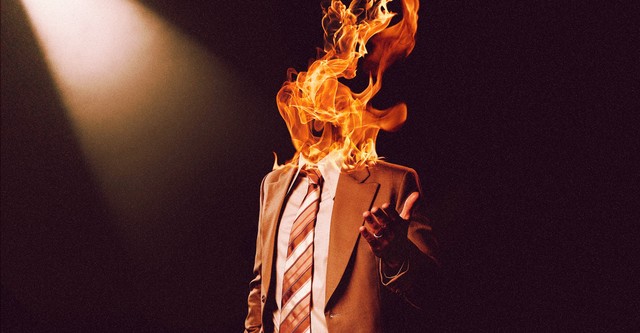


One reason you don’t see as many analog horror movies as you might think is the effort it takes to replicate the look and feel of retro horror, but Late Night with the Devil is one of the genre's most convincing and believable entries.
Framed as unedited, never-before-seen footage of a late-night talk show’s Halloween episode, the film spends a lot of time establishing its setting before David Dastmalchian’s Jack Delroy steps on set. We learn about his backstory, the history of his fictional show, and see footage that could have been taken directly from a VHS recording in the ‘70s. When we finally reach the fated broadcast, the grainy quality only sells how unpredictable the night is, with everyone’s reaction to the horror in front of them feeling genuine and authentic, as if this were Hell House LLC (2015). It’s an ensemble piece, but it’s really Dastmalchian’s show, and it's a great reminder that he’s a wonderful actor desperately deserving more mainstream attention. Late Night with the Devil isn’t just a great analog horror movie—it’s one of the best horror movies of the 2020s.








One of the progenitors of analog horror on the internet is undeniably creepypastas. If you’ve been online since the early 2010s, then you’ve probably heard of internet horror stories like Ben Drowned, Jeff the Killer, and Petscop, just to name a few. Rumors have power in creepypastas and analog horror, which is what makes We’re All Going to the World’s Fair such a strange watch.
For the most part, the film is shot through a static internet webcam, as we watch a young teenage girl go through a potential mental breakdown as she seeks to travel to another plane of existence, though it could also be her attempting an internet challenge for social clout. It’s never exactly clear, but We’re All Going to the World’s Fair doesn’t shy away from its found-footage roots, at times looking like a more psychedelically demented take on Host (2020). You’re constantly questioning what’s going on and unsure where the film is going in its 86-minute runtime. This is a horror movie for the internet age, and while it may not be an analog horror film in the traditional sense, thematically, it fits perfectly.




In a lot of ways, WNUF Halloween Special is a spiritual successor to Ghostwatch. Both center on a TV show host trying to explore paranormal phenomena to gain notoriety, but while Ghostwatch had the backing and budget of the BBC, WNUF Halloween Special had nothing and still managed to deliver a great piece of analog horror.
The film allegedly had a budget of $1,500, and it used every last cent to ensure WNUF Halloween Special felt like a lost videotape from the ‘80s. It has all of the hallmarks of an analog horror film—grainy video quality, stilted performances, low-budget commercials—but never before have they been as faithfully recreated as they are here. Shows like Stranger Things (2016) claim to be love letters to the 1980s, but WNUF Halloween Special is the closest and most faithful any film has ever come to recapturing that era. Ask any person from Gen X, and they’ll tell you that WNUF Halloween Special is a spot-on recreation of that most bodacious of decades. It’s not exactly a scary movie; in fact, it’s pretty damn funny, with enough ‘80s cheese to have a good laugh with the family when Halloween rolls around, but that’s exactly what makes this film so charming.


