Most People Miss The Saddest Part Of 'Whiplash's Ending

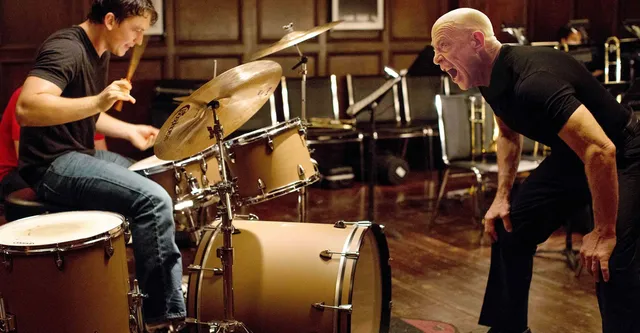
Whiplash (2014) is a prickly but unforgettable music drama that has a much sadder ending than most audiences give it credit for. The film stars Miles Teller as an aspiring jazz musician who falls under the brutal tutelage of the legendary music teacher, Terence Fletcher. The film is deeply focused on Andrew’s mental state and growing obsession to match Fletcher’s rigorous training, albeit at the cost of the rest of his connections and social life.
It all builds to a powerful ending where Andrew stands up to Fletcher on his own terms, with both of their pursuit of perfection feeding into one another. It’s a moment of unity for the pair that feels justifiably complicated given their dynamic the rest of the film. However, there’s one aspect of the ending, focused on Andrew’s father, Jim, that gives it a much more somber touch. In fact, it’s the underlining of the film’s thematic message about the nature—and cost—of perfection.
'Whiplash's Ending Is Uplifting and Sad at the Same Time

Whiplash's finale plays out against the backdrop of a JVC Jazz Festival. As revenge for exposing his aggressive teaching methods and getting him fired from his position at Shaffer, Fletcher ensures that Andrew is humiliated on stage by recruiting him to play drums for his show, only to reveal he gave him the wrong song. However, despite his father's efforts to help him, Andrew refuses to take this lying down. Returning to the stage, Andrew delivers a tremendous performance that Fletcher gradually accepts and embraces, conducting him and even sharing an acknowledgment of respect and passion that hadn't existed before. It's a strangely uplifting moment for the film, a way for Andrew to finally achieve the perfection he'd been striving for all film under Fletcher's tutelage.
However, the movie underscores the bittersweetness of the beat with Andrew's father. Jim has spent the entire film offering gentle support to his son, playing a key role in turning Andrew against Fletcher when he discovered his teaching methods. During the finale, Jim can be seen watching Andrew and Fletcher from the hallway, clearly impressed by his son’s talent. However, as the song goes on, Jim’s smile fades, and his expression becomes one of almost somber awe. He finally recognizes his son’s art as a perfectionist’s take, but it’s clear that he isn’t overjoyed. If anything, this moment underscores the unshakable distance that has developed between them.
Andrew's Dad Is Key to the 'Whiplash' Finale

Jim is depicted throughout Whiplash as one of Andrew’s only emotional connections. In direct contrast to Fletcher’s high standards and casual abuse, Jim is soft-hearted and openly vulnerable. While he relies on his father in some regards, there’s no drive to earn his respect the same way Andrew seeks Fletcher’s. Jim represents a more mundane but arguably happy existence, with the film teasing out his own thwarted ambitions to be an author, only to embrace being a high school teacher and family man.
Despite his efforts to get through to his son about the movie and recognize that his obsession with becoming perfect is becoming self-destructive, Andrew refuses to step away. This gives his final awe at his son an underlying sadness to it. He finally sees the work that Andrew has put in, witnessing him going all out and usurping control of the stage from Fletcher. The film emphasizes the distance between Jim and Andrew, placing the former almost in another world from his son. Jim’s awe isn’t just a man being moved by his son’s talents but also recognizing that he may have lost him forever. Given the way Whiplash lets Andrew and Fletcher gain a happy ending by finally playing together to deliver something “great,” this final look from Jim underscores the true thematic meaning of the film.
Whiplash Is All About the Price of Perfection

The underlying focus of Whiplash is the pursuit of perfection and the price it exacts on a person. Andrew just wants to be one of the greats, with a mix of passion, skill, and talent getting him on Fletcher’s radar. However, Fletcher’s training inspires Andrew not just to push himself physically but to alter his perspective on the wider world. It’s a mindset that feels obsessive at times, excusing abuse in the name of results. However, this kind of fixation leaves Andrew increasingly isolated.
Andrew doesn’t make friends in the jazz class, gradually seeing them as rivals and pawns in Fletcher’s mind games. He loses his girlfriend, grows distant with his family, and becomes desperate to the point of self-destruction. Jim represents a way back from the obsession, his last remaining tether to a normal life. However, Andrew doesn’t want that. As he condescendingly tells his family earlier in the film, he’d rather die in his 30s as a great than live a long, comfortable, unnoticed life. In that final moment of Whiplash, Andrew has achieved greatness with Fletcher, and Jim seems to recognize that his son is truly on that grim path he predicted for himself. It all gives Whiplash’s climax a really understated but painfully bittersweet touch that helps color the coda of the film.