'Looper' Timeline Explained: How The Movie's Time Travel Actually Works

Looper (2012) is a slick sci-fi noir movie that uses time travel to do more than just create new timelines. The film introduces a near-future where humanity has invented time travel, leading criminal organizations to hire people who could utilize the tech to cover up crimes. This includes “Loopers,” people who dispose of people (and eventually themselves) who are sent back in time.
The film’s primary Looper, Joseph Gordon-Levitt’s Joe, is dealt a really big complication when his older self (played by Bruce Willis) escapes his death, setting off a series of bombastic shootouts and timeline changes. The exact nature of time-travel causality in this film differs from other movies, so it’s worth recognizing all the timeline changes and how they come about. Beyond that, the sci-fi film uses time travel as a powerful moral metaphor, giving Rian Johnson’s sci-fi flick a deeper meaning.
Looper's Multiple Timelines, Explained

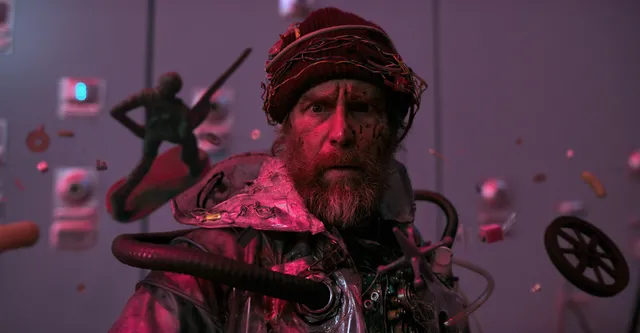
Instead of using the kind of splintering multiverse featured in the Marvel Cinematic Universe, Rick and Morty (2013), or Everything Everywhere All at Once (2022), Looper uses a singular timeline that can be directly impacted and changed. Over the course of the film, there are several tweaks to the timeline that change the world around it. They all start in the base reality where time travel has been invented and used by powerful global syndicates to hide their crimes. To showcase the effects of changing the past, the film features the inglorious fate of Seth, revealing that mutilating the modern-day Looper will morph Old Seth's body to reflect these retroactive changes. If something happened in the past, it all of a sudden takes effect in the future.
The brunt of the plot takes place in a new timeline created by the older version of Joe as he escapes his death at the hands of his younger self. In the original progression of events, Joe closed his loop and traveled the world, eventually settling down with a wife. However, the crime lord known as the Rainmaker came hunting down the surviving Loopers, capturing Joe and getting his wife killed in the crossfire. Joe was able to manipulate events to save his own life when sent to the past, leading to a new timeline where he takes out the Looper organization and hunts down Cid—the Rainmaker as a child. Young Joe realizes that it’s the death of Cid’s mother that seems to be a key element of the Rainmaker’s origins, so he kills himself to stop Old Joe from killing her. This sets up an open future and a possible timeline where the Rainmaker never comes to be, where the Loopers organization has been damaged, and where Joe’s wife never met him (and died because of that connection). That open-ended nature of the final timeline is key to the thematic bedrock of the film.
'Looper's Entire Morality Is Rooted in Its Time Travel

Looper is a cool time-travel action movie on a surface level, but it’s also a very firm morality play about someone recognizing fate isn’t predetermined. Joe's perspective on life is reflective of the way Loopers ensure the timeline works on a predetermined path. He and almost everyone in his orbit take part in a loop of death and destruction, hurt people causing more pain. This cycle can be driven by greed, apathy, or even righteous fury, but it always causes more violence. Joe’s entire arc in the film, especially after forming a bond with Sara and realizing how dangerous Cid could become, is rooted in recognizing that the loop can be broken. Joe sees the other side of potential in Cid, sparing the child that his older self is slaughtering his way through the past to get.
Efforts to convince Old Joe may fall flat, leaving Young Joe to realize that he can still end the cycle by removing himself from it, literally. By erasing his embittered older self, Joe gives someone else a chance at life instead of taking it away from them. That ability, and having the resolve to do it, is the key to making the world a better place instead of perpetuating a fresh cycle of non-stop violence. Looper’s morality is threaded through its time-travel, where people who have accepted the brutality of their lives are hired to ensure the cycle they’re trapped in continues. Only by breaking the chain—even if it comes with a sacrifice—can you actually change the world (and the timeline) instead of just tweaking the cycle of violence to suit your desires. It gives Looper a quietly emotional anchor that expands its emotional depth.