How To Watch ‘Jojo’s Bizarre Adventure’ In Order

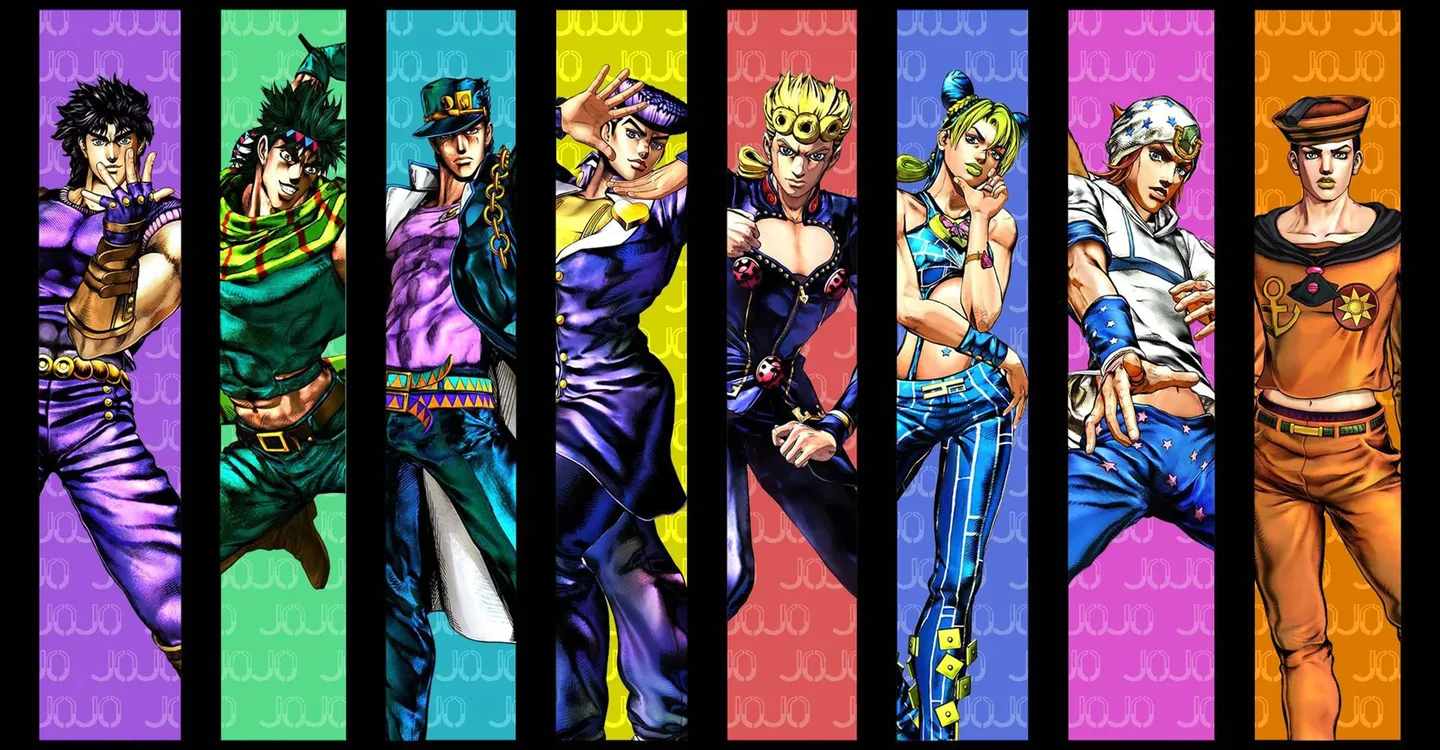
Few manga can claim to be as influential in the world of anime as Jojo’s Bizarre Adventure (2012). Originally published in 1987, Hirohiko Araki’s generation and dimension-spanning adventure of the Joestar family has become an iconic part of the anime community. Its Stand-based power system has influenced countless action anime; its sheer presence in online culture is impossible to ignore, and the millions of manga volumes sold have kept the series alive to this day. It’s undeniably strange, but those who gel with its certain blend of weirdness are consistently treated to some truly creative and compelling scenes.
But keeping track of Jojo’s Bizarre Adventure is no small feat. The series is divided into nine parts, each of which tells its own somewhat self-contained story. As of now, six of the nine parts have been adapted, and with part seven, Steel Ball Run (2026), on the horizon, now is the perfect time to start watching the series over on Crunchyroll and Netflix. But if you have no idea where and how to start, here’s what you need to know and what each part is like, in order to have a smooth watching experience.
Part 1: Phantom Blood (2012)
Episodes 1 - 9
It’s easy to think of the first part of Jojo’s Bizarre Adventure, Phantom Blood, as weak, given how the series would evolve. However, what makes Phantom Blood’s nine episodes such a fun watch purely comes from the show’s two leads, Jonathan Joestar and Dio Brando. Jonathan is your perfectly pure goodie-two-shoes, while Dio… well, he’s introduced by kicking a puppy, and he only becomes more vile from there.
The first half of Phantom Blood centers on the dynamics between the two adopted siblings, and seeing them both psychologically outmaneuver one another is entertaining enough, even before the introduction of vampirism and the light-based energy system that is Hamon. The plot is simple, but that simplicity helps this arc feel classic in all the right ways. The pacing and plot are easy to understand, and at times are reminiscent of The Castle of Cagliostro (1979) while mixing in dark and foreboding aesthetics that would be right at home in Dracula (1931). While it doesn’t quite capture the same sense of oddness that would define later seasons, the character drama and brevity help make Phantom Blood a great weekend watch and generally a great introduction for anyone looking to get into anime.
Part 2: Battle Tendency (2012)
Episodes 10 - 26
One aspect that separates Jojo’s Bizarre Adventure from its contemporaries is how each part centers on another member of the Joestar family. In the case of Battle Tendency, it focuses on Jonathan’s grandson, Joseph Joestar, and continues many of the ideas and plot threads of Phantom Blood.
Concepts from part one are still present, like the use of Hamon, but plenty of new and interesting concepts are toyed with in Battle Tendency, like an ancient race of superhumans bent on conquering humanity. With Joseph traveling across the planet from New York to Mexico to the mountains of Switzerland, it makes this part feel like a globetrotting adventure cut from the same cloth as Raiders of the Lost Ark (1981) and other pulp action serials. There’s a sense of logic to Battle Tendency that’s easy to follow, and while it can still be nonsensical, it hasn’t gone quite so far into incomprehensible directions that later parts would flaunt. Also, thanks to his charming and cocky attitude, Joseph is one of the most delightful and personable protagonists the series has ever seen, boldly proclaiming victory through wit and ingenuity. Battle Tendency is easily the most underrated part of Jojo’s Bizarre Adventure, and if you want a confident and charming lead, Joseph is your man.
Part 3: Stardust Crusaders (2014)
JoJo's Bizarre Adventure: Stardust Crusaders
JoJo's Bizarre Adventure: Stardust Crusaders - Egypt Arc
To many longtime Jojo fans, Stardust Crusaders is the part where the series truly comes into its own. Gone are the somewhat traditional fights, light supernatural elements, and Hamon, and now the fights are mindbendingly convoluted thanks to the introductions of Stands.
Stands bestow their wielder with powerful abilities that range from being simple, like the ability to control fire, to straight-up impossible. Our heroes, led by Joseph’s grandson Jotaro, fight dream-invading babies, murderous puppets, gamblers that can steal your souls, and perverted gorillas with the power to control ships. Does it make sense? Rarely, but Jotaro, Joseph, and their allies will do whatever it takes to reach Egypt and defeat the seemingly resurrected Dio.
What helps elevate Stardust Crusaders is how all of the fights are a perfect blend of melodrama and fight-pumping badassery. Like Kenshiro from Fist of the North Star (1984), Jotaro is a stoic badass who lets his fists and his Stand, Star Platinum, do the talking. There’s so much testosterone in each of the 48 episodes that it makes Stardust Crusaders a manly anime for manly men. It can run a bit long in the tooth, especially in the show’s second half, but if you’re looking for an intercontinental road trip of an anime for the boys, Stardust Crusaders more than delivers.
Part 4: Diamond Is Unbreakable (2016)
Coming off of Stardust Crusaders, Diamond Is Unbreakable may give you tonal whiplash. Gone is the subdued color palette, musclebound adventurers, and a barrage of heinous villains of the week; instead, Diamond is Unbreakable is bright with more realistically depicted people living their somewhat ordinary lives.
Diamond is Unbreakable follows Jotaro’s uncle, Josuke, and the life he lives in the small, sleepy Japanese town of Morioh. ‘Quirky’ would be the best way to describe Diamond Is Unbreakable as the season, for the most part, focuses on one-off episodes with new and eccentric Stand wielders. The show undeniably changes a lot of the eccentricity of Twin Peaks (1990), but presents it as a colorful summer vacation. Not everything is all sunshine and roses, though, as part four eventually becomes a murder-mystery about a serial killer lurking in the shadows of Morioh, featuring one of the most compelling antagonists in the series. They’re thankfully complemented by their interactions with one of the most extensive and likable supporting casts in the series, which helps to make Diamond is Unbreakable a lighthearted yet surreal take on Jojo’s Bizarre Adventure.
Part 5: Golden Wind (2018)
While most of the seasons of the show tend to tie into the larger exploits of the Joestar family, Golden Wind is unique in that it’s a very standalone season. While references are made to earlier seasons, because of its Italian setting and entirely new cast of characters, it helps to make Golden Wind a solid jumping-on point for newcomers.
Golden Wind is more tightly focused, as part five is set entirely around Italy. Not only that, but all of the characters in Golden Wind, including the lead, Giorno Giovana, are mafioso, which allows the actions scenes to be far more brutal. There are genuine stakes this season, and while it may start with a core cast of characters, it won’t be long until those numbers whittle down. But what helps make Golden Wind stand apart from the rest of the other parts is its sense of style. In a lot of ways, this is Jojo’s Bizarre Adventure at its sexiest, with plenty of pretty boys that push the series’ homoeroticism to its breaking point and then some. The mafia drama may be reminiscent of Goodfellas (1990) and The Godfather (1972), and those looking for a slick crime drama will definitely find that here, but you’ll also find Golden Wind elevates the series’ pageantry to new levels.
Part 6: Stone Ocean (2021)
Following escapes in Egypt, Japan, and Italy, Stone Ocean takes the series to its most fantastical and weirdest setting yet: Florida! Stone Ocean stands apart from the rest of the series since it takes place almost entirely in one location, the Green Dolphin Street Prison, aka, “The Aquarium.” In it, Jolyne Kujo, Jotaro’s daughter, is not only trying to save her father after an attack by a mysterious Stand, but also to escape the Aquarium and discover the truth as to why she was framed for a crime she didn’t commit.
The dramatic heights are definitely reminiscent of The Shawshank Redemption (1994), and this season contains some of the most imaginative Stands the series has ever seen, as well as an almost entirely female cast of leads. Outside of Jolyne, these ladies may not be as interesting as earlier side characters, and the middle part of the season, like Stardust Crusaders, tends to drag a bit despite only being 38 episodes. Still, Stone Ocean is by far the most unconventional part of the series yet, and perfect for people who have grown tired of the standard Shonen tropes.
Part 7: Steel Ball Run (2026)
Parts 1-6 of Jojo's Bizarre Adventure all follow a single continuity, but Steel Ball Run serves as a soft reboot. It remixes iconography and character names in new and interesting ways, creating a season that has become beloved within the fandom for how it transcends beyond the tropes that the series has established up to this point.
Steel Ball Run is about a cross-country race from San Diego to New York City, with the winner claiming a cool $50 million. There’s plenty of adrenaline as the racers begin to take each other out, and given the stakes, some of the violence is especially gnarly and brutal. Even if Steel Ball Run is a blatant homage to The Cannonball Run (1981), there’s a lot of nuance to this part. Previously, our heroes and villains were pretty blatant with very little room for ambiguity, but here, they’re all layered in a way that makes you question who you should root for and who deserves to win the race. It’s by far the most approachable entry in the series for newcomers, so if you’re ready to witness the greatest race in American history, be ready for Steel Ball Run.














Bundle HD

Bundle HD
Bundle HD

Bundle HD