

'Fire Country' And 6 Other Procedurals That Spawned Multiple Spin-Offs

Procedurals have been a staple on TV for a long time. Their formula—usually, a case of the week that is resolved with every episode—creates a watchable pattern. The consistency and frequency of said shows produce a loyal audience, and the characters usually stay on those shows for seasons of time, which means viewers spend years of their lives alongside them. Then, after great success, these procedural shows eventually spawn spin-off series, enriching a shared universe of characters with interconnected lives.
Two of the most famous and longest-running examples are Law & Order (1990) and NCIS (2005). All of these shows interact with and lean on each other in various capacities. Some are more dependent than others. Nevertheless, the sheer volume represents the popularity of a good procedural TV show and its spin-off series. You can watch the following shows on Hulu, Paramount+, and more.


Fire Country is the latest show to have multiple spin-off series. Set in the fictional town of Edgewater in Northern California, this procedural also feels like a small-town family drama like Virgin River (2019). It follows Bode Leone (Max Thieriot) as he seeks redemption through a prison release firefighting program with Cal Fire. His dad, Vince Leone (Billy Burke), is the Battalion Chief, and his mother, Sharon Leon (Diane Farr), is the Cal Fire Division Chief.
So, Fire Country is practically about a family business. Therein lies the problem when the show lost two of its main characters—Vince and firefighter & paramedic Gabriela Perez (Stephanie Arcila) after Season 3. It’s as though the show’s universe wants to supplement that loss with the expansion of a different side of the show’s family. In its fourth season, Fire Country launched Sheriff Country (2025). It’s set in the same town but follows Sharon’s stepsister and sheriff Mickey Fox (Morena Baccarin). Now, CBS seems to be closing in on a medical drama spin-off for Edgewater. Only time will tell what kind of relationship it draws back to Fire Country.








Law & Order has seven spin-off series, with its latest being Law & Order: Organized Crime (2021). Its lead is Detective Elliot Stabler (Christopher Meloni), the former partner (not romantically yet, somehow) of Captain Olivia Benson (Mariska Hargitay) and is a spin-off of Law & Order: Special Victims Unit (1999), which itself is a spin-off. Those shows are the ones most dependent on each other, with the characters interacting quite frequently.
As this procedural franchise has grown, so has its geographical reach with Law & Order: UK (2009) and Law & Order: LA (2010). Most recently, the franchise expanded by taking the premise of one of its longest-running spin-offs, Law & Order: Criminal Intent (2001), outside of New York City, and Law & Order Toronto: Criminal Intent (2022) was born. The Law & Order franchise has been around long enough to experiment with its formula, creating the anthology series Law & Order: True Crime (2017). However, that one was short-lived, with just one season, suggesting that audiences prefer Law & Order to do what it does best.









Bundle HD

Bundle HD
Bundle HD

Bundle HD

Bundle HD

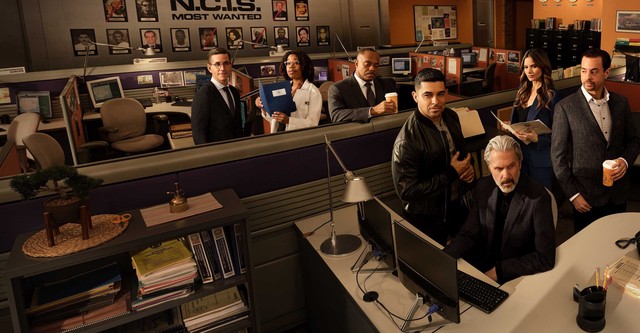
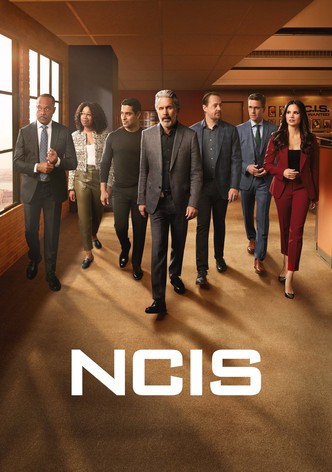
The NCIS universe is just as interwoven, with spin-offs going back in time with NCIS: Origins (2024) or extending to streaming in NCIS: Tony & Ziva (2025). Those are only two of the six NCIS spin-off series. A seventh series is currently in the works and set to premiere in CBS’s Fall 2026 primetime schedule. That’s right—the NCIS universe is expanding once again with NCIS: New York. Reflecting that intricately connected universe, it finds its lead in NCIS agent Sam Hanna (LL Cool J), who starred in another spin-off, NCIS: Los Angeles (2009).
It gets even better because NCIS: New York’s co-lead is played by Scott Caan, who starred in the procedural Hawaii Five-0 (2010). There’s a whole ecosystem of procedural TV out there! Regardless, the NCIS shows can be watched separately. My personal favorites are NCIS: Los Angeles, NCIS: Hawai’i (2021), and NCIS: Sydney (2023)—in that order. Even so, the smaller crossovers and the rarer, larger ones pay off much better if you commit to the entire franchise.







Bundle HD
Bundle HD
Bundle HD
Bundle HD


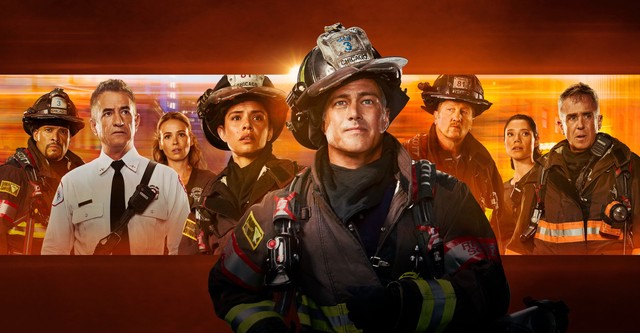

Just two years into its own run, Chicago Fire started such a successful series of spin-offs that the line-up is affectionately known as One Chicago. First came Chicago P.D. (2014), quickly followed by Chicago Med (2015). The three shows follow the lives and work of first responders in Chicago. Together, they have a residence in NBC’s Wednesday night schedule. That kind of consistently blocked viewing makes me nostalgic for the days of TGIT with Grey’s Anatomy (2005), Scandal (2012), and How to Get Away with Murder (2014).
Admittedly, the cast turnover on these shows is becoming more and more frequent. There are some character exits that I’m still not over, like Chicago Fire’s Gabriela Dawson (Monica Raymund) and Chicago P.D.’s Hailey Upton (Tracy Spiridakos). However, they both have returned in some capacity since their exits, which makes saying goodbye to them all over again even tougher. These shows exist in a breathing universe, where characters leave, but they also come back. They also interact more frequently than any of the other spin-offs on this list.



The 9-1-1 universe’s crossovers are so few and far between. There’s only a handful among the three shows. In fairness, 9-1-1: Lone Star (2020), the first spin-off series, ended before there could be a three-show crossover. Also, in this interconnected universe’s defense, they’re much farther apart than the One Chicago shows. The original series follows first responders—mainly firefighters—in Los Angeles. 9-1-1: Lone Star is set in Austin, Texas, while the newest addition, 9-1-1: Nashville (2025), is set in Nashville, Tennessee.
Therefore, the shows are less intricately connected. The shared universe is tethered more through the premise itself. In that sense, the 9-1-1 shows are more unique in the landscape of procedurals and their spin-offs. It also offers a freer way to jump into the shows. It doesn’t feel like there’s all that much “homework” because each show stands on its own. Any rare crossover provides the necessary information to understand what’s happening without having to watch hundreds and hundreds of episodes to understand the characters’ interpersonal relationships.


Bundle HD
Bundle HD
Bundle HD
Bundle HD
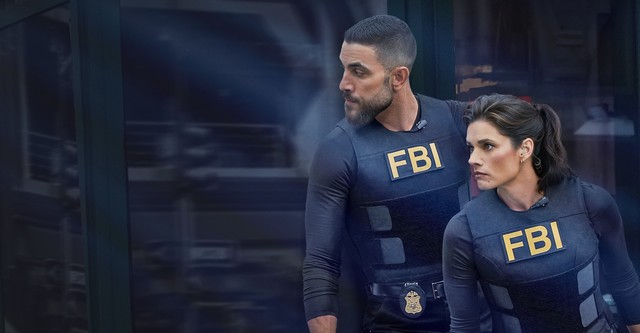

Dick Wolf’s Law & Order, the One Chicago shows, and the FBI shows all exist in the same shared universe, to a degree. It’s only that the FBI shows have dwindled as of last year, and then spawned in a new direction this year. The mothership series that follows the team at the New York office of the Federal Bureau of Investigation is still going strong. Its cast hasn’t experienced all that much turnover, which is fairly impressive, as it’s currently airing its eighth season. I find its strongest dynamic to be its leads, Special Agent Maggie Bell (Missy Peregrym) and her partner, Special Agent Omar Adom “OA” Zidan (Zeeko Zaki).
It’s also a vote of confidence in that series that CBS has renewed FBI through its ninth season. However, that choice makes it all the stranger that the network has condensed the show’s universe. It expanded with FBI: Most Wanted (2020), and shortly after, it launched FBI: International (2021). The former was a grittier, more Criminal Minds-esque series that was geographically close to the original series. Meanwhile, the latter broadened the shows’ reach with impressive cinematography and Europe-based threats.
FBI: International’s cast becomes interesting in Season 4, when Jesse Lee Soffer joins as the new lead, Supervisory Special Agent Wesley “Wes” Mitchell. He also played Jay Halstead in Chicago P.D. So, he’s just one of a few people playing different characters in an interconnected universe. Jay’s brother, Will, is played by Nick Gehlfuss on Chicago Med, but he stars as Bill Goodman, an FBI agent, opposite the CIA officer Colin Glass (Tom Ellis) in the new FBI spin-off series, CIA (2026). These universes are tangled webs if you really want to keep up with them.

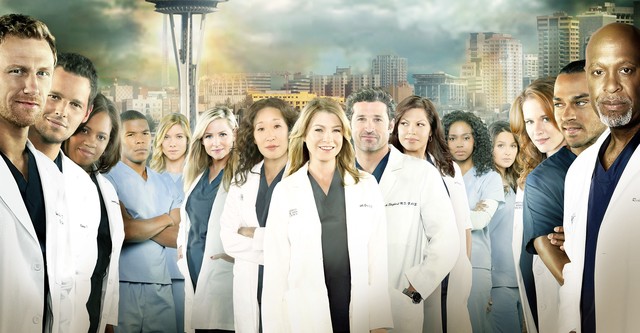
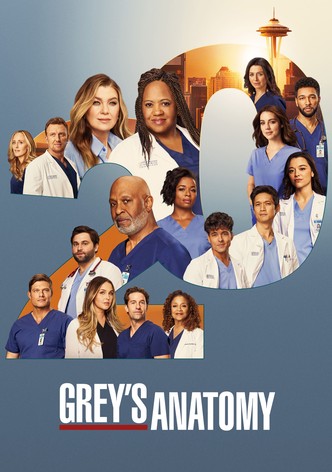
With more than 20 seasons to its name, Grey’s Anatomy has grown with evolving casts of characters and the evolution of medicine. It also expanded its world with the Los Angeles-based Private Practice (2007). That series follows the iconic Dr. Addison Forbes Montgomery (Kate Walsh) to a smaller practice in California, exploring medical cases through a more ethical lens. There are a few crossovers between the two shows, but not so many that either is unwatchable without the other. It ran for six seasons and quickly became one of my favorite shows of all time. It also introduces Dr. Amelia Shepherd (Caterina Scorsone), who has been a main character on Grey’s Anatomy since Private Practice ended.
As the longest-running medical drama on TV, Grey’s Anatomy has not one but two spin-offs. The second was Station 19 (2018), which followed the lives of a group of firefighters at a nearby station. It brought Ben Warren (Jason Winston George) from Grey’s Anatomy over as a main character, and later added Dr. Carina DeLuca (Stefania Spampinato) as a series regular.
Given how close the two series were, there were more frequent crossovers between Station 19 and the original series. The two shows even built a supportive relationship between their respective leads, Captain Andy Herrera (Jaina Lee Ortiz) and Dr. Meredith Grey (Ellen Pompeo). As someone who likes some of the conventions of network TV, I also enjoy that both of the shows have backdoor pilots on Grey’s Anatomy to hook potential audiences, and that they did.
Bundle HD
Bundle HD
Bundle HD
Bundle HD


