AI Completely Changed This 2013 Movie's Ending & Opened Pandora's Box

AI has been creeping into our lives for a while. At first, it was auto-completing text messages. Then it was recommending things for you to watch, what you should read, and what to listen to next. Now it's everywhere. Even if you want nothing to do with it, you're still engaging with systems built on it. For creatives, especially writers, it's been frustrating in a very specific way.
There's now an underlying expectation that you need to prove your work is yours. Not refine or improve it. Just prove it wasn't generated by a thieving bot. Years spent learning structure, tone, and pacing have all been flattened into a backwards verification exercise. Because the default assumption points toward the machine, and the human is left to justify their ability.
What makes that harder to ignore is how little resistance there is from the people actually funding things like movies. Studios are shockingly open about exploring AI as a replacement for human talent. And from a purely commercial standpoint, the appeal is obvious. AI can pull from existing material and churn out something usable without the friction that comes with working with actual people.
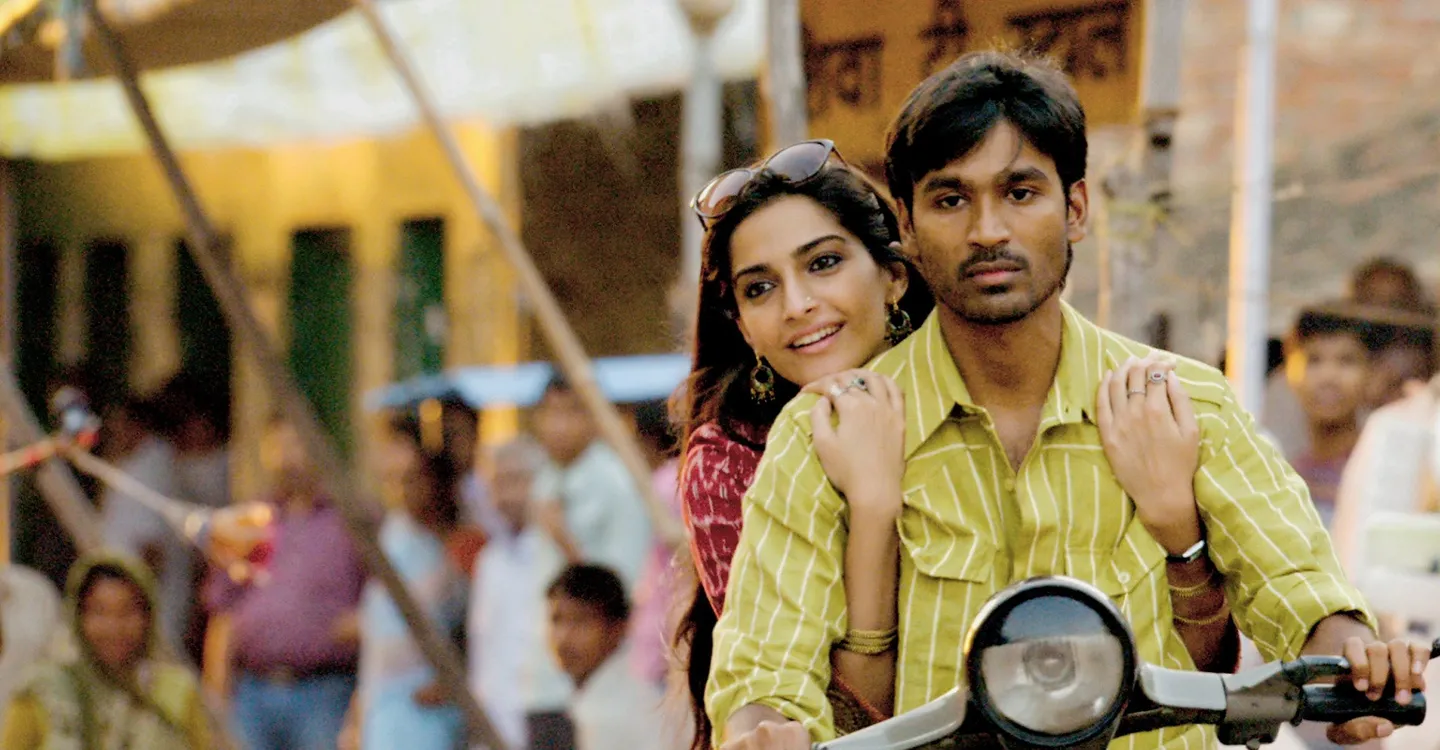
But that efficiency comes at a cost that's becoming harder to overlook. When movies are built by pulling from what already exists, you end up with something that resembles storytelling without any real feeling behind it. This isn't a theoretical concern. It's already playing out in real ways within the Indian film industry, specifically the 2013 romantic drama Raanjhanaa (streaming on Prime Video).
AI Ruined A Tragic Love Story
Directed by Aanand L. Rai, Raanjhanaa follows Kundan (Dhanush), a Hindu man whose lifelong fixation on Zoya (Sonam Kapoor), a Muslim woman, drives the story into increasingly uncomfortable territory. This isn't a conventional romance. Kundan's idea of love is persistent to the point of self-destruction, and the film doesn't try to gloss that over.
It allows his decisions to play out fully, even when they become difficult to watch. That's what gives the story substance. It doesn't correct itself to make the audience feel better. The original ending reflects. Kundan is assassinated, and the film closes on that loss without offering any emotional escape. It's abrupt, unresolved, and deliberately so.
But in 2025, the ending was changed. The studio, Eros International, released a new version of the movie. The final scenes were reconstructed using AI so that Kundan survives. So instead of dying, he wakes up in a hospital bed and smiles. The change might not seem like too much of a big deal, but it fundamentally alters the core message of the film.
Director Rai was openly frustrated about the change. "It was quite painful," he said via The Hollywood Reporter. "I was hurt that the ending of my film was being changed and that someone was playing with the emotions in my work." Dhanush was even more explicit, saying the alternate ending had "stripped the film of its very soul" and warning that AI alterations "threaten the integrity of storytelling."
The studio's response was equally clear, but from a completely different angle. As the financier and rights holder, it argued that it is the "legal author of the film" and therefore has the authority to modify it. Within the current structure of the Indian film industry, where many projects are work-for-hire and lack specific contractual protections, that argument holds up.
That's really the core issue. It isn't just about one film being altered. It's about an environment where it's possible to do that in the first place, because the people who made the work don't have the leverage to stop it. Audience reaction complicated things further. Many fans rejected the new ending, arguing that it misunderstood the entire point of the story. But some preferred the revised version.
The Cannes Film Festival Plans To Showcase Two AI Projects
In a really disappointing turn of events, the Cannes Film Festival plans to screen two movies that were created with the assistance of AI. The first one is called As Deep as the Grave. Directed by Coerte Voorhees, the film tells the real-life story of North America's first female archaeologist, Ann Axtell, who worked to uncover the region's first civilization.
Thanks to AI, Val Kilmer, who died in 2025, will appear in the film as Father Fintan, despite the fact that he never filmed his scenes. The actor had originally been cast in the role but was unable to participate due to severe health issues. Rather than recasting, the filmmakers used generative AI to construct his performance using archival material and assets provided by his family.
The decision was made with their approval, and according to Voorhees, "It was that support that gave me the confidence to say, 'Ok, let's do this,'" Voorhees told Variety. "Despite the fact some people might call it controversial, this is what Val wanted." Although the use of Kilmer's likeness has been given the green light by his family, it still introduces a complicated question.
If a performance can be assembled after the fact, using fragments and reconstruction, what exactly defines acting? A different version of that question appears in Critterz, an AI-assisted animated feature backed by AGC Studios. The film is being positioned as "human-led but AI-assisted," with writers and directors still said to be creating the story while AI handles large parts of the production.
That might sound reasonable in theory. But it's also the same logic that underpins a lot of what's already happening. Since the line between assistance and replacement isn't fixed, it can change based on what's efficient, what's scalable, and what the industry decides it can get away with. So eventually, the question stops being "can this be done" and becomes "who gets to decide how far it goes."