Return to Sci-Fi with Disclosure Day: 9 Times Steven Spielberg Wondered About Alien Life

In our current era of discord and uncertainty, who better than Steven Spielberg to return with the most earnest blockbuster in years?
His latest effort is a movie that suggests there might still be room for a bit of wonder and hope in our world and perhaps even a unifying moment. That’s basically the big picture gist of Disclosure Day, Spielberg’s first fully original science fiction movie in decades and the latest chapter in what has been a lifelong fascination with the possibilities of extra-terrestrial life.
The movie stars Emily Blunt and Josh O’Connor as, respectively, a weather reporter and a techie whistleblower who learn that their destinies are intertwined. This takes them on an action packed journey that will lead them first to each-other, and then to learning about alien life and the secrets of their own past.
All of this has got us thinking about just how many times Steven Spielberg has explored these ideas and themes in his long and impossibly influential career. In the list below, which I’ve arranged in chronological order, you’ll find movies and shows that you’re probably already thinking about as you read this, but you’ll also potentially find a few that you weren’t aware of — including projects that he only worked on adjacently, as well as a few deep cuts from his own career.
Read on for a bit more info on Steven Spielberg’s lifelong obsession with UFOs and alien life and his connection with these projects, and use the links to find out where you can stream them on services like AppleTV, Netflix, Prime Video and elsewhere.


Did Steven Spielberg begin his career at 17 with a movie about UFOs? Of course he did, and even if it’s now impossible to see it in full — and the director himself barely rates it — it still happened. He made it in high school, it cost 500 bucks and it was called Firelight.
As far as we know, the story is set in Arizona and follows a scientist and a so-called “UFO believer” as they investigate sightings of mysterious coloured lights in the night sky. Unfortunately, you won’t be able to catch up on all of this one, but it’s nice to know that this fascination has continued for more than sixty years now.
On a side note: if you’re interested in that particular time in his life and his artistic awakening, Spielberg explored it beautifully in his recent movie The Fabelmans.


After announcing himself with the TV movie Duel in 1971 and essentially inventing the summer blockbuster with Jaws in 1975, Spielberg finally got to make the wide canvas UFO movie he’d always wanted to — and he knocked it out of the park.
That movie, of course, was called Close Encounters of the Third Kind, and even though it was released into cinemas at the height of the Vietnam War and the Watergate scandal, it offered audiences a mostly benevolent port in the storm. Sure, the government in this one still tries to cover the whole thing up, but the visitors themselves are resolutely friendly. They even vibe with a little human synth music.






Five years after Close Encounters, Spielberg went one better with E.T. the Extra-Terrestrial, a movie that, if given the chance, you sense would be the one he'd take to a desert island. The story follows the arrival of an adorable alien in the suburbs of L.A. and the friendship that forms between him and a boy named Elliott. While on earth, he discovers the joys of John Wayne and beer and helps Elliottt and his pals to fly.
More recent movies like The Iron Giant and The Wild Robot have done great things with that blueprint, but the Spielberg original remains not only one of the greatest Hollywood classics but perhaps the most essential UFO movie of all time.









Spielberg has directed many of the biggest blockbusters of the last 50 years, but with his companies Amblin and DreamWorks he’s also produced a good few of them as well. This list includes the Back to the Future trilogy, the Gremlins movies and Poltergeist, but there are plenty of extraterrestrial specific stories in there, too.
The first major success of these was Men in Black, a movie that became the third highest-grosser that year after Spielberg’s The Lost World and a little film called Titanic. The story follows an agency not unlike the Colin Firth-led Wardex in Disclosure Day, except that in this Will Smith and Tommy Lee Jones-starring movie, the withholding of alien information from the public is played for good, solid laughs. Spielberg went on to act as executive producer on all three of the sequels — albeit to progressively diminishing returns.


In the early ‘00s, when Spielberg was deep in production on A.I. Artificial Intelligence, the director took the time to produce Taken, an acclaimed ten-episode miniseries on SyFy that boasts the first collaboration between Spielberg and Dakota Fanning, who was 8-years-old when the director cast her.
Taking place over five decades , the show follows two families in Roswell, New Mexico, who each had encounters with the aliens that were rumoured to have crashed there in the 1940s. If you saw Disclosure Day and are curious to explore more of the director’s fascination with that particular incident and time period, this is one you’ll want to check out.


A few years after Taken, Fanning rose to the occasion again when Spielberg cast her alongside Tom Cruise as the co-lead in his astonishing 2005 remake of War of the Worlds.
Unlike previous Spielberg UFO movies, the director’s adaptation of the century-old H.G. Wells classic drew more from the images and anxieties of what had happened in America on 9/11, resulting in an alien invasion movie that looked more like Bourne and felt astonishingly contemporary — at least in parts.
What you ultimately get is an uneven tale of human perseverance that starts with an incredible bang but ends on a bit of a whimper. Still, it's worth it for the bang.











Spielberg kind of continued on his bad guy alien kick for his next project, Indiana Jones and the Kingdom of the Crystal Skull — a movie that brought Harrison Ford’s devilishly handsome archeologist back for what later turned out to not be his last adventure.
Similar to earlier episodes in the franchise, the antagonists of Crystal Skull — a group of Soviets led by Cate Blanchet’s Irina Spalko — are obsessed with finding a relic that they believe will grant them supernatural powers: in this case a skull left by inter-dimensional beings. It’s probably a reach to call them evil (or even aliens) but it hardly matters — Spielberg was clearly just tickled by the idea that the lost city of El Dorado was not a man-made phenomenon but something else entirely...

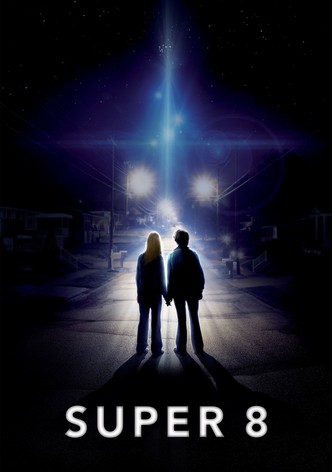
After Crystal Skull, Spielberg began a pre-Disclosure Day hiatus from alien narratives in his work — but he still found the time to produce a couple of extraterrestrial stories. The first of these was J. J. Abrams’ delightful Super 8, a movie that did for ‘80s Spielberg what Abrams’ Force Awakens would do for Star Wars six years later.
Indeed, similar to the likes of Stranger Things, you could basically squint your eyes with this one and pretend you were watching a Spielberg movie from that era: there’s the 1950s setting, the Goonies-like crew of precocious kids, and the government cover-up of something otherworldly. Hell, there’s even a Fanning sister in it.


Pre-Disclosure Day, Spielberg's last brush with near-earth mysteries was Falling Skies, a post-apocalyptic sci-fi show that basically split the difference between War of the Worlds and The Walking Dead. This one came via showrunner Robert Rodat, who wrote the script for Spielberg’s WWII classic Saving Private Ryan.
The Pitt’s Noah Wyle stars as a professor-turned-militia-leader on a post-alien-invasion Earth. The action-packed drama, which ultimately ran for five seasons, is now available in full on Netflix for your viewing pleasure — so if you're looking for a bit of malevolent alien action after all that Disclosure Day positivity, this should be up your alley.