Disclosure Day's Ending, Explained: What Do the Aliens Want From Us?

In Steven Spielberg's Disclosure Day, Emily Blunt and Josh O’Connor play two strangers who learn that their destinies, and those of some extra-terrestrial lifeforms, have long been intertwined.
The movie marks not only Spielberg’s long-awaited return to science fiction, a full eight years after Ready Player One, but it’s also his first story to reference aliens since Kingdom of the Crystal Skull (2018) and arguably his first to do so (originally) since E.T. the Extra-Terrestrial.
Given all that, you won’t be shocked to hear that Disclosure Day is full of surprises and that the article you are about to read contains major spoilers concerning what happens in the movie, especially in its final act. If you’ve seen the movie, however, and are ready to look a little bit closer at those remarkable sequences, read on to find out more, and then use the guide to find out where to watch some of the titles we mention on services like AppleTV, Netflix, Prime Video and elsewhere.
What Happens to Disclosure Day's Main Characters in the Reconstructed Family Home

The central narrative of Spielberg’s new movie follows Margaret Fairchild (Blunt), a Kansas City weather reporter who has a strange encounter with a bird at her breakfast table. She comes away from the experience with the ability not only to speak seemingly every language but also to look into people’s memories, perhaps even their souls.
Meanwhile, a tech wizard named Dr. Patrick Kellner (Josh O’Connor)—who spent the best part of a decade working for Wardex, a non-governmental agency run by Noah Scanlon (Colin Firth) that’s sole purpose is to keep evidence of alien life hidden from the public consciousness (like a less cool and friendly Men in Black)—goes on the run with his girlfriend Jane (Eve Hewson) and a backpack full of hard drives containing decades of evidence of alien activity on earth and in the skies. When Kellner and a group of his colleagues (led by Colman Domingo’s Hugo Wakefield) decide that the day to disclose (ahem) this information has arrived, all hell naturally breaks loose.
Throughout the movie, as Kellner is kept up to date via satellite phone calls, we continuously see snippets of what Wakefield is up to on what looks like the sound stage of a movie studio where an idyllic home is being constructed from scratch. At first glance, it looks a little like something from Nathan Fielder’s The Rehearsal. As it turns out, Wakefield (and indeed Spielberg) have something similar in mind.
In some lines of dialogue, we’re alerted to the fact that Fairchild had a traumatic experience as a kid that she has since buried in her memory, and Wakefield’s hope with the reconstructed home is to bring that memory back. By Act Three, when Fairchild and Kellner’s paths finally cross, they find themselves inside the house where they sit and, with the help of one of three identical (and seemingly multipurpose) handheld alien devices in the movie, retrace the steps of the fateful night when they were both visited by the interstellar beings—appearing in the animal forms that we’ve seen in the trailer and on the movie’s posters—and taken to their ship.
While there, we learn that the young Kellner was gifted with total fluency in mathematics. Fairchild, meanwhile, was given a kind of all-seeing third eye. Though unlike Kellner’s ability, which apparently flourished during university, Fairchild’s remained dormant until the encounter with the bird at the beginning of the movie.
The Climactic Broadcast—and What Happens Next

After discovering what's been happening to her for the last 24 hours and how it connected to that repressed childhood memory, Margaret fully embraces her role as both the hero of the movie and perhaps its saviour figure. This inspires her to take Kellner, Wakefield and their team to the local TV station where she works.
Upon arrival, she uses her new aura to convince her colleagues to broadcast the footage Kellner has been carrying with him instead of the daily news of an apparently imminent nuclear conflict in Korea—that has been simmering in the background of Spielberg's sci-fi plot. After arriving, and with Wardex’s agents in hot pursuit, Kellner gets to work uploading 70 years' worth of disclosed footage into the station’s system for their broadcasters to start editing for their feed.
Wardex then arrives to take out the power and the backup generators at the last second. But just when all hope looks lost, Jane arrives with the last alien device, allowing Margaret to power back up the system with a wave of her hand. At this point, the director delivers one of the most Spielbergian sequences I’ve seen perhaps this century as the images we’ve been waiting to see for the entire movie finally play: this includes everything from grainy handheld camera footage from the Roswell incident in the 1940s (which looks like something from a much earlier Spielberg movie) up to high definition footage from the cockpit of fighter jets as great ships miraculously appear from the clouds. Spielberg intercuts these images with weirdly moving sequences of news station reporters working in harmony and of a world caught dead in its tracks—the kind of collective moment of earnest wonder that Spielberg still does better than anyone.
After that, the director delivers his coup de grace: a wheelchair is brought in with some kind of egg-shaped device on top, which opens to reveal an elderly alien under a blanket—a bit like WWII-era F.D.R. The being gradually gets to its feet, walks to Fairchild and whispers something in her ear. At this point, she turns to the TV camera and to us, and simply says, “Listen,” as the screen goes black.
Throughout the movie, the background story has suggested that the world is barreling towards nuclear war, in which case Fairchild’s line could be seen as a teaser. However, Spielberg isn’t ending his movie with a cliffhanger as much as an earnest plea—a disarmingly heartfelt request from the 79-year-old filmmaker to everyone watching that simply asks that we show a bit more empathy to each other before it’s too late.
What to Watch After Disclosure Day

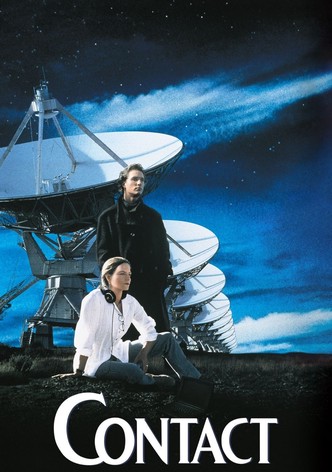
Naturally, your first port of call after watching Disclosure Day should be those early Spielberg classics, starting with Close Encounters of the Third Kind and E.T., before moving on to A.I.—basically, any of the ones where the aliens are benevolent and curious creatures. After that, you can line up some similar first contact movies, like Denis Villeneuve's Arrival, Robert Zemeckis’ Contact (which was written by the great Carl Sagan) and Ron Howard’s Cocoon. You can also, of course, simply start watching The X-Files.
If that’s all getting a little too optimistic for your tastes, there is no shortage of movies that explore the worst-case scenarios of aliens making it to our little blue dot—not least Spielberg’s post-9/11 reimagining of War of the Worlds or the Will Smith ‘90s classic Independence Day.
For something a little more cerebral and ground level, try M. Night Shyamalan's Signs, or for more of that mid-century Roswell energy, the recent indie gem The Vast of Night. For something a little trippier, you can definitely take Alex Garland’s adaptation of Jeff VanderMeer’s Annihilation or John Carpenter’s horror classic The Thing for a gooey spin. And for an example of an alien landing that brings out the worst in us, make sure to check out Neil Blomkamp’s awesome 2009 movie District 9.
And remember, keep watching the skies.