Every Live-Action Resident Evil Movie, Definitively Ranked

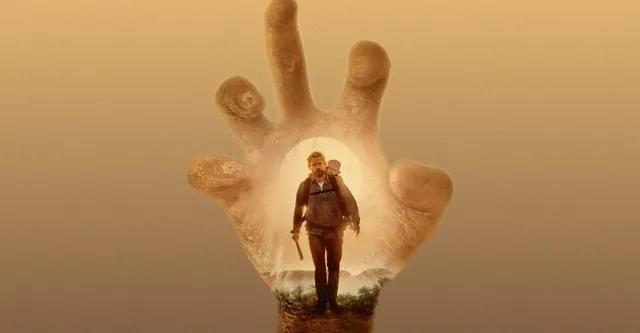
Zach Cregger’s Resident Evil is already being hailed as one of the best video game adaptations of all time, but where does it rank on our definitive list of live action Resident Evil movies?
That Cregger has apparently cracked the Resident Evil code should not be overlooked: this is, lest we forget, a franchise that movie producers and TV executives have been trying (and financially succeeding, if never in a totally satisfying way) to get their hands around for decades — basically ever since the first two PlayStation games were released in 1996 and 1998, introducing a whole new generation to the thrills and chills of the zombie genre in the process.
That newfound fascination only grew in the early ‘00s with the releases of 28 Days Later and the first of Paul W.S. Anderson’s six Resident Evil movies in 2002, which were swiftly followed by Zack Snyder’s Dawn of the Dead remake in 2004. Since then, the world has clung on to the zombie genre with a rictus grip. If you consider that there are now over 350 episodes in the Walking Dead expanded universe alone, Cregger’s 97-minute-long movie should really be nothing more than a modest footnote — but it actually feels quite significant.
But we digress. Of the eight movies live action movies in the RE franchise, some have naturally stood the test of time better than others, with a few even developing an unlikely fanbase amongst higher minded critics over the years after being roundly dismissed upon release. For the list below, which I've arranged in descending order, I watched every live action Resident Evil movie so far and enjoyed almost all of them. Read on to find out which ones are actually worth returning to and which one now sits on top of this bloody pile.


Resident Evil: Apocalypse, the second movie of the original Milla Jovovich run, lands in last place on our list for the simple fact that it has so few redeeming qualities. Paul W.S. Anderson wasn’t able to direct, so the job instead fell to Alexander Witt — an experienced Hollywood pro who nevertheless hadn’t actually directed before and wouldn’t attempt to again for the next 20 years.
It’s just so clear when watching it that it was obviously rushed into production after the surprise box-office haul of its predecessor. The plot (which takes the action to the streets of Raccoon City) seems to be drawn from the Resident Evil 2 computer game, but for some reason Jill Valentine (a playable character from the first game) is thrown into the mix. It also openly and quite cheaply lifts scenes from 28 Days Later, most glaringly Jovovich’s Alice waking up in an abandoned hospital.
On the plus side, we do get some remarkably overqualified casting in the form of Jared Harris (years before shows like Mad Men and Chernobyl made him into the actor we know and love) and future Game of Thrones star Iain Glen, who’s introduced as Cain, one of the series’ main antagonists. If you’re doing a watch through and need to do some laundry or send some emails, this is the hour and a half in which to do so.







Released four years after Resident Evil: Retribution (the longest gap in the series), Resident Evil: The Final Chapter deserves some recognition for managing to tie up all the bonkers plotlines of the Anderson/Jovovich years — though it frankly just hasn’t got a whole lot more to recommend it after that.
Retribution ended on a cool cliffhanger, with Alice entering a besieged White House as if in a cut scene from Call of Duty: Modern Warfare, but The Final Chapter failed to deliver on the goofy/epic potential of that moment, with Anderson bringing everything back to the Hive and Raccoon City instead.
Granted, this flashback setup is more or less what the MCU did with Avengers: Endgame, but with much more time and money and emotion and talent. If, however, you’ve made it this far in the series, you will probably get a little kick out of seeing stuff like that iconic laser hallway from the first movie again.




Outside of Anderson and Cregger, the only soul who’s been brave enough to tackle Resident Evil as writer and director is Johannes Roberts, an accomplished horror filmmaker (his new movie, Primate, was a lowkey blast) whose 2021 effort Welcome to Raccoon City was meant to kick start a whole new franchise — but, as we now know, it was dead on arrival.
For the movie — which, unlike some, does boast a start, middle and end — Roberts decided to drop the lore of the Anderson universe and focus on the first two games instead, bringing together Claire (played by Skins legend Kaya Scodelario), Jill, Chris, and Leon for the first time in what was essentially a kind of Assault on Precinct 13 style showdown.
Unfortunately, the movie ended up leaning too heavily on its not very good CGI and was quickly overshadowed by Zack Snyder’s far cooler and funnier Army of the Dead, which was released on Netflix the same year.


We edge into the “pretty decent” range of the Jovovich years with Resident Evil: Extinction, a Mad Max style romp through a post-apocalyptic wasteland that ends with an incredible showdown on the Ponte di Rialto; or, at the. very least, the Las Vegas version of it — which is kinda fitting for this franchise when you think about it.
Directed by Russell Mulcahy (a Hollywood hack of the highest order), Extinction has aged better than almost all of the movies of the Jovovich franchise because a lot of its effects were accomplished using miniatures (you can see the scale of them in this cool little featurette) and so still look pretty damn good.
It was also the first in the series to successfully bring a protagonist from the game, Claire Redfield (played by Ali Larter, of more recent Landman fame), into the mix, along with some relatively recognisable names like Oded Fehr (The Mummy) and R&B legend Ashanti.


Are we giving bonus points to Anderson for getting there first? Perhaps, but the original 2002 Resident Evil movie boasts ‘00s style and plenty of swagger, and its effects haven’t aged as badly as you’d think. Added to that, it’s also got Michelle Rodgriguez and Jason Isaacs — two actors who pretty much improve anything they’re in.
The first in the Jovovich series sees Alice wake up in a mansion with no memory before making her way into the Hive for the first time, only to find that the Red Queen (the facility’s A.I. defence system) has murdered everyone in an attempt to maintain the outbreak. Working with a group of commandos, Alice must try to escape before the Red Queen “contains” her, too.
The movie (which is basically a tight, haunted house thriller) was released around the same time that the Resident Evil Zero game hit shelves and, perhaps thanks to some halo effect, made a good chunk of change at the box office as a result — after which Jovovich and Anderson were pretty much on a roll. Along with the six incredibly successful RE movies they made together, the twosome also got married in 2009 and have since had three children — one of whom, Ever, played the young Nat Romanoff in Black Widow. Now that's what I call dynasty.




The second half of the Anderson run is when things really start cooking. We’ll get to Afterlife in a second, but Resident Evil: Retribution — a kind of batshit, knock-off Matrix movie that threw more ideas at the wall than it knew what to do with, but in a highly entertaining way — is almost as good.
The plot kicks off directly after the end of Afterlife and sees Alice, Wesker and co. form an unholy alliance in order to break into a top secret Umbrella facility in far East Russia where clones of Alice are apparently being made. Like all the best RE movies, the plot then becomes noticeably computer game-coded, with Alice having to fight her way through various simulated worlds (Moscow, New York, suburbia) in order to get to the Red Queen.
It’s admittedly bonkers stuff and barely makes sense, but the setup allows Anderson to be playful with the material, bringing back some old companions for cameos and chopping in some simulation dream sequences that feel like cut scenes from Lost.


The best movie of the Paul W.S. Anderson sextet is, by a hair, Resident Evil: Afterlife — the fourth in the series and also, not coincidentally, the one that balanced the lore of the franchise with the computer game better than all the others.
Afterlife begins with a scene in Tokyo but the guts of the movie plays out in an L.A. prison that’s become a temporary oasis from the hoards outside. Alice discovers it when flying by and lands on the roof, where she meets a new crew and encounters Chris Redfield (Wentworth Miller, bringing plenty of Prison Break rizz with him) for the first time. Naturally, the hoard finds a way in and an epic showdown ensues.
Hanging over the narrative is a rumoured safe haven called "Arcadia" — which is a bit of a dystopian trope, one you’ll recognise in everything from The Last of Us to Children of Men. Still, tropes are tropes for a reason and Anderson's use of it in Afterlife is what made his Resident Evil franchise finally feel panoramic and lived in.
The also made a frankly insane $300m at the box-office, which is probably closer to half a billion today. Not bad.


With the greatest respect to Anderson’s many under-appreciated years of service to the franchise, movies just don’t come much leaner and meaner than the latest Resident Evil — Zach Cregger’s gloriously entertaining 97-minute romp might be self aware to a fault, but it’s just so consistently funny, violent, unsentimental, and icky that it really doesn’t matter.
If you come to action or horror movies for thrills over lore, this one will probably end up in your top ten of the year, and it’s not short on little Easter eggs for long-term fans of the games, either. Man of the moment Austin Abrams stars as a hospital courier tasked with delivering some precious cargo into Raccoon City. Along the way, he meets increasingly grotesque monsters, gets bitten by a child, has a funny scene with Paul Walter Hauser, and ultimately has to find a way to get to get to the top of a big building before the world ends.
That’s basically it, and I wouldn’t change a thing.