2026's Resident Evil Ending, Explained - Does Bryan Survive, and Will There Be a Sequel?

After multiple wild attempts to translate the thrills of the zombie apocalypse video game into a movie, Zach Cregger’s Resident Evil has gone the other way around and produced one of the most entertaining game adaptations of all time.
It's mad to think that we’re just a little over a year since Cregger graduated to the big leagues with Weapons, a movie that banked ten times its budget at the box office, won an Oscar for Amy Madigan, got spoofed by Conan O’Brien and Scary Movie, and was — as all those things suggest — a bona fide cultural phenomenon. As a result, expectation levels for what Cregger might achieve with Resident Evil were set unusually high, but even with this quick turnaround, he’s delivered a remarkably lean, funny, gory and scary 97-minute thrill ride.
Let’s take a closer look at how this blood-soaked rollercoaster ends and weigh up the possibility of a Cregger-directed or produced sequel. Naturally, huge spoilers for the latest Resident Evil movie lie ahead.
What Happens in Zack Cregger’s Resident Evil

Imagine a back-to-basics relaunch of the game that takes you into Raccoon City on the night when the virus breaks out. Now imagine that the character you’re playing has zero weapons experience but is funny and brave, no matter how gross and gnarly everything gets around him. That’s basically what this movie does for a breathless hour and a half. We barely leave the protagonist's side, and the whole thing plays out more or less in real time.
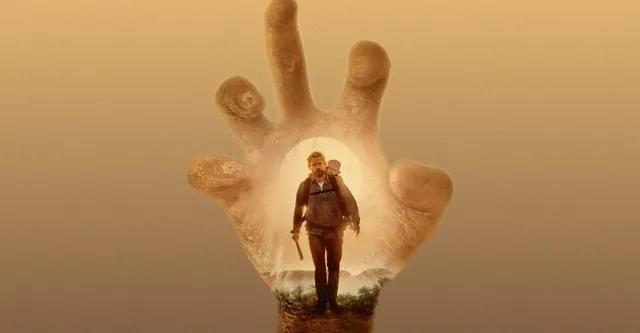
Austin Abrams (who, thanks to this and next month’s Whalefall, already looks like the breakout star of the second half of 2026) plays Bryan, a hospital organ courier who’s offered double pay to do a late-night delivery to Racoon City — which he agrees to instead of going to look after his pregnant girlfriend (as with most Cregger protagonists, he has a good dash of scumbaginess about him).
Along the way, he hits a woman in the snow who, of course, turns out to be a zombie. This leads to a funny altercation with a police officer, leading to a creepy farmhouse, then a creepy tunnel (where Bryan is bitten by a young girl), and later to a creepy sewer. And so forth and so on.
Like any good introductory sequence in a computer game, Bryan 'levels up' bit by bit, picking up new abilities and better weapons, although crucially without becoming particularly skilled at any one of them. After learning that the precious cargo he’s been carrying isn't an organ but the stabilising agent for the Umbrella Corporation’s cure to a virus it both created and unleashed, all roads lead to Raccoon General Hospital and a final boss showdown on the upper floors.
How Resident Evil (2026) Ends

While remaining doggedly tongue-in-cheek, Cregger’s movie increasingly resembles a computer game the longer it goes on (I expect we'll see a lot of think pieces on streaming's influence on contemporary movies).
This is especially true in the last act, which includes an elevator shaft fight that will be familiar to anyone who’s ever played a game like this (Bryan's options are so clearly drawn that you almost feel like pressing 'X' at times). After that whole ruckus, Bryan has to make his way through a particularly visceral maternity ward that appears (without getting too symbolic) like a grizzly representation of his own bad conscience.
Without getting too bogged down in all that, he just about makes it to the exit door on the other side of the room and onto a sky bridge that will take him to the lab where a cure is being developed. As he inches across the damaged walkway, he uses the last bullet in his pistol to shoot the mop that’s been holding the door behind him shut, sending a horde of creatures crashing down onto the B.O.W. (Bio-Organic Weapon, which, in case you aren't familiar with the games, is essentially a giant monster made up of various human limbs and bodies that it collects along the way) that’s been chasing him and growing since the original car crash.
Battered, bloody, and about to turn into a monster himself (from the girl's bite in the tunnel), Bryan hands the stabilising agent over to the lab's technicians (the chief of whom is played by Severance’s Zach Cherry), who immediately get to work finishing the cure. Mere seconds from its completion, Bryan finally turns into a B.O.W. himself and consumes the technicians one by one as his mind deteriorates. But he still has just enough consciousness left to plead for the cure while the rest of his body wreaks havoc. Eventually, it comes down to him and one final scientist. At the moment of truth, however, as Bryan’s last glimmer of humanity deserts him, B.O.W. Bryan cuts the technician's arm clean off, sending the cure down 28 floors and into likely oblivion.
As B.O.W. Bryan devours the rest of the scientist's body and lets out an almighty roar, the camera pulls back to show Raccoon City aflame—just as the credits roll.
Does Resident Evil (2026) Set Up a Sequel?

The basic answer to this is either 100% 'yes' or 100% 'no', depending on what you're into. What Cregger has given us is a story within the Resident Evil universe in which no canonical heroes appear, no human character we meet survives, and which ends on a gloriously apocalyptic whimper.
The movie has plenty of nods to creatures and objects and camera movements that will delight fans of the games (there was a collective cheer of recognition when Bryan opened a door to reveal an old typewriter), but there is barely anything in terms of lore or world-building going on here — which is, IMO, wonderfully refreshing.
We get the basic geography of where we are (full marks to Cregger's direction) and are of course reminded that the Umbrella Corporation has once again flown too close to the sun with its icky experiments. But it’s all presented in a funny, hubristic, and almost throwaway kind of fashion — it’s notable that nobody ever even says the word “zombies."
I would guess that Resident Evil (2026) will make a very hefty profit on its $75M budget (I’m definitely seeing at least one more time) and that plenty of overtures will be made to Cregger to get him to come back to make another one. However, with the way this movie plays out and the playfully doomy manner in which it ends, it feels like a one-and-done to me. There is naturally a chance that Cregger stays on as producer for a couple of sequels, like an anthology series, but I think he has enough on his plate at the moment and plenty of original ideas. After Weapons and this, he can basically do whatever he wants.
In terms of Cregger's immediate future, he is currently writing an Aunt Gladys-focused prequel to Weapons (titled Gladys) along with a sci-fi space movie called The Flood, which he will also direct. Both are penned for release in 2028. Exciting times.