Furious: How a Forgotten '80s Noir Film Inspired 2026's Best Crime Show

Elizabeth Meriwether’s Furious has been flying high on our streaming charts ever since the first few episodes dropped in late July.
However, I'd guess that most people watching will have never even heard of Black Widow: the slightly obscure 1987 noir that Meriwether’s hit show was based on.
It was definitely news to me, but I did manage to track the movie down on Prime Video, and I must say it's pretty damn good. Furious is also one of those adaptations where the things it has in common with the original are almost less interesting than the things Meriweather left out in the process of turning a largely forgotten semi-erotic thriller into the first major crime show of the post-Epstein era.
What is 1987's Black Widow?

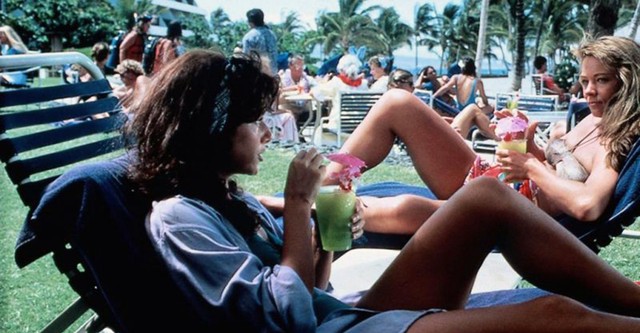
In basic terms, Black Widow is a late ‘80s thriller that feels like a little bit of a warm-up act for Silence of the Lambs. It stars an excellent Debra Winger as Alexandra Barnes, a U.S. Department of Justice agent who begins to suspect that a string of freak deaths involving wealthy men are actually connected through one seductive killer.
That killer, Catherine (played equally well by Theresa Russell), eventually invites Barnes into her orbit after the lawwoman goes undercover, posing as a tourist and following her to Hawaii, where Catherine is planning to marry and probably kill her next victim. Then, in true ‘80s fashion, Barnes accidentally falls in love with the man, while kind of becoming Catherine's friend.
'80s excess aside, it's a quality piece of work in general, with a screenplay written by Ronald Bass (who won his Oscar for Rain Man the following year), cinematography by the three-time Oscar winner Conrad Hall (Road to Perdition) and a score by the great Hollywood paranoia composer Michael Small (The Parallax View). Dennis Hopper, Diane Ladd and James Hong all appear in small roles. If you are fond of movies from this era, it is well worth seeking out.
The movie was also directed by Bob Rafelson, the New Hollywood pioneer who nurtured Jack Nicholson’s rise to fame in the early '70s with movies like The King of Marvin Gardens and Five Easy Pieces. After their fourth project together, Rafelson got into a physical altercation with an executive and didn’t work in Hollywood again for six years. Black Widow was set to be his big comeback, but it didn't quite knock the lights out at the box office, and most critics seemed to agree at the time that it was a bit of a missed opportunity.
Still, writing for the Chicago Sun Times, Roger Ebert spoke for many when he wrote, “Black Widow is an interesting movie struggling to escape from a fatal overload of commercial considerations.”
What Furious Keeps From Black Widow and What it Leaves Out

As much as I enjoyed the movie's style and swagger, Furious is on a different narrative level to Black Widow. Meriwether has not only brought the story kicking and screaming into the present day, but she’s also swapped the idyllic surrounds of the Pacific Ocean for some good old grimy New York streets. More significantly, she's ramped up Catherine's (Lola Petticrew) righteous anger while also turning the innocent rich guys into real villains.
The 1987 Catherine is still a sympathetic character, however, as well as a former sex worker, and as the women get closer, you can sense a solidarity growing between them that the film (which was written and directed by men) never quite knows what to do with — you sense that this is where Meriwether saw the potential for her modern retelling.
As such, there's no equivalent for Nora, Jay Easton, or Marshall, but there is a slightly hangdog colleague (like Danny, but without the romance) and a douchey boss (like Ed, but with what looks like a toupee and played by an unrecognisable Terry O’Quinn, from Lost).
The character who most closely resembles her 1987 counterpart is Alice Black (Emmy Rossum). That said, in Furious, as we’re starting to learn, Black, unlike Barnes, has her own share of traumas to deal with — there is a startling scene in Black Widow when Barnes starts to tell a colleague about her abusive dad before passing it off as a joke. I'm guessing Meriwether saw some room for improvement there, too.
Furious May Deliver a More Satisfying Ending Than Black Widow

What Meriwether (who made her name as the creator of New Girl before moving into drama with the Elizabeth Holmes story The Dropout) has essentially done is rework Rafelson’s movie into an allegory about the awful failings of modern law enforcement and the Epstein era — a time when the victims of the worst crimes imaginable rarely get justice while many of the people who commit them have enough zeroes on their bank balance to walk free.
Of course, there’s not a whisper of that kind of thing in Rafelson’s movie, which naturally fetishises wealth in its dreamy, aspirational, 1980s way. If there is one thing about it that warrants those “based on” title cards, however, it's the way in which the movie allows the cop and the killer to come together and to eventually find that they might have more in common than either of them realised.
At the end of Ebert’s review, the late critic might have been looking into the future when he asked: “Why not follow a more cynical, truly diabolical course – something inspired by the soul of film noir? Why not have Winger fall completely under the spell of the black widow and stand by while the tycoon is murdered so the two women can live happily ever after?”
The last two episodes of Furious air on August 24 and 31. Here's hoping we get that conclusion Ebert was dreaming of.








Bundle 4k