Bugonia’s Twist Ending: What Happens, and Why It May Ruin Everything

You always know to expect the unexpected in a Yorgos Lanthimos film, and the Greek auteur's latest film, Bugonia, may deliver his biggest curveball yet.
The movie is his fourth collaboration with actor Emma Stone, following The Favourite (2018), Poor Things (2023), and Kinds of Kindness (2024). Budgeted at $45-50 million, it’s also Lanthimos’ most expensive to date. That feels appropriate considering it’s the closest he’s come to a sci-fi picture thus far: Bugonia’s inciting incident, as revealed in trailers, is two conspiracy theorists – Jesse Plemons’ apiarist Teddy Gatz and his cousin, played by Aidan Delbis – kidnapping Emma Stone’s CEO Michelle Fuller, who they believe to be an alien.
What follows is a pitch-black comedy-drama inflected with gruesome moments of violence, dramatic irony, pathos, and magnetic performances from Stone and Plemmons. It all culminates in a rather surprising final twist, and depending on your view of the film’s muddled messaging, this ending may make the film or completely unravel it.
Bugonia’s Twist Ending, Explained
After the kidnapping, the film gradually reveals that Teddy’s mother, played by Alicia Silverstone, is in a coma caused by the pharmaceutical company that Michelle presides over. Teddy’s deep dissatisfaction with her meagre apology and compensation clearly fuels his accusation that Michelle is an alien emissary – an Andromedon, specifically – who must be contained and prevented from contacting her mothership.
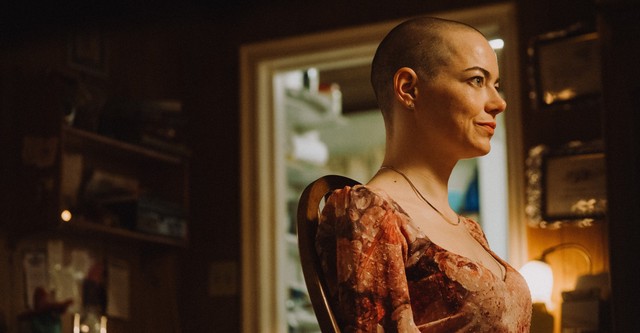
After having her head shaved (something Stone actually did for real), being forced to smother herself with cream every day to prevent communication with her species, and suffering electroshock treatment, Michelle is unsuccessful in convincing Teddy of her humanity, or placating him with the ‘truth’ in hopes that cooperation will lead him to release her.
As everything rushes towards a chaotic finale, Teddy distracts a local cop from uncovering the truth in his basement, while Michelle accidentally persuades his cousin to shoot himself. She extracts the key to her manacles from him to escape, but before leaving, discovers a hidden room filled with pickled body parts and a photobook of Teddy’s previous dismembered ‘subjects.’ With the true extent of his operation revealed, she confronts him with the real truth about the Andromedons: they were responsible for accidentally wiping out the dinosaurs and bioengineered humans as penance. The experiments on Teddy’s mother were part of a testing phase for the next stage of human evolution.
She claims the plans are on her ship, and she can take Teddy there via a teleporter in her office. A flawed Teddy agrees, but when they get to the office, he reveals he’s wearing an armed bomb. He steps into the teleporter as she ‘activates’ it, and the bomb detonates, killing him and knocking out Michelle. This seemingly brings an end to the whole affair… Except that when Michelle awakens in an ambulance, she flees the vehicle, returns to the office, and does indeed beam up to her mothership, revealing she really is the Andromedon Empress.
She and her fellow Andromedons decide that humanity isn’t worth sustaining or salvaging, and essentially pull the plug on us by popping a bubble over a model of a flat Earth.
Why Bugonia’s Ending May Be Divisive
We spend the vast majority of the film assured that Teddy’s claims are conspiratorial nonsense, and while clearly intelligent, he’s unfortunately gone too far down the rabbit hole – addled by past sexual abuse and traumatised by his mother’s condition – to come back. On the backdrop of a widespread, even murderous, rise in anti-capitalist rhetoric, his grievances with Michelle won’t seem unfounded or unsympathetic to some, even if his actions are obviously unhinged, violent, and criminal.
For her part, Michelle’s situation is similarly sympathetic. Even a privileged Girl Boss doesn’t deserve to be robbed of their dignity and accused incessantly of being an alien in a stranger’s basement. However, though she does suffer, Michelle is never a helpless victim: she physically and verbally fights her captors at every turn, harnessing corporate negotiatory psycho-babble to undermine Teddy, specifically.
In this light, Bugonia is at its most coherent when read as a snarky summation of our current communication problems: rationality vs. belief, fact vs. feeling, or truth vs. anti-truth. Both parties not only believe they know the truth, but that they are intellectually and morally superior to the other. It’s like watching a Facebook comment section play out in real-time. This is the core tension of Bugonia’s drama, and of the relationship between its two driving antagonistic forces.
The reveal that Michelle really was who Teddy thought she was at the very end forces you to re-examine this theme. It pulls the vague environmentalism into sharper focus, as with the end of humanity comes the implied flourishing of other species – in particular, bees, famously endangered, and the only thing that really humanised Teddy. It also gives Teddy’s complicated existence more meaning, vindicated in his explosive death. In other words, there’s a silver lining to the nihilism.
However, this sharp turn from a quirky but grounded comedy-drama into actual science fiction in the final few minutes will no doubt be jarring to most viewers – maybe even dismissed as a cheap bait-and-switch ending thrown in just for the sake of making things even more interesting. It's hard to tell if the social and political commentary about our inability to understand each other and the divide between the haves and have-nots was the crux of the story, or if it was the existential warnings about ecological disaster all along. Was Teddy actually a messed-up antihero? Considering his horrendous crimes, it's an uncomfortable re-contextualisation.
Bugonia’s Ending Comes From Its Source Material
The basis for the story comes from the Korean film Save the Green Planet! (2003), and is pretty faithful to it, including the end twist. For that reason, we can neither solely applaud nor wholly blame Lanthimos – depending on your feelings – for it.
Ari Aster signed on to produce the remake around the time of its early development in 2020. The director is notably credited with the most significant departure between Bugonia and Save The Green Planet! – changing the gender of the kidnapped character, opening the door for Stone to step into the role when Lanthimos joined the project. Gender-swapping characters doesn’t automatically alter their personality or behaviour, but the optics of two men holding a woman against her will for an extended period of time reads very differently than it does for a male victim.
Interestingly, Save the Green Planet! writer/director Jang Joon-hwan credits Misery as inspiration, where the gender dynamic between abductor and abductee is reversed, as well as a surprising real-life source. “I remember liking Misery a lot when it came out, but it bothered me that [the Kathy Bates character] was just this crazy bitch,” he told The Village Voice while promoting the film. “I knew that I wanted to make a film about kidnapping, but I also knew that I’d have to come at it from the opposite direction. I’d have to take the kidnapper’s point of view. And when I came across this anti-DiCaprio website, claiming that he was an alien who was trying to seduce all the women on the planet in order to conquer earth, the two ideas seemed to fit.” In the early ‘00s, such crackpot theories were more novel. Nowadays, they’re positively pedestrian.















Bundle HD






Bundle 4k