'Seinfeld' Ending, Explained (& Why It's So Controversial)

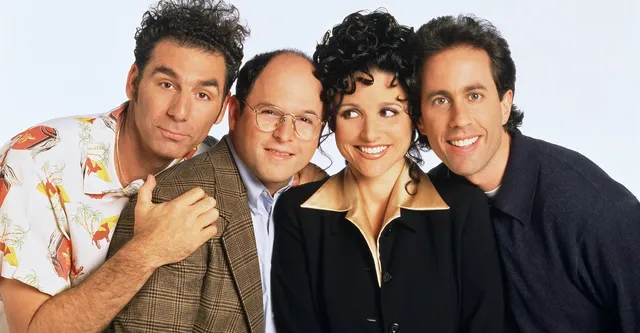
Seinfeld, the hit sitcom created by Larry David and Jerry Seinfeld, ran for nine seasons between 1989 and 1998. Often described as a show about nothing, it follows a fictionalized version of the titular comedian and his everyday life in New York City, with his friends George Costanza (Jason Alexander), Elaine Benes (Julia Louis-Dreyfus), and Cosmo Kramer (Michael Richards).
Set mostly around Jerry's apartment, the series finds comedy in the small frustrations of everyday life, like losing your car in a mall parking garage. By the time the show reached its ninth season, expectations for the finale were understandably high. But instead of giving Jerry and his friends a conventional farewell, the finale puts the four main characters on trial—literally.
The finale begins with Jerry and George learning that NBC has agreed to turn their sitcom pilot, Jerry, into a series. Jerry, who is given access to the network's private plane, decides to take George, Elaine, and Kramer to Paris to celebrate. Things take an unexpected turn when Kramer, while trying to get water out of his ear, stumbles and wreaks total havoc in the cockpit.
As a result, the pilots are forced to make an emergency landing in Latham, Massachusetts. While waiting for the plane to be repaired, the group sees a man named Howie (John Pinette) being carjacked and make jokes about his weight, while Kramer records the whole thing. A nearby police officer sees what happens and arrests all four under the town's Good Samaritan law.
What Happens During the 'Seinfeld' Trial?

Jerry calls his usual lawyer, Jackie Chiles (Phil Morris), to defend them. But the odds get stacked against them when the prosecution brings in people from the gang's past to testify about their past behavior. The witnesses include restaurant owner Babu Bhatt (Brian George), the Bubble Boy (Jon Hayman), Mabel Choate (Frances Bay), from whom Jerry once stole a marble rye, and countless others.
As each person takes the stand as a character witness, the prosecution explains how Jerry and his friends have repeatedly treated others badly, often without giving much thought to the consequences. The jury eventually finds all four of them guilty of criminal indifference. And Judge Vandelay (Stanley Anderson) sentences them to a year in prison.
In the final scene, Jerry, George, Elaine, and Kramer are sitting together in their prison cell and seem pretty unbothered about their jail time. Kramer finally manages to get the water out of his ear, while Elaine decides to use her one phone call to contact Jill, the friend whose call she had ended earlier, after Jerry and George made fun of her for making a call in the street.
Jerry and George, meanwhile, discuss the placement of the buttons on George's shirt. It's almost exactly the same conversation they had in the show's very first episode, bringing the series to a close with the characters doing what they've always done—talking about something completely trivial and ignoring the consequences of their actions.
Why Is the 'Seinfeld' Finale So Controversial?

The final scene is a pretty good indication of what Larry David was going for. After nine seasons, the characters haven't changed, and the show doesn't give them a last-minute redemption arc or a sentimental farewell. However, not everyone appreciated this approach. Some viewers felt that the courtroom storyline relied too heavily on bringing back old characters.
Others thought the episode sacrificed the comedy that had made Seinfeld so popular. Jerry Seinfeld has also been somewhat critical of the episode, saying that bringing back so many familiar faces was fun but didn't necessarily make for good comedy. David, on the other hand, has consistently defended the ending and said he has no regrets about it at all.
The creators eventually found a way to revisit the ending in Curb Your Enthusiasm (2000). In the show's 12th season, Jerry jokes about having already messed up one finale, while Larry defends the original Seinfeld ending. Then, in the Curb Your Enthusiasm series finale, Larry finds himself in a similar courtroom situation, giving the story a chance to play with the same idea again.
In a 2024 interview with GQ, Seinfeld described the connection between the two endings as a gag that finally paid off. "What you have there is a joke that was set up 25 years ago and then paid off 25 years later!" he told the publication. "How do you even describe something like that?" So, while the Seinfeld finale remains debatable, it ended up becoming part of a pretty epic callback.