10 Movies That Prove Even Legendary Directors Can Bomb At The Box Office

The biggest directors in the world often command a certain amount of expected success. When you’ve got bona fide critical and commercial hits to your name, you can become a selling point all on your own. Take Christopher Nolan, whose name is synonymous with modern blockbusters in a way no other director can manage. As a result, the biggest names in the industry are often guaranteed success with their new movies.
That’s not a certainty, though. There are plenty of legendary filmmakers who, over the years, had a bomb despite the rest of their legacy. Looking across cinema history, some of the biggest directors ever had to weather flops just as well as anyone else. Especially in light of Ridley Scott’s latest struggles at the box office, here are the biggest flops from legendary directors.


Ridley Scott
Ridley Scott has been a steady and consistent hand at the box office since the 1970s, but even his clout wasn't able to keep The Dog Stars (2026) from bombing at the box office. The director behind Alien (1979) and Gladiator (2000) returned to the sci-fi genre with The Dog Stars, bringing in his typical starry collectors for a post-apocalyptic trek across a ruined United States.
Unfortunately, the film floundered against enduring hits like Spider-Man: Brandon New Day (2026) and surprise success stories like Coyote vs. ACME (2026) and only earned $34 million against a production budget of at least $70 million at the time of writing. Hopefully it'll follow in the slow-burn success of Blade Runner (1982), but for now it is one of Scott's biggest misses in recent memory.






Steven Spielberg
There are few directors who can match the early winning streak of Steven Spielberg, who took the success of his made-for-TV film Duel (1971) and followed up with a series of hits including Jaws (1975), Close Encounters of the Third Kind (1977), and Indiana Jones and the Raiders of the Lost Ark (1981).
Even Spielberg's critically decried first foray into broad comedy, 1941 (1979), turned a profit. However, not all of his movies were able to connect with audiences, especially Empire of the Sun (1987). Despite plenty of critical acclaim, the film’s $22 million box office run wasn’t able to recoup the budget for the period piece drama.







Francis Ford Coppola
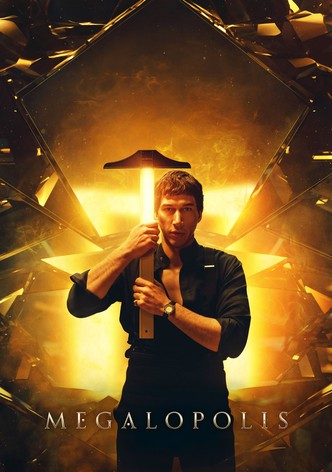
The filmmaker behind The Godfather (1972) is always going to be able to get funding for a project, but even Francis Ford Coppola's resources were stretched thin by Megalopolis (2024).
A passion project of the director who created a modern Roman Empire on the streets of New York for the strange and singular project, Coppola was only able to earn back $14.4 million at the theaters, failing to offset the staggering $120 million cost for the film. Megalopolis is one of the biggest auteur-driven bombs of the recent era and too odd for its own good, but it will remain a distinct late career experiment for one of 20th-century cinema's most acclaimed directors.


Martin Scorsese
Martin Scorsese has always had a keen eye for dramatic storytelling, with his sharp edges giving movies like Taxi Driver (1976), Raging Bull (1980), and Goodfellas (1990) the prickly honesty that those characters deserve. One of his best examples of that is The King of Comedy (1982).
The bleak comedy about an aspiring comedian and his decision to kidnap a talk-show host to earn a TV slot is a grim exploration of fame and a deeply personal look at the need for validation. It was also maybe too harsh for the era, only earning $2.5 million against a reported budget of $19 million. The film has since earned more critical appraisal and got a much more successful spiritual successor in Joker (2019), so at least it earned a memorable legacy beyond its initial struggles.


Quentin Tarantino & Robert Rodriguez
With a bevy of great genre films under their belt, it's clear that the inspiration Quentin Tarantino and Robert Rodriguez took from grindhouse productions paid off. Unfortunately, that didn't pay off in good returns for their overtime love letter to the genre, Grindhouse (2007). Two short films, each directed by one of their directors, have a blast with their over-the-top genre tropes.
While both films are a lot of fun—and Death Proof has some of Tarantino's best stunt work thanks to a fully committed Zoe Bell—the movie failed to attract a broader audience. Grindhouse only grossed $25.4 million on a budget that was upwards of $67 million at the box office. Both filmmakers had better success with their subsequent films, but the shorts are still some of the most fun either filmmaker has ever had.


Alfred Hitchcock
A great example of the divide that can exist between average audiences and critics, Alfred Hitchcock's Vertigo (1958) is often considered a highlight of his career and one of the legendary filmmaker's greatest contributions to cinematic history—but it bombed when it debuted in theaters.
The movie, a psychologically complex thriller starring Hitchcock's best collaborator, Jimmy Stewart, was thematically rich but perhaps a bit too harsh in its complexities, leaving audiences that had otherwise elevated his movies like Rear Window (1954) and Psycho (1960) into massive hits unresponsive. Vertigo left theaters lower than most of his films, although re-releases in theaters eventually allowed it to technically break even. However, the film's legacy has more than made up for that initial disappointment.




Akira Kurosawa
Based on Shūgorō Yamamoto's 1962 novel A City Without Seasons, Dodes'ka-den (1970) marks one of the lowest points in the legendary Akira Kurosawa's life. The filmmaker behind influential classics like Seven Samurai (1954) came back from a five-year hiatus for the movie, which is a series of vignettes focusing on citizens of a shantytown on the outskirts of Tokyo.
Kurosawa went into great personal debt to finance the film, but the disappointing turnout for the film left him heartbroken. The film remains one of the most divisive of Kurosawa’s career, with critics decrying it as a misguided series of parables while some have come to its defense as a strange but empathetic work from the Yojimbo (1961) filmmaker.





Richard Linklater
Richard Linklater is one of the kings of indie cinema, with his early comedies like Slacker (1990) and Dazed and Confused (1993) setting the stage for powerful romantic dramas like Before Sunrise (1995), coming-of-age stories like Boyhood (2014), and surprising action comedies like Hit Man (2024).
Despite the tremendous influence that Linklater has had on cinema, not all of his films could be hits—especially not Me and Orson Welles (2008). The period romantic drama starring Zac Efron as an actor in Welles' famous adaptation of Julius Caeser earned solid reviews but only grossed $2.3 million at the box office, making it a massive disappointment compared to its $25 million budget.


Spike Lee
Spike Lee has always been a terrific indie filmmaker, whose best big-budget films like Inside Man (2006) and BlacKkKlansman (2018) are best able to retain a grounded touch despite their genre and period leanings.
The same unfortunately can't be said for Miracle at St. Anna (2008), Lee's take on the epic war movie that focuses on four Buffalo Soldiers who form bonds with the residents of a small Tuscan village they end up in. The film cost $45 million but was only able to earn back $9.3 million at the box office, which wasn't helped by the film's lackluster reviews. Lee had better luck with his later return to the war movie genre with Da 5 Bloods (2020).



Steven Soderbergh
Steven Soderbergh has a terrific blend of films to his name, ranging from his indie beginnings with Sex, Lies, and Videotape (1989) to his eclectic approach to the Hollywood system that's delivered movies as varied as Erin Brockovich (2000), Traffic (2001), and Ocean's Eleven (2001).
However, the filmmaker suffered a rare miss with The Good German (2006). A deliberate throwback to the stylings of Casablanca (1943), the slick post-war romantic drama cost $32 million to produce but only earned back $5.9 million at the box office. While the movie failed to turn a profit, Soderbergh’s constant work ethic ensured that it wasn’t long before he was back in the director’s chair.