20 Years Ago, The Most Divisive Superman Movie Was The Change Fans Needed (But We Didn’t Know It)

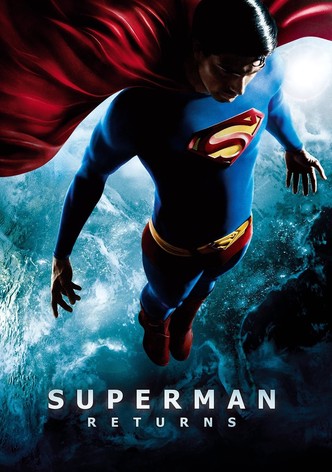
Just shy of twenty years before 2025’s Superman, 2006’s Superman Returns is remembered as a noble failure.
Picking up where Superman II left off (ignoring the disastrous III and IV), the film had Kal-El/Clark Kent coming back from a five-year mission in space to find that Lois Lane is engaged to another man and has a son. Meanwhile, Lex Luthor has found his Fortress of Solitude and plans to use the technology that made it to create new, sellable land, and wipe out the competition – i.e. large parts of America.
While most positively reviewed, Superman Returns didn’t connect with a large enough audience upon release, who might have been put off by a slightly convoluted story that centred family drama more than big action set pieces. But in the intervening two decades, Returns has been reevaluated by those who appreciate the risks it took in more emotionally grounded storytelling and a lighter, softer touch at a time when the fanbase was more in tune with Christopher Nolan and Zack Snyder’s darker, edgier DC films.
Its 20th anniversary is an opportune time for me to add to the more favourable discourse the film has sparked, breaking down why Returns, the maligned middle child of Superman movies, will always be my favourite.
(A note before we begin: Whereas I may have heaped praise on them at one time, due to the controversies around director Bryan Singer and actor Kevin Spacey, I’ll be keeping mentions of them to a minimum.)
Superman Returns Was a Key Part of DC’s Comeback Era – Until It Wasn’t

Let me take you back to the turn of the new millennium, when, after a string of successes from the late 1970s into the early 1990s, the brand behind Superman, the Warner Bros.-owned DC Comics, had largely fallen out of favour with cinemagoers.
At that point, Marvel was at the start of a 20-year tear, from the blood-soaked Blade to the philosophical X-Men to the YA-coded Spider-Man trilogies. This all culminated in a homegrown cinematic universe backed by an IP-guzzling industry titan that has been as culturally impactful as it has been financially bothersome for James Cameron’s all-time box office records. But the comic book company’s friendly rival was still feeling the sting of 1997’s critically poisonous (though not entirely commercially unsuccessful) Batman & Robin; thus, the infamous Nic Cage-starring Superman Lives, which would have returned the character to the big screen for the first time since 1987, was cancelled the following year – as was Batman & Robin director Joel Schumacher’s Batman Unchained.
DC’s flagship superhero duo, the perfect light/dark counterparts of a tortured billionaire masquerading as a street-level vigilante and a corn-fed, god-like alien keeping the planet safe on a journalism salary, were dead in the water. Even Christopher Nolan’s Batman Begins, now considered a classic of the decade, was released with modest expectations in 2005. The polar opposite of the gaudy Schumacher aesthetic, Begins proved to be the shot DC’s cinematic arm needed, and just one year later, Batman’s red-and-blue Super Friend followed, with a higher budget and therefore higher expectations.
It’s these expectations that sadly killed Returns and the new run of films it could have set up. While it earned a reasonable profit, that wasn’t enough for Warner Bros. to deem a planned sequel – slated for 2009 – worth continuing with. Instead, Superman was rebooted again with 2013’s Man of Steel, directed by Zack Snyder and starring Henry Cavill. While Returns, on balance, was better received by critics, Man of Steel, which wasn’t, generated grosses that the studio was far happier with ($670M worldwide on a $225-58M budget).
Man of Steel’s success and the universe it kickstarted came to quickly overshadow Returns. But why did audiences flock to one and not the other? Was it the hairy-pecked hunkiness of Cavill compared to the more Reeves-compliant litheness of Routh? It sounds shallow, but there may be something in it: the revival of juiced-up male bodies, akin to cinema trends in the 1960s and 1980s, was ramping up in the approach of the 2010s – a media period so chock-full of silver screen roiders that we brought back the word ‘swole’ to accurately encapsulate them.
We might also take a side-eye at Christopher “IMAX is my religion” Nolan. The success of his gritty Batman trilogy was so culturally encompassing that the broad look, tone and feel of Returns shone too bright an optimistic, retro spotlight into the bleary eyes of a core audience base responding more to how the world felt in that moment – gripped by post-9/11 cynicism – than how it used to be. Hollywood’s Superman abandoned Earth as the opulent ‘80s gave way to the grungey, chaotic ‘90s. As far as ageing Gen Xers and coming-of-age Millennials were concerned, the man who came back in 2006 was a deadbeat, out-of-touch Boomer dad in cringey, over-the-tights underwear grappling with a midlife crisis.
However, as someone who equally loves both Nolan and Singer’s takes on these characters like they were my own non-identical twins, I’d argue that Returns is far more interesting and introspective than it was given credit for at the time – and maybe continues to be to this day. I’d also argue, given what came later, that the sharp contrasts that did exist between the Nolan and Singer iterations of Gotham and Metropolis were far more reflective of their source material, and far better for the tonal delineation between the two chalk-and-cheese flagship heroes. This dividing line is what makes them so compelling both separately in the same universe and in chorus with each other when they share a panel or screen.
Superman Returns Is One of the Most Mature Superhero Films Ever Made

When we think of maturity in superhero media, we think of a muted or even monochrome colour palette (the Snyderverse, or the black-and-white version of Logan), cranked-up violence, gleeful use of naughty words (The Boys, Kick-Ass, etc.), and glum-faced, gritted-teeth antiheroes (the Snyderverse, again).
The equation of maturity with things that are ‘adult’ doesn’t always necessarily mean they’re ‘grown-up’ – e.g. complex, tasteful, nuanced. The appeal of Superman as a power fantasy is like seeing him only through the eyes of his enemies – the Lex Luthor’s of the world. Instead, what he chooses to do or not do with that power is what writers over the decades have played upon to elevate him above the allegorical but largely personality-less position of a modern, ancient Greek demi-god, and into a more empathetic folk hero. If Batman represents the struggles of human society, Superman represents the struggles of the human condition.
The most lauded Superman comic stories produced in the decade leading up to and around Superman Returns left behind multiversal crises and ‘event’ battles to the death in favour of inward strife. Jeph Loeb and Tim Sale’s Superman for All Seasons and Grant Morrison and Frank Quitely’s All-Star Superman were deep character studies plumbing the psychological toll that a man who is both the last of his kind from Krypton and the first of his kind on Earth might feel. Despite dealing with teenage angst, the morality of power, and even one’s own mortality, both stories are rendered in script and artwork with primary-coloured sunniness befitting a character who eternally sees the good in everyone, even when we can only see the bad in him.
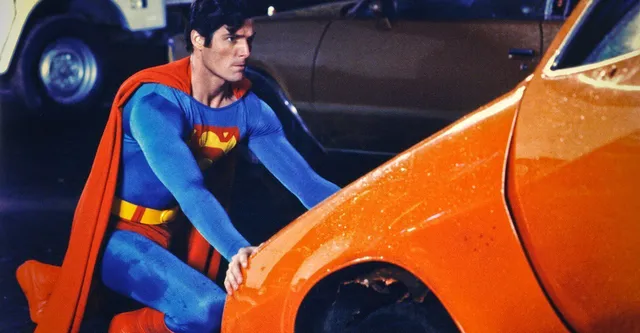
Superman Returns fits perfectly into this period of reinvention, or rather, retro-future reclamation, for Superman. It celebrates his cinematic past by directly building on 1978’s Superman and Superman II’s storylines – picking up after his failed search for the rumoured remnants of Krypton – as well as homaging Richard Donner’s bright, airy style and John Williams’ uplifting theme music. It even has a posthumous cameo from Marlon Brando reprising his role as Kal-El’s birth father, Jor-El. But Returns also bridges the gap between past and present in its story, which is essentially a bit of a kitchen-sink melodrama, and, aside from perhaps being too reverential to Donner, its most divisive element.
It’s a set-up that reads like a post-WWII drama: a soldier returning from war to find his sweetheart, presuming he’d never come back, has moved on and started a family, leaving him to pick up the pieces of an old life. Speaking to Empire in 2013, Singer wondered if the film’s failure was that it was “made for a certain kind of audience. Perhaps more of a female audience.” As one of those female audience members, do I connect more with the romantic, social elements of Superman? I don’t not, but that doesn’t mean I also don’t like it when he catches aeroplanes or smashes the Klan.
I’m being flippant because the comment could easily be construed as reductive, but there is a definite softness to Routh’s performance and the self-sacrificing nature – both personal and physical – to his character arc that I find to be the most endearing of any live-action Superman portrayal. (Smallville’s CW heartthrob Tom Welling comes pretty close.) Whether you interpret it as ‘feminine’ or ‘soft boi’, the moments that stay with me from the film aren’t his confrontations with Spacey’s sneering Lex Luthor or rescuing the not-so-damsel-in-distress Parker Posey’s Tess (“and her little dog, too.”) It’s the sweepingly romantic homage to Superman flying with Lois Lane (a miscast Kate Bosworth); slipping out of her heels to stand on his boots so they can gently float into the air. It’s his birth father’s words, “the son becomes the father,” echoing in his mind as he watches her son (also definitely his son) sleeping soundly, realising that his life has been forever altered, and after being away from his adopted home for so long, he now has a reason to never leave it again.
Returns also makes the mature choice not to reunite Clark and Lois by the end as one big happy family with their son. While this may have been partly for sequel material to deal with, it's a bittersweet ending reflective of the complexities of real-life relationships: dealing with the consequences of one's personal choices, free from entitlement, and respecting a loved one's boundaries and what's best for a child even when it's painful.
Ultimately, what's most admirable about the film is a tacit understanding that Superman’s greatest strength is his restraint. We see it in his relationship with Lois, but more broadly in what it takes for his natural gentleness to be physically expressed by a body that can more easily kill than love; take life rather than create it. Speaking of which, it's this undervalued quality that was completely shattered by a single neck break seven years later.
The DCEU Was a Bleak Mess Without Superman Returns as its Foundation

Should Superman kill? That was the moral quandary Snyder’s Man of Steel culminates with. With a roar of pain, Cavill’s Kal-El executes Michael Shannon’s General Zod, a Kryptonian supremacist bent on sacrificing Earth for the revival of their race. This comes after a bombastic battle through Metropolis that fans pointed out would have resulted in immense collateral damage, and becomes the inciting event for Batman vs Superman: Dawn of Justice.
The moment was deliberately controversial, undermining the inherent goodness we associate with the most super of superheroes, and the shocking violence of it is at complete odds with everything in Returns. It’s also emblematic of the heavy-handed cynicism Snyder carried forward into Batman vs Superman, and then Justice League. These were two films in which the World’s Finest start off as bitter enemies whose feud can only be ended by the stereotypically ‘calming’ influence of women: first, Wonder Woman, and then the two men remembering that they both have mothers who’d probably be very disappointed they weren’t playing nice. We then get a rushed take on the famous ‘Death of Superman’ story, and a ‘Sadfleck’ Batman so out of ideas he tries to unalive himself to defeat Big Bad, Darkseid, and can’t even do that right.
For all the bold swings this era of cinematic Superman took, they were all body shots: punching the air out of your lungs in the moment, but never deep or interesting enough to leave a lasting mark. This was a desaturated, brooding time period that defined the character more as a living, breathing nuclear deterrent for our planet than a symbol of hope and peace – a weapon we begrudgingly needed rather than warmly welcomed. (For the record, James Gunn explores this tension to great effect in his Superman.)
Snyder’s creative vision had ardent cult appeal and was, at least initially, lucrative, but in the wake of the DCEU’s downfall and the lighter touch of Gunn’s current DCU stewardship, Superman Returns’ legacy only seems to improve over time. Its moments of nostalgic grandeur, emphasising Superman’s awe-inspiring power and aspirational symbolism, aren’t undone by the quieter, melancholic ones that many were turned off by; rather, the film is strengthened by them in contrast. If the original Superman movies made you believe a man could fly, Returns made you believe he could also feel.