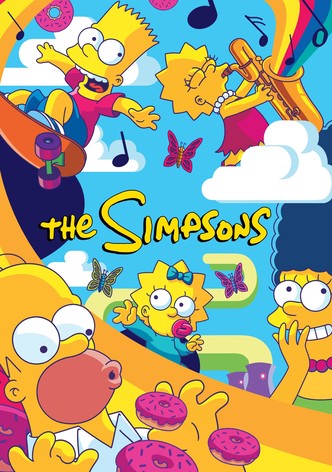
This Animated Classic Nailed a Cape Fear Parody Years Before Apple TV’s Remake

In a recent (and otherwise glowing) five-star review of the latest adaptation of Cape Fear—a six-episode miniseries on Apple TV+ that is set to reach its finale in early July—The Guardian’s Lucy Mangan made, I believe, two errors.
The first was a suggestion that Javier Bardem’s performance as Max Cady would go down as the definitive take on the character. This struck me as a bit of a drive-by, not only on poor old Robert Mitchum (who got there first in the 1962 original) but also Robert DeNiro’s deliciously haunting turn in Martin Scorsese’s 1991 remake—a movie in which the Goodfellas director notably cast Mitchum and his co-star Gregory Peck in cameo roles.
The second and perhaps most glaring snub was to leave TV’s first great Max Cady out of the running altogether. Read on to learn a bit more about him and how The Simpsons, as always, got there first.
TV’s First Take on Max Cady May Surprise You

In October 1993, less than two years after Scorsese’s remake romped to almost $200M at the box office, Season 5, Episode 2 of The Simpsons brought Max Cady to Springfield in the guise of Sideshow Bob. The character, a hilariously over-qualified sidekick to Krusty the Clown, first appeared in Season 1 and even took centre stage in the penultimate episode, ‘Krusty Gets Busted’, in which he framed his boss for armed robbery so he could take over the show.
Of course, Bart foiled that plan and would do so again when Bob returned in Season 3 in ‘Black Widower’, in which he stopped Bob from killing Aunt Selma and inheriting her money. Those two appearances cemented the character as Bart’s arch nemesis and set the stage for a legendary comeback in ‘Cape Feare’, one of the great classics of the show’s golden age.
What Makes The Episode Such A Classic

All of those early Bob episodes are basically all-timers because the character (thanks in no small part to Kelsey Grammer’s incredible voice acting) is such a compelling and wonderfully written antagonist. The Yale-educated clown is really a comic villain for the ages: the kind of egotistical bad guy who’s capable of charming a crowd, but to the point of thinking he’s smarter than everyone else, therefore underestimating them in the process.
For ‘Cape Feare’, Sideshow Bob gets the full Cady treatment: the elaborate chest tattoos (inspiring perhaps the most quotable line in the episode), the remarkable grip and upper body strength, and of course his unquenchable thirst for revenge. In typical Bob fashion, however, it just never goes as smoothly as he plans: first come the bumps, then the garden tools, then his all-too-easily leveraged love for a certain Gilbert and Sullivan opera. By the time Bob actually gets around to killing Bart, he’s already surrounded by the police.
It also helps that ‘Cape Feare’, unlike previous Bob classics, came out in Season 5. This was near the end of Conan O’Brien’s time as a writer on the show: a stint that began in Season 3 and helped to set the tone of the show, making The Simpsons what it was (and still is, in a way); setting it on its way to a golden era that lasted until around Season 9.
Where Does Kelsey Grammer’s Portrayal Rank in the Pantheon of Cadys?

Like any such ranking, mileage may vary, but I will say that all three of the pre-Bardem portrayals have stood the test of time. With that in mind, I’m placing Javier in a respectable fourth (at least for the next decade), with Sideshow Bob in third, the O.G. Robert Mitchum in second, and DeNiro’s Oscar-nominated turn (he lost to Hannibal Lector, of all people) as the one to beat—which naturally can still happen.
John D. MacDonald’s 1957 novel The Executioners (upon which each Cape Fear is based) has clearly proven itself a malleable text—one that’s already been interpreted by artists a half century or more apart. Whenever the next one comes along, we can check again if Bardem's Cady has endured.