
Like the first stack of Advent calendars at your local supermarket, the annual awards season seems to arrive earlier and earlier with each passing year. This has had the knock-on effect of making almost every race look done and dusted before a single envelope has been opened—but there are always a few that stay stubbornly erratic right up until the moment of truth.
It’s too early to say if Joachim Trier’s Sentimental Value will win anything at the Academy Awards, but it will certainly bag a bucket-load of nominations and, I think, be competitive in three of the four acting categories as well as Best Original Screenplay. At the time of writing, quite a few are very much still at play.
This all comes in what already looks like another landmark year for non-English language representation at the Oscars—2026 could see up to four non-English language films competing for Best Picture: It Was Just and Accident (the Iranian winner of the Palme d’Or), No Other Choice (the latest from Korean Master Park Chan Wook), The Secret Agent (a ‘70s-set genre mashup from Brazil) and Sentimental itself.
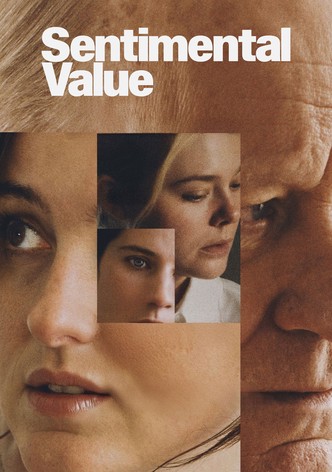
This is a movie from Norway that’s been leaving audiences in floods of tears ever since its premiere in Cannes earlier this year, where it went home with the Grand Prix—essentially the festival’s second prize. Read on to discover more about Sentimental Value and whether or not you might want to see it!
What Is Sentimental Value About?
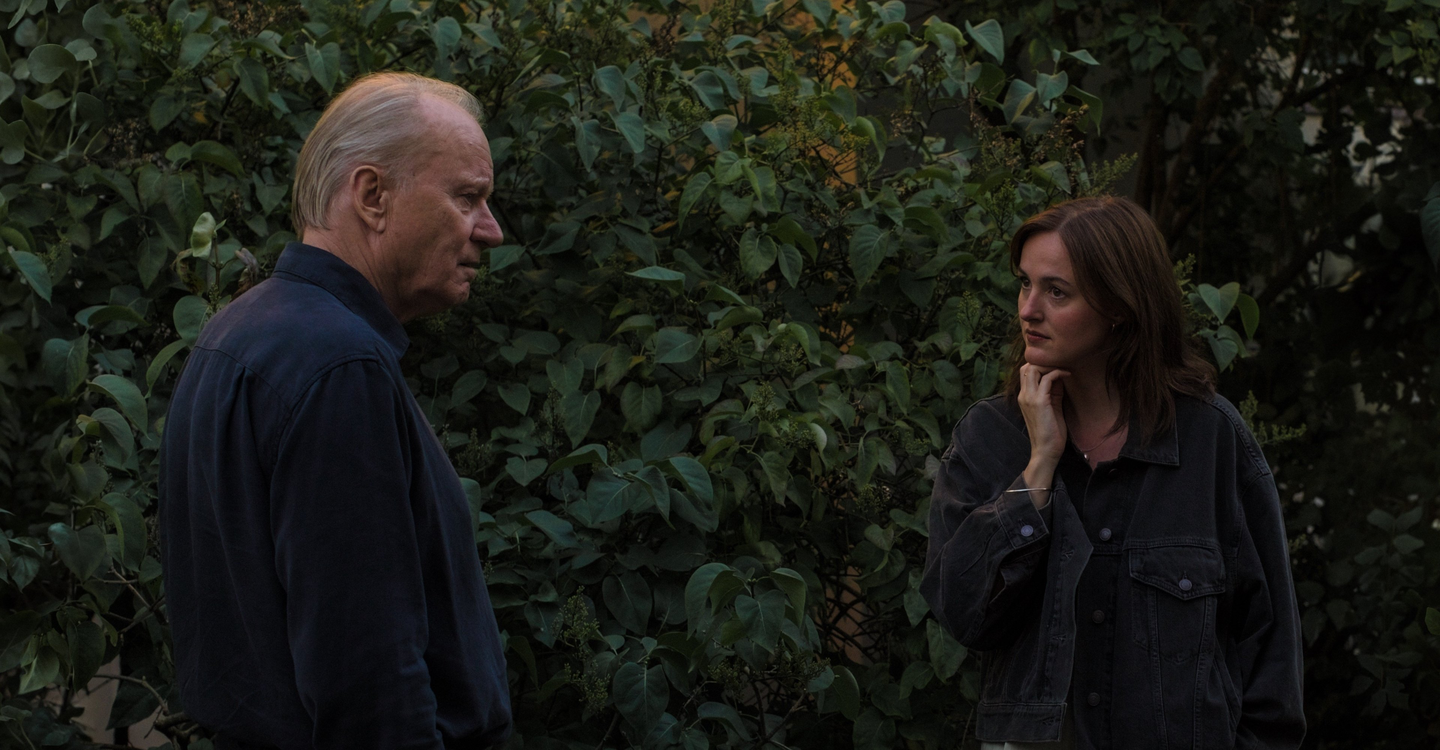
Sentimental Value is a story about a house and the family that has lived there for four generations. We see the tumultuous earlier years in flashback, but the film is chiefly concerned with Gustav Borg (Stellan Skarsgård), an arthouse filmmaker, and his two adult daughters, a theatre actress named Nora (Renate Reinsve) and her younger sister, Agnes (Inga Ibsdotter Lilleaas).
The drama begins with the funeral of Nora and Agnes’ mother, where the news surfaces that he is the sole inheritor of the house and plans to shoot a late project there. Having been selfishly absent for long periods when they were growing up, this turn of events prompts Gustav to nudge his way back into his daughters’ lives—Royal Tenenbaum style.
To do this, he offers the lead role in his film to Nora, which she declines, so Gustav ends up hiring a famous American actress (played by Predator: Badlands’ Elle Fanning) instead—a choice that helps the project get made but threatens to distance him even further from Nora and Agnes. As they each attempt to navigate this situation in their own way, memories resurface, and old wounds are reopened.
How Sad Is Sentimental Value?
As I referenced earlier, things get quite weepy in the latter stages, but it’s a cathartic kind of sadness. And besides, Trier and his long-term screenwriter Eskel Vogt have always been attuned to their fellow countrymen’s endearingly dry and self-deprecating sense of humour. Combined with the director’s offbeat editing style, it wouldn’t be entirely crazy to describe the film as a dark comedy. The director tends to be quite melancholy, as seen in his earlier films, Reprise and Oslo: August 31st (both excellent portraits of sad young men), but Worst Person in the World (a film about being rudderless in your 30s) was a hoot from start to finish.
Sentimental (a film about a slightly later phase of life) essentially splits the difference between these two modes, yet even the heavier moments are offset by the beauty of the images and the pure charisma of the cast.
How Likely Is Sentimental Value to Win at the Oscars?
I wouldn’t be surprised to see all four of its principal actors nominated at the Oscars, where the possibility of three acting wins is growing less impossible by the day.
In a less competitive year, Skarsgård would be an absolute shoo-in for a career recognition win: over four decades, the actor has done pretty much everything you can do—from Lars Von Trier movies to The Avengers and Andor—and what better way to honour that longevity than with a film that both interrogates and celebrates what it means to make art.
Is Sentimental Value Worth Watching?
Absolutely. In recent weeks, I am getting the sense that some critics are starting to turn on it a little, but I wouldn’t let that stop you from seeing it—especially if, like me, you’re a little more susceptible to certain kinds of movies around this time of year. As I mentioned, Trier is a director with a nose for comedy and a knack for drawing great performances out of his actors.
This is evident once again with Fanning, Skargard and Lilleaas, but if you can only see it for one reason, it’s Reinsve—an actor whom Trier essentially discovered (she had a small role in Reprise) before essentially making her a star with Worst Person—a film she probably should have been nominated for in 2022.
I recently heard the actress described as one of the “most eloquent blushers in the history of cinema,” and I’m inclined to agree with that statement. Seeing her face go bright red—or flicker in an instant from anger to shame, or joy to embarrassment—is one of the great gifts that European cinema has given us this decade, and if you’d like a chance to see that on a big screen, go see Sentimental Value, but make sure to check out Worst Person while you’re at it, and then go watch her alongside Sebastian Stan in A Different Man, a great indie from last year. In 2026, she’s set to appear in new films from Joe Talbot (The Governess), Cristian Mungiu (Fjord) and Alexander Payne (Somewhere Out There). Hop on while you can.