Every Two-Time Palme d'Or Winner, In Order

When Cristian Mungiu won his second Palme d’Or for Fjord at this year’s Cannes film festival, he became only the tenth filmmaker in the festival’s 80 year history to do so.
It’s an amazing achievement for any director, especially when you consider all the uncontrollable variables at play — namely the plain luck and good timing of having a favourable jury and, in some cases, a lack of serious competition in that year’s selection.
In the list below, I’ve rounded up every filmmaker so far who has achieved this remarkable feat — a list that spans three continents, nine countries and ten filmmakers. No one genre of film connects these winners, necessarily, but look closely and a few clear themes (you can probably guess them) start to emerge.
Read on to learn a bit more about each of these directors and use the guide to find out where to stream their award-winning movies on services like AppleTV, Netflix, Prime Video and elsewhere.
Francis Ford Coppola

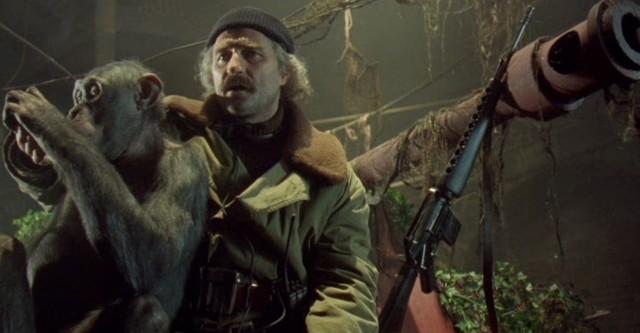
If you came to this list expecting stoic Europeans (don’t worry, they’re on their way), you might be surprised to learn that the first two-time winner was none other than Francis Ford Coppola — and no, neither of them went to either of the Godfather movies.
It’s kind of amazing to consider, but Coppola had already made the highest-grossing film of all time before stepping foot into the festival’s competition with The Conversation, a masterpiece of cold war paranoia starring Gene Hackman, in 1974. Coppola then made it two-for-two five years later when he returned with Apocalypse Now, having released a little movie called The Godfather Part II in between. Has any director ever had a better run? I highly doubt it.
Bille August

The least well-known of the two-time winners — at least to my knowledge — is Bille August, a Danish director and protégé of Ingmar Bergman who won his first Palme in 1987 with Pelle the Conqueror and followed that up a decade later with The Best Intentions.
In a nice full-circle moment, the latter was also written by Bergman — who, just a few years later, when the festival was celebrating its 50th anniversary, was essentially voted the greatest filmmaker of all time. The fact that Bergman never won an actual Palme at the festival, despite bringing some of his greatest masterpieces there, tells you all you need to know about how odd and random a jury’s decision-making can be.
Shōhei Imamura

If August was getting anxious waiting for that second Palme to arrive, he probably could’ve taken some solace from the 35 years that Japanese filmmaker Shōhei Imamura saw pass by between his win for The Ballad of Narayama, a classic of post-war Japanese cinema, and his 1997 movie The Eel.
The second of those was particularly unusual, as the jury that year made the unprecedented (and still unique) decision to share the Palme d’Or between Imamura’s Eel and Abbas Kiarostami’s The Taste of Cherry — a win that’s since gone down as the crowning achievement of the Iranian New Wave generation. So, in spite of the reverence for Imamura in the cinephile world, that split call from Isabelle Adjani’s jury has always been seen as a controversial one.
Emir Kusturica

These days, the French-Serbian filmmaker Emir Kusturica is basically Cannes royalty, having competed eight times and served as jury president in 2005. On his first visit to the festival in 1985, however, he was a fresh-faced 32-year-old who probably couldn’t have believed his luck when his film, When Father Was Away on Business, was accepted into the competition. He probably felt an even stronger emotion when it won him his first Palme d’Or.
Like August, Kusturica then had to wait about a decade for his next one but it eventually came for Underground, a remarkable film about two Belgrade black market profiteers during WWII that was immediately heralded as a modern classic, and rightly so.
Jean-Pierre and Luc Dardenne

After the dominance of Hollywood movies in the 1980s, world cinema seemed to regain its confidence in the decade that followed and no festival revelled in it more than Cannes. This was the era when the Danish Dogma movies started bursting out, and where stylish filmmakers like Edward Yang and Wong Kar Wai arrived from the other side of the globe. But, amidst all that excitement came two modest filmmakers from Belgium named Jean-Pierre and Luc Dardenne whose brand of minimal realism would set the tone of the festival for years to come.
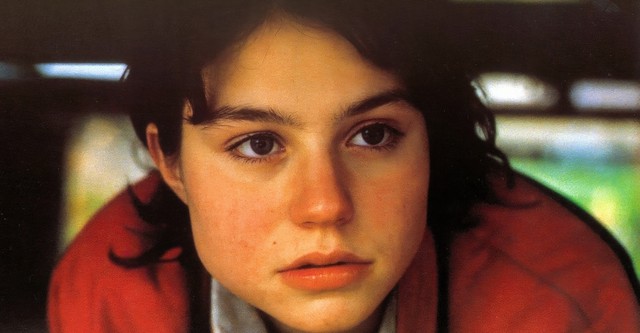
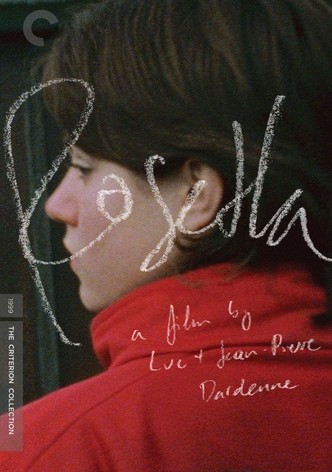
Of the ten films that the sibling directors brought to Cannes over the years, their breakout work Rosetta (1999) and their devastating later film The Child (2005) both won the Palme — the latter being awarded by fellow two-timer Emir Kusturica’s jury. Game recognises game.
Michael Haneke

It took almost 60 years for it to happen, but in 2009 and 2012, Michael Haneke did what nobody thought possible by winning two Palme d’Ors in a row for back-to-back films. The first, oddly enough, came a few years after The Piano Teacher — a film that most people these days would probably agree is actually his greatest masterpiece.
To be fair, The Piano Teacher was probably a little too provocative for the jury to process on first viewing, but the Austrian’s reputation only went from strength to strength in the years that followed. When he arrived with The White Ribbon in 2009, a haunting movie about the roots of Nazism, the jury were unanimous; just as they were when he returned in 2012 with Amour, a Paris-set film about love and dementia.
Ken Loach

As an Irish person and a diehard fan of pretty much everything Ken Loach does, on and off the screen, I’ve always wished I could’ve been in Cannes for the premier of The Wind that Shakes the Barley twenty years ago. The film, a tragedy set during the Irish War of Independence, is now considered a true classic of Irish cinema and, according to the actor himself, one of the proudest achievements of Cillian Murphy’s career.
Loach’s approach might look as if it came downstream of the Dardennes, but the old socialist had been up to this stuff since the 1960s, so a win in 2006 was probably as overdue as it was deserved. The same can’t really be said for his second Palme for I, Daniel Blake — which turned out to be the first in a trilogy of movies on modern Britain that ended with The Old Oak in 2023. If I could choose, I probably would have awarded that film instead, but for everything Loach has accomplished (including the record 17 times he was selected in competition) he more than deserves his spot on this list.
Ruben Östlund

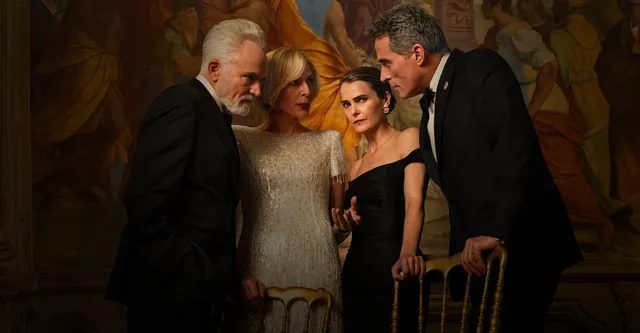
If one recent name sticks out on this list, it’s probably Ruben Östlund. The Swedish filmmaker's highbrow cringe comedies have given us plenty of laughs over the years, especially his breakout film Force Majeure in 2014. Still, for the director to have won back-to-back Palmes for The Square and Triangle of Sadness just looks a little off when you think of all the filmmakers who’ve never won one, let alone two of these things.
Regardless, both films are deliciously provocative and funny satires. The Square focuses on the art world via the opening of a new conceptual show in a Stockholm museum. Triangle, meanwhile, points its crosshairs at the uberwealthy; it takes place on board a luxury cruise ship where a dinner of bad shellfish leads to total chaos.
Most prognosticators seemed to think that the director’s latest, The Entertainment System is Down, would surface at this year’s festival but it wasn’t to be.
Cristian Mungiu

The most recent addition to this historic group is Cristian Mungiu, whose new film Fjord — a story about a religious family who fall afoul of the Norwegian child welfare system when it’s revealed that they discipline their kids with the occasional slap on the butt — has just won the 2026 Palme d’Or.
This comes 19 years after Mungiu won the first Romanian Palme for his breakthrough masterpiece, 4 Months, 3 Weeks and 2 Days. Whether Fjord, which stars the Oscar-nominated actors Renate Reinsve and Sebastian Stan, will have enough crossover appeal to take Mungiu all the way to the Academy Awards will be very interesting to see.
Before we wrap up, it's worth noting that Swedish filmmaker Alf Sjöberg did technically win the top prize at Cannes in 1946 (Torment) and 1951 (Miss Julie), but his first award was actually known as the Grand Prix du Festival, before the Palme d'Or was officially introduced.