The Nastiest Body Horror Transformations, Ranked

Who doesn't love a good slice of body horror now and again?
Heck, DC Studios' latest film, Clayface, is very much part of this family, even if it is a story about a Batman villain. But, our fascination with the grotesque is relentless; the dark stories showing the human body as a source of fear and disgust, and the corruption and destruction of the body itself. Something icky this way comes.
From John Landis' seminal An American Werewolf in London, to John Carpenter's The Thing or Coralie Fargeat's The Substance, our obsession with seeing someone change is as potent and pertinent as ever, so we have cobbled together just eight of the best transformations in cinemas history.

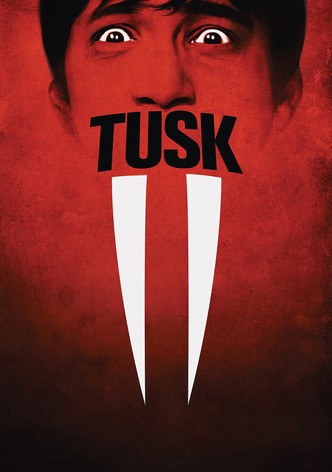


Oh, Kevin Smith, you delightful, cruel man. You would never have imagined in the beginnings of his career that he would make such a film as Tusk, but putting aside his View Askewniverse for a film based on something he read: an advertisement that offered free room and board for anyone willing to dress up as a walrus and keep the advertiser company... Well, something was definitely “askew” with this.
Enter the obnoxious Wallace (Justin Long), a podcaster who happens upon Michael Parks’ lonely, eccentric man who survived at sea with the help of a walrus called Mister Tusk. His grief and loneliness have clouded his mind, and he drugs Wallace and begins a torturous series of procedures with one goal in mind: turn him into a walrus. Part body horror, part surgical precision, Tusk presents a truly unique transformation on our list and shows the consequences of being an asshole most harshly.




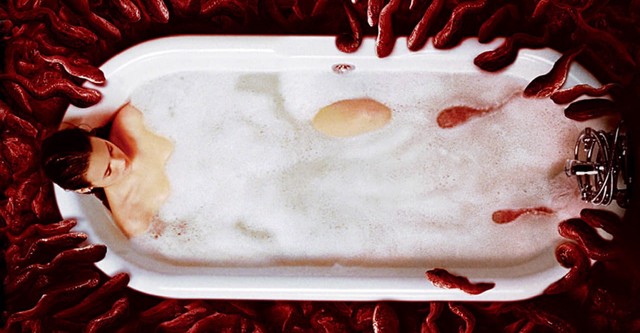


James Gunn’s directorial debut, Slither, was a box-office flop on its initial release but has gained a huge cult following in the decades since, not least since Gunn’s own career has taken off. It's got a simple premise: a meteorite brings a malevolent alien parasite to Earth that soon finds a host in town resident Grant (Michael Rooker), takes control of him and begins to transform him into a grotesque monster while abducting local women to host his spawn.
Shocking and grisly in the extreme, Grant’s transformation is a sight to behold and takes much from David Cronenberg and John Carpenter, and its practical effects look spectacular. The film's themes of contagion, losing control of your own body, and self-destruction are hugely prevalent, even if the film plays up the dark humour of the situation rather than the anguish of it all.



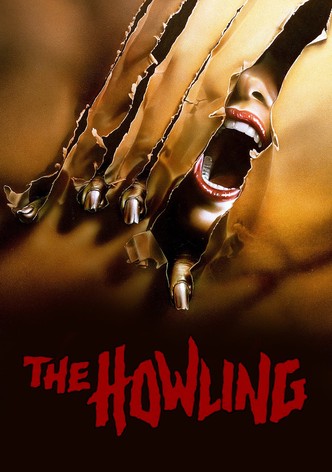
Just like London buses, you wait ages for a new, updated, modern werewolf film, and then wouldn't you know it, three come along at once. That was the case for The Howling, Wolfen and An American Werewolf in London — all released within six months of each other. All very different, all very unique in their own way, but Joe Dante’s film was the genre changer and still remains quite powerful.
His film focuses on a community of werewolves and their repressed beings rather than the pain and suffering of one person in Landis’ aforementioned film, but its groundbreaking transformation scene — Rob Bottin once again front and centre — is its own unique beast. Indeed, the film has a satirical edge to it and is more ambiguous and less about suffering, choosing to leave much up to the audience, whereas Landis’s film is a straight-up tragedy. Don’t pick one; enjoy them both.


Few films in recent years have pushed the boundaries of body horror quite like Coralie Fargeat’s magnificent movie The Substance, which stars Demi Moore as Elizabeth Sparkle, a once much-loved celebrity now being shut out of Hollywood due to her age. She stumbles across a black-market substance that can create a younger version of yourself, so long as you follow its rules to the letter.
Desperate to reclaim her youth and relevance, Elizabeth takes the substance, and her younger self (Margaret Qualley) is reborn. However, she starts to hog the limelight, and her body can only take so much, so both sides of her begin to wrestle for control with monstrous consequences. Fargeat’s film explores the beauty industry, Hollywood, ageism, sexism, the yearning for youth, and the cultures that consume women. Ambitious, uncompromising, startling yet heartbreaking, it's one of the decade’s most brilliant and most important films.






John Carpenter’s 1980s masterpiece has had many pretenders try to go up against it over the decades, including a terrible remake, but nothing before or since has come close to the majesty of The Thing, both in story terms and in Rob Bottin’s unbelievable practical effects at the film's heart.
Come for the alien-takes-over-other-organisms story, stay for a tale of isolation, mistrust, and Cold War paranoia. The Thing showcases both Carpenter’s unique abilities as a storyteller, as well as being a throwback to the alien invasion films of the 1950s. What makes the transformations so special? They are all so inventive, so different but utterly beguiling — and truly terrifying.




Ever hear about the film that taught the world about “shunting”? Well, you are in for a real treat when you seek out Society, the 1989 film that sat on a shelf for three years before it gained a US theatrical release. Directed by Brian Yuzna, who helped bring us Re-Animator, he outdid himself with this satirical horror film about societal privilege, paranoia, exploitation, and fear — and wrapped it up with the most grotesque ending ever seen.
Bill (Billy Warlock) believes his wealthy family are hiding secrets and, after a search to find answers, he discovers the shocking truth: the wealthy can merge with others in a most horrifying process, becoming an elastic mass, a slimy conglomeration of flesh that is nothing like its human form. While not a transformation per se, those at the heart of it certainly contort themselves in unimaginable ways. Just perhaps don't eat immediately after.


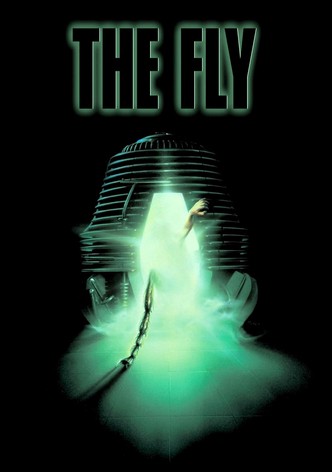
David Cronenberg took this reimagining of the 1958 sci-fi classic, The Fly, and brought it into the modern day with a tale as much about science as it is about love, arrogance, the pursuit of perfection, disease, and the fear of ageing. Jeff Goldblum is perfectly cast as scientist Seth Brundle, who is desperate for relevance and for his revolutionary transporter pods to work; he experiments on himself — with disastrous results.
Teleporting himself with a fly in the machine, his computers instead fuse the two, causing a slow, painful, and frightening transformation of Brundle into Brundlefly, an amalgamation of the two entities. The first “insect politician”, Brundle completes his transformation before he asks Veronica, his great love, to kill him and end his torture. Arguably the most moving horror film ever, it features some magnificent make-up effects from artist Chris Walas.






Bundle HD


Easily the most incredible transformation sequence in cinema history, the unprecedented sequence Rick Baker created in An American Werewolf in London has stood the test of time and then some. Director John Landis knew what he wanted since the 1960s: a werewolf transformation unlike anything done before, shot in bright lights, with no dissolves and few cuts; he wanted the unprecedented.
Thankfully, he had Baker at his disposal, and through a series of make-up effects, “Change-O” moulds and more, they were able to show Naughton's reshaping, bones cracking, face elongating and the agonising pain of becoming something other — and we have to confront it head-on. A truly remarkable feat, Baker would win an Academy Award in 1982 for his work.