

8 Essential John Carpenter Movies In Order

Cinephiles these days are impressed when someone like Christopher Nolan manages to knock out a movie, but John Carpenter was absolutely prolific during the '70s and '80s.
Carpenter delivered a run including The Thing, Escape From New York, They Live, and Halloween. Those four all-time classics were just a selection of the nine movies that John Carpenter directed in a peerless period of creativity between 1978 and 1888 — a rate so fast that fans barely had time to fill up their popcorn buckets.
Exaggerations aside, that Carpenter hit rate still stands among the all-time great runs in film history, and even if things got a little more uneven in the later decades of his career, the 78-year-old’s filmography remains a formidable body of work.
This is no reason to be daunted by it, however. If anything, Carpenter‘s portfolio is one of the most accessible and entertaining we have. What’s more, you can also use our handy guide to navigate the horror grandmaster’s most essential movies to get started on, which I’ve listed below in chronological order, and take it from there.
Just note, if you vibe with these and are curious about Carpenter’s more recent work, Ghosts of Mars is still, for our money, an under-appreciated gem.


It’s not exactly essential to kick off your John Carpenter watchthrough with his debut feature Dark Star. The movie is a little goofy but it’s extremely influential all the same: a charming outer space hangout movie that a wide range of artists including Joss Whedon, Hideo Kojima, and Danny Boyle have all cited as a major influence.
What makes this story — a deep space mission to destroy potentially unstable planets in potentially inhabitable solar systems — such an essential Carpenter is the fact that the director and his team managed to make it work on an absolute shoestring budget.
If you need some extra motivation, the screenwriter, Dave O’Bannon, went on to write Alien directly after.














A movie that relaunched and reinvented the slasher franchise while making an absolute killing at the box-office, Halloween’s inclusion in the Carpenter canon doesn’t require much explaining — it’s the kind of movie where, if you’ve only heard Carpenter’s name once in your life, it’s probably because of this movie
This is also the moment that launched Jamie Lee Curtis’ career and confirmed Carpenter’s unique abilities as a film composer — those synths!
It also started one of the longest running franchises in movie history — a series of varying quality (to be fair) but one that, much like Michael “The Shape” Myers himself, has so far been impossible to kill.






If recent shows like Stranger Things are anything to go by, 1980s pop culture isn’t going away any time soon — even for audiences and creatives who weren’t around to remember it.
Thanks to Carpenter’s early run of popcorn classics, he has remained among the top tier of ‘80s directors when it comes to influencing these kinds of shows and movies — as seen very recently in the pilot episode of Widow’s Bay, which reimagined Carpenter’s The Fog (a Stephen King-coded ghost story set in a fishing town in New England) for the present day.
Good as Widow’s Bay is, like most Carpenter classics, the original barely needs any reimaging. This is thanks largely to Dean Cundey’s timeless cinematography — an unmistakably ‘80s vibe that he later brought to movies like Jurassic Park and Back to the Future.





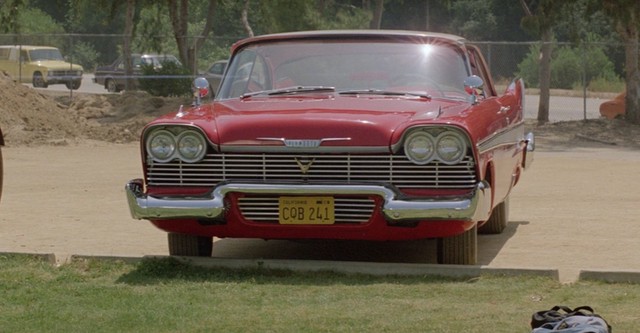

How Carpenter has made it through his career with only one Stephen King adaptation on his CV is kind of fascinating. Regardless, the movie is called Christine and it’s a 1983 auto-fixation classic about a high school senior whose relationship with his beloved cherry red Plymouth Fury starts to become a little too co-dependent.
Christine isn’t the most satisfying of Carpenter’s classics, but it’s still one of the best looking movies he ever made — with Cundey working serious magic with the car's shiny curves and chrome trimmings. If you liked the recent French hit Titane, you can mark this one down as a must watch.


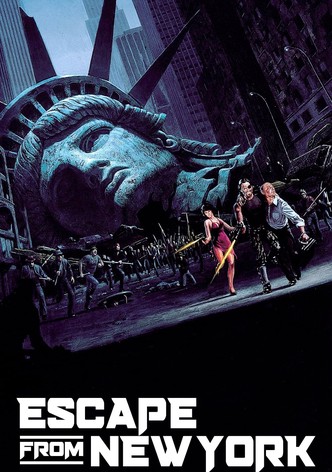
Another Carpenter classic that boasts what looks like an over-qualified team (given the B-movie material) in front of and behind the camera is Escape From New York — a rough sci-fi diamond about a near future New York (it’s set in 1997) where Manhattan has been turned into an island prison.
Of course, the plot involves a hijacking of Air Force One and the kidnapping of a president who is then held for ransom. This, of course, means that Kurt Russell’s Snake Plissken must be sent in to get him back.
Watching the movie today, it’s amazing how well the effects have aged, not least the matte paintings of the New York skyline — the handiwork of a young James Cameron, don’t you know. Back behind the camera, Cundey is joined by a cast that simply groans with legendary character actors like Harry Dean Stanton and Lee Van Cleef. The 1996 sequel, Escape From L.A., ain’t bad either.


Speaking of movies in the Carpenter canon that still resonate, The Thing is the most influential of the lot.
By the time that this sci-fi horror masterpiece was released, the director had already helped to relaunch the slasher genre, reinvent what a popcorn movie could be, and redraw the parameters of film music; but, in terms of pure image-making The Thing is something else.
To take one example: this 45-year-old movie about a group of scientists in Alaska who encounter a gnarly, shapeshifting alien probably influenced Zach Cregger’s Resident Evil more than the video game it was based on.





Granted, it’s hard to argue that Big Trouble in Little China has aged immaculately (far from it), but the level of entertainment that this wild ride of a movie delivers should make up for at least some of its cultural insensitivities.
The plot sees Kurt Russell (in his third collaboration with Carpenter) play a semi-truck driver who ends up embroiled in a gang war when his friend’s fiancée is abducted at the airport. As essential Carpenter flicks go, this one isn’t in the top top tier, but it’s just too fun and iconic to leave out.






Bundle HD


Another rough diamond in Carpenter’s filmography is the 1988 cult classic They Live — a movie with ideas and images about powers, politicians and advertising (think skull headed humans and brainwashing messages, hidden in plain sight) that are still being used by activists today.
Even if you’ve become too familiar with that iconography over the years, They Live is still well worth seeking out — a movie with a brilliant premise that gets a little fumbled in the delivery, but it’s a blast from start to finish.
Take the frankly insane fight scene between Rowdy Roddy Piper and Keith David — an action sequence so bizarre that it was basically re-immortalized by Family Guy a decade later.


