There’s something long lasting and utterly enticing about horror movies. People cover their eyes or watch through their fingers, but always end up coming back for more, and what terrified audiences in the ‘60s still finds ways to crawl under our skin today, even after decades.
Certain horror movies endure not because they just throw monsters at you, or because they’re gory or shocking (though, let’s be honest, that’s definitely a factor), it’s also because they understand that fear is personal. They make you question if your neighbors are really as friendly as they seem, and what that random sound in your kitchen was. The best horror films live rent-free in your head (and that’s why it keeps us up until dawn!)
Love them or argue about them, here’s a list of ten of the best horror films of all time and where you can watch them on Prime Video, Apple TV, and more; some titles have invented entire subgenres or redefined villains, and some were even temporarily banned or have pushed audiences to the point where they’ve walked out of theaters. Enter at your own risk, and let’s get spooky!
Psycho (1960)
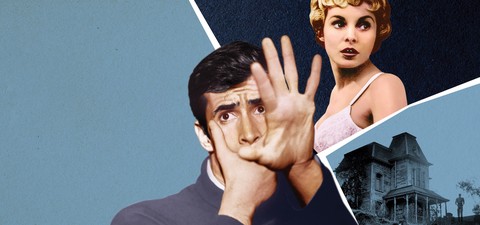
If you were wondering where the blueprint for the slasher film genre came from, then Alfred Hitchcock’s Psycho is it. Our apparent protagonist Marion Crane steals some cash and is forced to check into the Bates Motel due to a rainstorm. Here she’s introduced to Norman Bates, an awkward guy with a seemingly close relationship with his mother. And that’s all you need to know before Hitchcock pulls the rug from under you in the most iconic shower scene ever filmed.
The genius in Psycho is in how it manipulates your expectations, and with the black-and-white cinematography, the impending doom perfectly scored by Bernard Herrmann, and the uneasy atmosphere around Bates Motel, all heightens the tension and makes everything that happens story-wise feel unsafe. The thing about Norman Bates is that he isn’t just a villain (with edits on YouTube!), his unpredictability and the way he rattles off nervously when he first meets Marion makes the twist that much more shocking. If you enjoy watching films where sanity is unraveled piece by piece, then Psycho is where that lineage begins.
Halloween (1978)
When I mentioned that Psycho is the great grand-parent, if you will, of horror and thriller movies that came after it, I wasn’t kidding. And we have Exhibit A right here: Halloween, which has a character named after one from Psycho. Before she was involuntarily switching her body with her daughter in Freaky Friday, Jamie Lee Curtis’ Laurie Strode was being stalked in Halloween, which set the template for suburban terror and a masked killer, something A Nightmare on Elm Street and Scream would later expand.
Michael Myers escapes from a mental institution and stalks babysitters in his hometown, including the aforementioned Laurie. She’s the kind of smart and resourceful protagonist you genuinely root for, making Meyers’ silent menace all the more chilling. He doesn’t monologue or twirl a knife dramatically, he just walks simple and slow to the tune of his theme song (I know!) But this is the approach that makes every shadow unnerving. The movie’s simplicity where over-the-top effects are replaced by a fighting teen with a will to live makes the movie impossible to shake. If you like suspense that closes in on you, then this film is a must-watch.
The Exorcist (1973)
You wouldn’t expect a horror movie about two priests exorcising a demon from Regan, a young girl, to cause the audience to faint, throw up, or walk out of theaters, but that’s exactly what William Friedkin’s The Exorcist did. This is not a “fun” horror movie, it’s bleak and deeply uncomfortable. The Exorcist, just like Rosemary’s Baby, takes familiar, domestic spaces and twists them into nightmares. If you love slow-burn horror movies that stick in your head for weeks, then you’ll feel right at home with The Exorcist.
What makes this film terrifying isn’t just the demonic possession, it’s the realism where every character reacts to the situation as if it's all actually happening. Linda Blair’s performance as Regan is still shocking (and her head-spinning alone is worth a gasp) because of how she portrays her role in a completely believable way; she’s just a kid caught in something that’s way beyond her (and our) comprehension. Sure, sometimes the pacing can drag, and I needed a bit of motivation to watch the medical scenes, but the payoff is worth it. Maybe that’s why the film's legacy continues even decades later, though its successors thus far haven’t yet induced the kind of reactions the 1973 film got.
The Texas Chainsaw Massacre (1974)
What could possibly go wrong when a group of friends stumble upon a deranged family in rural Texas? Apparently, a lot, because it’s Leatherface and his trusty chainsaw against the world. Texas Chainsaw Massacre is for those who like their horror raw and grimy, with relentless pacing, where the goal isn’t comfort, but survival. If polished scares feel too safe, then don’t worry you won’t find that here.
The sweaty and raw panic puts you in the characters’ shoes, and by the time the final chase hits the screen, I found myself holding my breath, even though the plot isn’t what we’d call intricate. Every shaky camera angle, every scream, and even the weirdly jovial music at the end feeds the unhinged energy of the film, pushing the audience into the same breaking point as the final girl and making it feel like a nightmare you can’t wake up from. But this is exactly what makes Texas Chainsaw a landmark movie (it was succeeded by 8 more films!), and is basically essential viewing for horror fans.
The Shining (1980)
When Stanley Kubrick made The Shining, it felt like a master class in slowly losing your mind while at a creepy hotel—you know, the one where the elevators bleed and twins stand in hallways to stare at you (I can already imagine the reviews on TripAdvisor for this hotel.) When Jack Torrance takes a job at the Overlook Hotel and brings his family along for the ride, he slowly unravels into madness.
Kubrick turns Overlook into a labyrinthine villain, where the oppressive silence and cold atmosphere provides the kind of slow burn that coils tension tighter and tighter with every passing scene, until your anxiety feels like a seamless part of the film and you end up wondering if any character’s narrative can be trusted. He proves that fear isn’t something that’s always immediate, sometimes the unraveling takes its own sweet time. Though Stephen King was divided over his novel’s adaptation, this vision is Kubrick’s, and it works. For people who can’t get enough of movies where isolation and creeping dread steer the wheel, The Shining should be the natural next watch.
Rosemary’s Baby (1968)
If the idea of being gaslighted by everyone around you feels more terrifying than serial killers who lurk in the shadows, urban legends, or gore, then Rosemary’s Baby will hit hard. Rosemary Woodhouse moves into a New York City apartment with her husband Guy before slowly realizing that everyone around her seemingly has very sinister plans for her unborn child.
The thrill from the film comes from its everyday interactions; like nosy neighbors, dismissive doctors, and a “helpful” husband who seems loving until he isn’t. Mia Farrow plays Rosemary in a heartbreakingly convincing way, with her sweet and trusting nature dissolving into the gradual realization that something isn’t right (and her vision of Satan certainly didn’t help matters.) If you’re a fan of occult movies with paranoia and psychological manipulation like Hereditary, then Rosemary’s Baby is the perfect watch. The film proves that horror doesn’t need blood to leave you sleeping with the lights on; sometimes it's the fact that the threat is hidden in plain sight (or next door.)
A Nightmare on Elm Street (1984)
When one of the masters of the horror genre, Wes Craven, writes and directs a film, you know it’s about to be legendary. And that’s exactly what A Nightmare on Elm Street is. Freddy Krueger, another iconic villain alongside Michael Myers and Leatherface makes his debut. A burned serial killer, Krueger starts murdering teens in their dreams—and if you die in a dream, you die in real life (sorry, should I have said, “spoiler alert!”?)
Craven’s storytelling mastery is in turning something as ordinary as sleeping into a total nightmare scenario with no escape, deliciously blurring the line between dreams and reality. What I found interesting was the mix of terror and dark humor. Krueger is obviously sadistic, yet oddly charismatic and hilarious, and this dichotomy adds a layer of darkly playful energy to the entire thing. Viewers who enjoy watching unstoppable threats in films like Candyman will get the same thrill from Elm Street. It’s inventive, frightening, and absolutely unforgettable—making it a classic ‘80s horror film that every horror fan must watch at least once.
The Blair Witch Project (1999)
Three film students. One forest. And no survival skills. Before we even knew what the word ‘viral’ meant, The Blair Witch Project was creating waves—and for good reason. This is for viewers who want simmering horror told through found footage. If you’re waiting for any polished CGI demons, I’m sorry but you’ll be deeply bored. Or if you staunchly believe horror movies need an iconic villain with their own theme songs to be relevant (hi, Krueger!), think again.
In TBWP, it’s the legend of what you can’t see that makes this film a one of a kind. It still holds up because of how the shaky found-footage style feels uncomfortably intimate, like we’re watching something we stumbled upon but weren’t meant to find. And this rawness isn’t easy to replicate. The panic feels totally real and that abrupt but surprisingly perfect ending? Chef’s kiss. One thing that might leave first-time viewers frustrated is that we don’t actually get to see the Blair Witch (I know, even after the franchise is named after her), but just hearing of her will give you an uneasy feeling in your stomach. Unlike the other films on this list, TBWP is stripped-down, and that sets it apart. If you liked Paranormal Activity, TBWP walked so that the former could run.
Carrie (1976)
Carrie White wasn’t just bullied; she was pushed to her breaking point by her classmates and her extremely religious mother in Carrie. She just wanted to fit in—until she absolutely did not. Brian De Palma takes Stephen King’s classic tale of humiliation and supernatural retribution and spins it into a beautiful tragic high school horror masterpiece. There’s nothing subtle about Carrie, it’s fiery, explosive, and revenge incarnate.
While we know this is a revenge horror movie, the slow burn to the final prom scene is agonizing, and though I was aware of how the film ends, I still found myself willing for things to go right for Carrie, and the payoff is devastating yet oddly cathartic when they ultimately don’t. Sissy Spacek’s performance as the titular character is magnetic, especially in the last scene. The way she looks genuinely happy while winning prom queen one minute, and the anger at being doused in pig blood and subsequent eruption in the next, is brilliant. Even though the 2013 remake of Carrie took some creative liberties with the script, it’s another unforgettable watch. If you’re a fan of movies with the same dark mix of teenage angst and power, you’ll find it in The Craft.
Orphan (2009)
Orphan is the kind of twist-driven horror film that sneaks in only to drop a major plot twist you never saw coming (or maybe you did), making it perfect for anyone who loves a shocking revelation almost as much as actual scares. After John and Kate Coleman adopt Esther, a sweet 9-year-old, they start to realize that she might not be who she claims as her secrets come to light.
Isabelle Fuhrman is truly the star of the show, and her performance as Esther is manipulative and chilling, making the entire movie an addictive and psychologically suspenseful watch. Yes, some plot points require us to suspend our disbelief, but that last confrontation scene between Kate and Esther, where the latter utters that one word, is worth the runtime. Both Carrie and Orphan use children as agents of horror, but where the former unleashes her teenage telekinetic rage, Esther is far more cunning and calculating, making her a genuinely unsettling heroine, if we can call her that. If you were curious about her ‘adventures’ before the events of this film, then head over to watch the prequel Orphan: First Kill for more unhinged Esther.