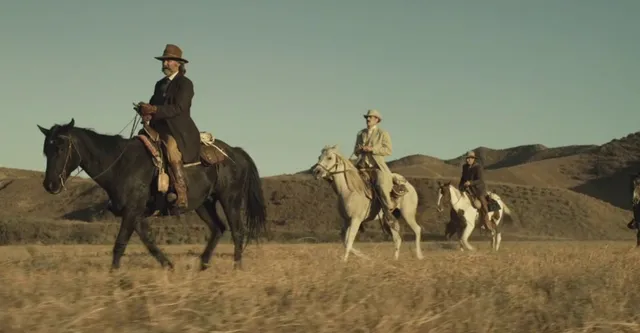
Antony Starr Rewatches This Western Drama Every Year | Sorry Not Sorry

A lot of shows are made to be watched once because they're built around big reveals or plot twists that lose their impact the second time around. You finish them, maybe recommend them, and move on. That's the deal. But the shows that don't rely on a payoff every five minutes are the ones that do the rounds on people's watch lists. And the same can be said for Antony Starr.
WATCH: Antony Starr Re-watches THIS SHOW Every Year?!
Speaking to JustWatch, Starr revealed that the 2004 HBO Max Western drama series, Deadwood, is his guilty pleasure rewatch, and his reasons are pretty solid. "The scripts are incredible. The performances are amazing. I watch it every year," he said while promoting The Boys Season 5. "And every time I see new things. It's just… It's fantastic."
One of the more interesting things about that pick is that it's a series. Most people default to movies when they talk about rewatches because they're contained. You can drop in, get the full experience, and be done in two hours. Deadwood doesn't work like that. It's dense, dialogue-heavy, and deliberately paced in a way that almost resists passive viewing.
You have to track power dynamics and conversations that don't always spell things out. Choosing that as a yearly rewatch says a lot about how much there is to unpack. Set in a South Dakota mining camp in the 1870s, Deadwood focuses on saloon owner Al Swearengen (Ian McShane) and Sheriff/co-owner of Star & Bullock Hardware, Seth Bullock (Timothy Olyphant), who are constantly at odds.
A Western Created Around Real Figures
What makes Deadwood different is its use of real historical figures in the story. Series creator David Milch used real diaries and newspapers that belonged to 1870s Deadwood residents to make sure that the look and feel of the show was accurate. The research also helped to ensure that the characters in the series were portrayed with as much realism as possible.
The real Seth Bullock was instrumental in bringing order to Deadwood as it transformed from a lawless camp into a proper town. That context makes the character's rigidity feel like a necessity instead of just a scripted personality trait. Al Swearengen, who ran the Gem Theater, operated in a space where illegal activities were (sort of) accepted as part of the economy.
The show doesn't clean that up. It accepts the idea that people like him were central to how these towns functioned. Wild Bill Hickok (Keith Carradine) comes in with an already established reputation as a gunslinger, and the series uses that to its advantage. Calamity Jane (Robin Weigert) is another example, known for her association with soldiers and scouts.
However, Deadwood does strip away some of the "legend" aspect that surrounds these famous American figures so that the fictionalized versions feel more human when you're watching the show. While that often leads to a few historical inaccuracies, it also prevents the series from feeling like a documentary.
Why To Watch 'Deadwood' (And What To Watch After)
What really makes Deadwood worth watching is how it handles its main characters. Bullock represents imposed order. Swearengen represents adaptive control in a sketchy setup. But neither approach fully wins, and the series is at its best when those two ideas are pushing against each other. The series also doesn't rely on clean resolutions, and consequences don't always arrive in obvious ways.
Once you finish the series, 2019's Deadwood: The Movie is a required next step. Set 10 years after South Dakota received statehood status, the story brings the town back together under a more formal system of governance. The change forces characters who previously thrived in disorder to operate within the law, and not all of them adapt.
If you're looking for something similar, Unforgiven (1992) focuses on the long-term consequences of violence through an aging outlaw pulled back into a life he left behind. 3:10 to Yuma (2007) strips things down to a moral standoff between two men with opposing beliefs. All of them do what Deadwood does best by putting characters first and letting everything else build from there.