Sinners Bites Into Oscars History - But Will It Actually Win Big in 2026?

Yesterday in Los Angeles, in the wee wee hours of the morning, Danielle Brooks (the Peacemaker star and recent nominee for The Colour Purple) and Lewis Pullman (son of Bill) took the stage at the Samuel Goldwyn theatre to announce what turned out to be a historic batch of Oscar nominations.
In the days leading up, some boffins had predicted that Ryan Coogler’s Sinners had a chance to become the most nominated film of all time—a record that it has now smashed, and with room to spare.
For it to happen, Delroy Lindo and Wunmi Mosaku needed to nudge out Paul Mescal and Ariana Grande from their perspective supporting actor races. Just like on Oscar night, these categories were read out early on, and both Sinners stars got in, prompting awards nerds across the globe (ie, me) to reach for their abacuses to see if the movie had a chance to make history. In the end, after being mentioned a staggering 16 times, Coogler’s bluesy, bloodsucking, vampire romp beat the record by two.
Sinners' Oscar Nomination Haul Beat A 75 Year Old Record
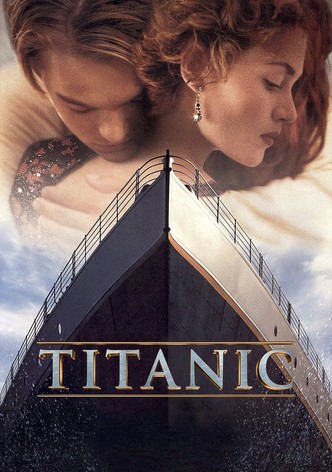
For the longest time, it felt as if nobody would even match the record set by Joseph L. Mankiewicz’s All About Eve, which landed 14 nominations in 1951, including five across the acting categories. Then, in 1997, James Cameron’s Titanic came along and matched it, converting a record equaling 11 of them into wins. La La Land joined the club in 2017, but, just like Eve, it only turned six of them into gongs—despite Faye Dunaway’s best efforts.
Had Sinners’ only landed 15, it may have needed an asterisk beside it as one of them would have been for Best Casting, a brand new category that those previous movies would likely have been nominated for, too. That Coogler’s film added yet another means that it stands alone on pure merit.
What Are Sinners' 16 Nominations (Expected and Unexpected)?
By lunchtime on announcement day, Sinners seemed to be a lock for at least 13 categories:
Best Picture
Director (Ryan Coogler)
Best Actor (Michael B. Jordan)
Original Screenplay (Coogler)
Score (Ludwig Göransson)
Song (Raphael Saadiq and Göransson)
Casting (Francine Maisler)
Cinematography (Autumn Durald Arkapaw)
Costume Design (Ruth Carter)
Makeup and Hairstyling
Editing (Ken Diaz, Mike Fontaine and Shunika Terry)
Production Design (Hannah Beachler and Monique Champagne)
Sound (various)
And breathe.
It all came down to Mosako and Lindo to get it over the line, which they did, for Best Supporting Actor and Actress. The one that few saw coming was Best Visual Effects, for which the film’s team beat out much more favoured competitors like Superman, Frankenstein and Wicked: For Good.
This also means that, unlike Eve, all 16 of its nominations came in separate categories and, more astonishing still, it was recognised in every category it was eligible for, bar Best Actress—my thoughts are with you, Hailee Steinfeld.
The Oscars That Sinners Could Actually Win - And Its Toughest Competition
And so we get to the tricky part. Coogler won’t need reminding that for every record for most nominations, there is also the possibility of earning the record for most nominations without a win. That unfortunate accolade was achieved by a film called The Turning Point (11 noms) in 1977 and later matched by Spielberg’s The Colour Purple in 1985. Like both of those films (Ross was up against Annie Hall and Star Wars, Spielberg for Witness and Out of Africa), Coogler has achieved this historic tally in a year with plenty of strong competitors—most notably Paul Thomas Anderson’s One Battle after Another and Chloe Zhao’s Hamnet.
If I had to put money on it, I’d probably say that Coogler’s film will have a similar night to movies like Mad Max: Fury Road and Master and Commander—ie It will lose the biggest races but clean up in the crafts—but it has two priceless things going for it: momentum and narrative. Hamnet has hoovered up audience awards at festivals around the globe and has the kind of emotional heft that the Academy loves; Anderson’s film, meanwhile, has swept the critics' prizes and he is long, long longgg overdue; but Sinners is something else—an audaciously original idea that actually made a ton of money at the box office. In a time when the theatrical experience is under threat, that might just be the kind of story that Hollywood wants to tell itself.
On a more granular level, it looks as if Sinners is running a close second in most of the non-acting categories and probably has the edge in at least Cinematography and Score. That would mean a third win for Göransson (after Oppenheimer and Black Panther) and a first for Arkapaw, who is only the fourth woman to be nominated (and the first woman of colour). A win would make her the first to ever take the award.
Is Sinners Really That Good?
The short answer is yes. It probably deserves even more credit for having premiered all the way back in April last year. Naturally, this is one to watch if you like stylish, sultry vampire movies (think Near Dark or From Dusk Till Dawn), but it’s a phenomenal achievement even as a period piece—there are moments in the first half of this movie that are as gorgeously detailed as anything in, say, Killers of the Flower Moon—and the music is just as good. You won’t be surprised to hear the blues tunes are on point—a constant rumble of guitar punctuated by Miles Caton’s hypnotic baritone—but the surges of heavy metal catch you off guard. And just wait till you see the two batshit song and dance numbers that Coogler drops at around the halfway point.
Come for all that, but stay for Coogler’s ideas, many of which have lingered with me since the first time I saw it. Things are being said here about the shared cultural histories of marginalised communities that you will not find in any other movie in the last 10 years—maybe ever. We wish it the best of luck.






















Bundle 4k





Bundle 4k