Forget Marvel, 50 Years Ago This Cult Musical Created the ‘Easter Egg’ Trend

Easter may have been and gone, but in the world of movies and TV, Easter eggs are timeless.
These days, we associate Easter eggs with cinematic universes and fan service. They can be a post-credit scene, a cameo, or a blink-and-you-miss-it moment that directly appeals to the more detail-oriented fans among us.
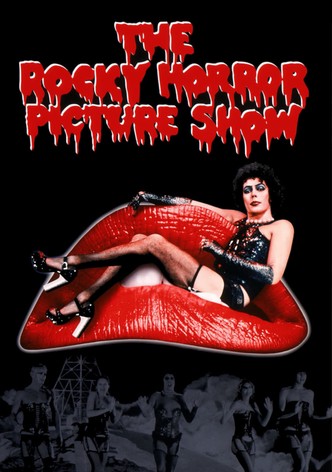
However, while the likes of Marvel and DC have largely taken ownership of Easter eggs now, they might have a surprising — and much more literal – source: 1975’s The Rocky Horror Picture Show.
How The Rocky Horror Picture Show Created Easter Eggs

As the legend goes, The Rocky Horror Picture Show cast had a little extra fun one day and decided to have a literal Easter egg hunt on set.
In turn, it seems like whoever hid the eggs did too good of a job, as three of these eggs can allegedly be seen in the film. According to fansite Cosmo’s Factory, a total of three eggs can be spotted: “one instead of a light in the main room, one as the group goes up in the elevator to the lab,” and, most famously, one under Frank-N-Furter’s throne.
While this rumour was never necessarily confirmed, it is widely believed that this is where the origins of the term “Easter egg” in film actually came from. However, it might not be the term’s only origin.
Atari Might Have Also Played A Role

The gaming and movie world are often seen as being adjacent to each other, but when it comes to the origin of the term ‘Easter egg’ as we know it now, Atari might have also played a role. Five years after The Rocky Horror Picture Show, Atari released a video game called Adventure.
In the game, you effectively control a square avatar whose goal is to explore a mythical kingdom, find a magical chalice and return it to the Golden Castle. The game was designed by Warren Robinett, who was disgruntled by the fact that, in those days, game studios never really credited the designers or developers of their products.
So, Robinett made the unprecedented decision to credit himself, and to hide that credit in the game. If the player put two specific objects in a particular room, they would be able to access another room which included lettering reading: “Created by Warren Robinett.”
Word soon spread about the addition, with the most famous example of this including a letter that a 15-year-old player sent to Atari informing them about what Robinett referred to as his “signature.”
Instead of spending all the money necessary to remove the signature, Atari decided to keep it in. Legend has it that Steve Wright, who was a director at Atari at the time, said that having hidden surprises for players wasn’t necessarily a bad thing, comparing it to finding Easter eggs on Easter morning.
While these two accounts don’t really relate to each other, both are arguably crucial in establishing the term ‘Easter eggs’ as we know it today.
What About The First Movie Easter Egg?

Here’s another fun fact for you: In terms of the little nudge-wink moments that are now defined as Easter eggs, the first-ever movie Easter egg far predates that term.
In Alfred Hitchcock’s 1927 movie The Lodger: A Story of the London Fog, one of the extras that came on-screen was actually Hitchcock himself, in a fun moment that was shared with committed Hitchcock loyalists at the time.
So, if you think about it, Hitchcock cameos can be seen as a very early equivalent to the Marvel tradition of Stan Lee movie cameos. Clearly, Easter eggs have a much richer history than you might think.









Bundle HD