

The 10 Best Brad Pitt Movies, Ranked

They say the movie star is dead, and that audiences are more drawn to superhero, comic book, novel, or franchise characters than to the actors who play them.
“Captain America is the star”, proclaimed Quentin Tarantino, and, in some respects, he might be right, but there are still some ‘old-fashioned’ movie stars pulling audiences in. Perhaps there isn’t a more consistent performer of the last four decades than Brad Pitt.
Alongside Leonardo DiCaprio, Tom Cruise, Julia Roberts, and Meryl Streep, Pitt has been at the top of his game for years, enchanting audiences since his breakout role in Thelma & Louise in 1991. He continues to bring the world some extraordinary film experiences, too, with his new films Heart of the Beast and The Further Misadventures of Cliff Booth, releasing in the next couple of months.
Here are just 10 films and performances from a career spanning over 60 films; he's revolutionised baseball, been a vampire, started an underground fight club, become an F1 champion, hunted Nazis, and everything in between.

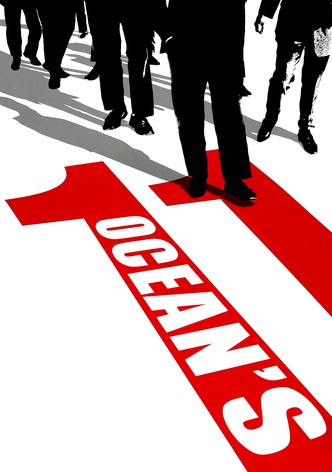


A best Brad Pitt film list would not be complete without Rusty Ryan bringing his trademark effervescence to proceedings. Based on the 1960 ‘Rat Pack’ film of the same name, Steven Soderbergh’s infectious thriller brought Pitt together with George Clooney, Julia Roberts, Matt Damon, and Andy Garcia among a sensational ensemble.
Rusty is Danny Ocean’s (Clooney) right-hand man – a small reason why this is No. 10, as he is part of the huge ensemble. After Ocean’s release from prison, the crew set about getting funding for their biggest heist ever: hitting a high-stakes vault that connects the three casinos. Stylish, dry, and controlled, Rusty is already an iconic role in Pitt’s filmography, not least because the character is always seen eating throughout the film, which was not scripted – Pitt just had no time between busy shoots to eat, so he ate on-screen. Effortlessly.











Going toe-to-toe with Tom Cruise is a staggeringly nerve-wracking proposition for an actor, not least one who had just started to emerge as a leading man. But, when it's Brad Pitt, it's a doddle. While the 1994 adaptation of Interview with the Vampire was met with mixed reactions – not least from creator Anne Rice herself – and it’s still Cruise’s show, Pitt rose above the noise magnificently.
Strangely, he nearly left the role, but reversed course when he was told it would cost a fortune to replace him. Indeed, director Neil Jordan said Pitt’s off-screen woes mirrored his character, Louis de Pointe du Lac, on-screen. We are glad he stayed, though, as he and a young Kirsten Dunst are the film’s shining lights — brooding, guilt-ridden, and restrained. It was a take-notice moment for Hollywood regarding Pitt’s leading man status.






Bundle HD


Another hugely underseen and underappreciated film in Brad Pitt’s collection is the 2001 political thriller Spy Game. This one co-stars his self-proclaimed acting idol Robert Redford – who had directed him in 1992’s A River Runs Through It – as his CIA mentor, directed by the legendary Tony Scott (Top Gun).
With the same fast-paced, super-stylish direction Scott brought to many of his films, Pitt plays CIA operative Tom Bishop, whose idealism leads him to go rogue and get arrested in China on high-level espionage charges, with mentor Nathan Muir given 24 hours to bring him home. Pitt leans into Bishop's tenacity and ingenuity brilliantly, while still making you feel empathy for his plight.





Terry Gilliam had been scarred by his experiences with Brazil and Baron Munchausen in the 1980s, so he planned his output more thoughtfully in the next decade. 1991’s The Fisher King reasserted his appeal, but it was 12 Monkeys that solidified his legendary status.
Set in a post-apocalyptic world ravaged by a virus, Pitt plays manic psychiatric patient Jeffrey Goines, who encounters Bruce Willis’ Cole, who is considered crazy after being sent back in time to find a cure to help humanity survive in the future. Pitt later said he thought he “nailed the first half… I got the second half all wrong.” It earned him his first Oscar nomination, however, so it wasn’t all wrong.





‘Moneyball’ is essentially a data-driven strategy for building a competitive sports team on a small budget using statistics instead of traditional scouting. It was a revolutionary idea at the time that sent shockwaves through baseball, for better or worse, and has even bled into other sports since.
A book by Michael Lewis later, the story of Moneyball and its deviser Billy Beane, general manager of the Oakland Athletics, came to the screen with Pitt as Beane. It remains one of his most underrated performances. Always questioning his choices and his landmark idea, Pitt brings a quiet, understated emotion to his performance that landed him another Best Actor Oscar nomination alongside Jonah Hill and a film-stealing Philip Seymour Hoffman.


Almost 20 years after its initial release, Andrew Dominik’s sprawling, spectacular wonder of a film is still both criminally underrated and underseen. A box-office bomb at release despite a combination of critical acclaim, Pitt and Casey Affleck’s performances, and Roger Deakins’ spectacular cinematography, The Assassination of Jesse James has thankfully grown in stature over the years.
Pitt plays legendary outlaw Jesse James, who becomes increasingly paranoid and anxious around his gang when 19-year-old Robert "Bob" Ford (Affleck) desperately seeks to join his remaining roster. Swapping his usual charms for stoic, angered unpredictability, it is perhaps the performance of Pitt’s, like the film, that is begging for rediscovery, especially as it was Affleck who got an Oscar nod for this, not Pitt.

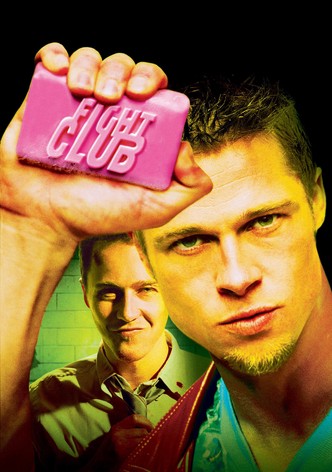
David Fincher’s adaptation of Chuck Palahniuk’s unique and brilliant novel was seen as a big risk back in 1999 when Fight Club was made, even trying to “restructure” Fincher’s own advertising ideas for the film for fear of it being a huge flop. Despite its box-office disappointment, it eventually hit the zeitgeist and became one of the most important films heading into the new millennium, cementing Ed Norton as one of Hollywood’s most exciting new prospects.
Pitt is Tyler Durden, a soap salesman with enough swagger, charisma and intense physicality to sell a million bars a week; he quickly forms a friendship with the film's unnamed narrator (Norton), a white-collar worker sick of his job. They form a ‘fight club’ together, but they soon discover their friendship runs much, much deeper.




“And once we're in enemy territory, as a bushwhackin' guerrilla army, we're gonna be doin' one thing and one thing only... killin' Nazis.” Lt. Aldo Raine of Inglourious Basterds is the first of two Tarantino entries in our list here. What can we say? he just brings the best out of Pitt.
In an alternate take on history, the Basterds travel to France to bring down Hitler, Goebbels, and the heads of the Nazi regime, all the while having to negotiate with Hans Landa, AKA the ‘Jew Hunter’, played with spectacular gusto by Christoph Waltz, who steals the film from everyone else. Nevertheless, Pitt’s dark sense of humour, cool effervescence, and thick Tennessee drawl makes this arguably his most underrated turn, and easily one of the most ambitious and off-kilter of his career. It’s definitely a bingo!


Many would argue that Quentin Tarantino’s ninth of his reported ten films should be number one on a Brad Pitt list because he finally won an Oscar. And you’d be right... if Se7en didn’t exist. Still, we concede it is the actor’s best ‘modern’ performance, and one of Tarantino’s most enjoyable films.
As stuntman Cliff Booth (who will return for more adventures later in 2026), Pitt’s charisma sits perfectly alongside Leonardo DiCaprio’s superstar Rick Dalton as they take on Hollywood in the 1960s. However, it's the latter who does most of the heavy lifting. Pitt’s Booth is confident, restrained, and understated while still exuding all his usual magnetism and being well-deserving of that Oscar, too.

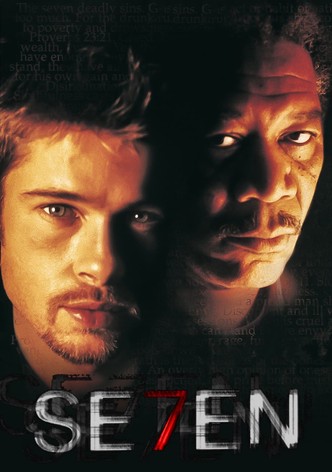
After being caught in the battleground that was Alien 3 on his first film, David Fincher waited three years to make his second, and it is still perhaps his greatest work. But even with his mesmeric, noir-like direction and cinematography, Se7en is nothing without Somerset and Mills at its heart.
There will be arguments about where Pitt’s greatest performance lies, but for us it is his turn in this thriller. A sharp contrast to Morgan Freeman’s seasoned Somerset, Mills’ youthful cockiness and frustrated impatience help anchor Andrew Kevin Walker’s masterful screenplay and Fincher’s impeccable artistry. Has Pitt been ‘better’? Possibly. But for the finale alone, this is easily the best film the Oscar winner has been part of. It’s ripe for another watch.


