8 HUGE Box-Office Hits That Critics Absolutely Hated

These days, critical appreciation and blockbuster success don’t really go hand in hand, especially with these movies that made a killing at the box-office but failed to impress the critics.
In fact, since Hollywood has moved more into franchise filmmaking in the last 25 years, those movies have basically become review-proof. The truth is that familiarity is more likely to sell tickets to the biggest movies these days — whether that means knowing the superheroes involved, the Transformers doing the transforming, or, as in the case of Michael, the songs being sung. Indeed, despite receiving a relative mauling by critics, that movie looks on course to become one of the biggest musical biopics of all time.
Of course, this isn’t the first time that bad reviews have had little to no effect on ticket sales. In the list below, I’ve rounded up eight notable cases when a movie made serious bank in spite of the critics; and in the interest of variety, I’ve limited this — with the greatest respect to Michael Bay — to one movie per franchise.

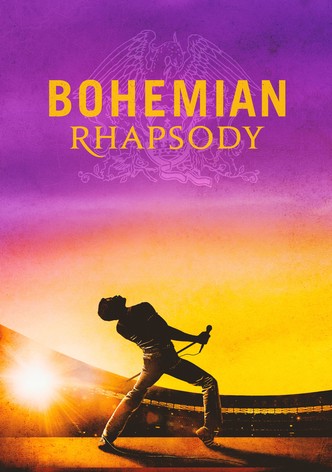


The closest comparison to what’s happening with Michael is — as many editorials are currently pointing out (Catherine Shoard’s piece in The Guardian is a real doozy) — another musical biopic which made a healthy profit regardless of critical suspicions that the filmmakers played fast and loose with the facts.
The most prominent case is the hugely successful 2018 movie Bohemian Rhapsody, which took in a record-breaking $910M and won Rami Malek (who wore an outrageous set of fake teeth for the role and didn’t even sing the songs) Best Actor at the Oscars (notably over Bradley Cooper — who directed, starred and even sang in A Star is Born)
The movie’s success was mostly thanks, I think, to the remarkable 15-minute-long Live Aid reenactment at the end — a coda that sent movie-goers out into the night still happily humming the tunes. Richard Roeper began his review in the Chicago Sun Times as such: “Eesh. What a disaster,” but the movie was never going to bite the dust with an ending like that.
Box-office: $910 million
Rotten Tomatoes score: 60%








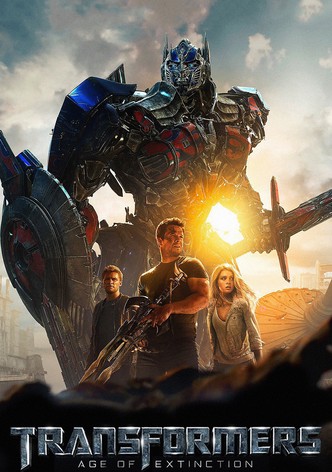

If one franchise embodies this list more than any other it’s Michael Bay’s Transformers, a series of movies that have basically turned making bank in spite of bad reviews into an artform — especially for the fact that the thing that critics tend to hate the most about them (Bay’s maximalist use of CGI) is simultaneously the thing that makes them so commercially successful around the world.
Just consider how the movies’ Rotten Tomatoes scores have deteriorated from the 2007 original’s high of 57% to The Last Knight, which came in at a series-low of 16%. I’ve decided to go for 2014’s Age of Extinction for its astonishing ratio of $1.1 billion to 18% on that review aggregating website. At the time of release, Peter Travers of Rolling Stone called it, “The worst and most worthless Transformers movie yet” — which I guess is at most only half correct.
Box-office: $1.1 billion
Rotten Tomatoes: 18%



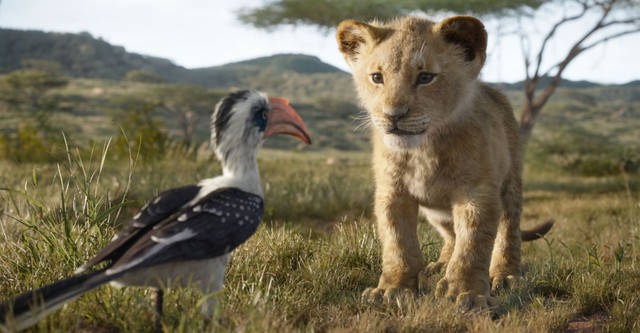

Relatively speaking, The Lion King — a “live-action” remake of the 1994 Disney classic — was more warmly received than most of Bay’s Transformers movies, but its $1.6 billion in box-office sales in spite of a lukewarm critical response does warrant a mention on this list.
Depending on how you look at it, this is probably the biggest disparity of critical appraisal to box-office earnings in history — it is, by my count, the only movie in the top 19 highest grossers ever to receive a splat on its Rotten Tomatoes page. Summing up how most reviewers felt about the movie’s uncomfortably uncanny look and feel, David Ehrlich at Indiewire described it as a “technically impressive nature documentary that forgets to include any real animals.” To which the public mostly said, “Who needs ‘em?”
Box-office: $1.6 billion
Rotten Tomatoes: 52%




Bundle 4k
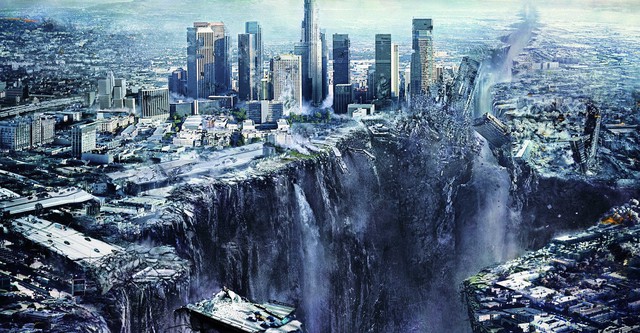

By 2009, Roland Emmerich had become to the disaster movie genre what John Ford once was to the Hollywood Western, having laid waste to famous chunks of America in everything from Independence Day to Godzilla and The Day After Tomorrow. Then, in 2009, he decided to fully lean-in by making 2012, a movie based on a doomsday theory from the Mayan calendar — which proved, at least to the critics, to be one disaster too far.
Having watched and mostly enjoyed 2012 quite recently, I think that the backlash at the time was more to do with general CGI on offer and a sense of disaster movie fatigue — but whatever the reason, it didn’t stop audiences coming out in droves to see what that gigantic wave from the trailer was going to hit. Peter Bradshaw might have spoken for both the sceptics and the movie’s fans when he described it as a “two-and-a-half-hour cataclysm of noise, nonsense, and collapsing landmarks.” Sign me up.
Box-office: $791 million
Rotten Tomatoes: 39%






Another recent franchise that’s raked in bags of cash despite being consistently berated by the world’s most respected movie critics is Colin Trevorrow’s Jurassic World trilogy, which made a collective $4 billion across its three installments despite receiving an average rating of 49% on Rotten Tomatoes.
The second installment, Fallen Kingdom, was not reviewed as poorly as its successor, Dominion, but its ratio of criticism to cash is certainly the most alarming. Over at Rolling Stone, Travers suggested that “the dinosaurs deserve better than this.” Too true.
Box-office: $1.3 billion
Rotten Tomatoes: 47%


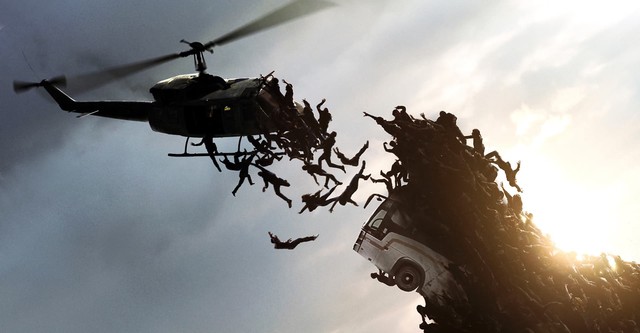
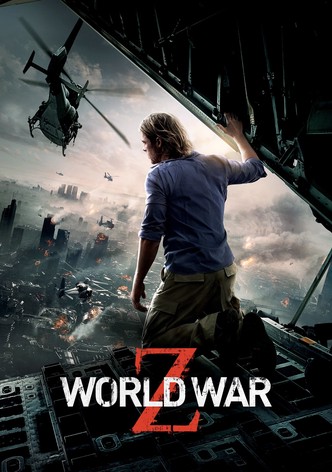
With 67%, it would be a stretch to say that critics necessarily hated World War Z, but seeing a fully original movie take half a billion at the box-office in 2013 in spite of tepid reviews still felt remarkable at the time, and is even weirder to look back at now.
World War Z sees Brad Pitt attempt to survive against perhaps the most ravenous zombie hoard ever put to screen. Was the movie’s most indelible image — a mass of zombies breaching the “Separation Barrier” between Israel and Palestine — just a little too distasteful? Writing for Screenrant at the time, Ben Kendrick called it “as absent-minded as its undead subject matter.” If it was released in 2026, I imagine the takes would be less polite.
Box-office: $540 million
Rotten Tomatoes: 67%


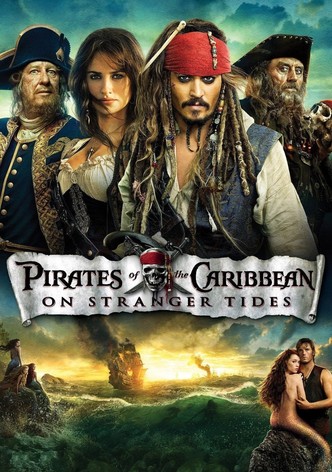
With their boundary-pushing use of (or over-reliance on) computer generated imagery, the Pirates of the Caribbean movies were eventually about as appreciated by critics at the time as Bay’s similarly hectic Transformer saga — but, having revisited the Gore Verbinski installments (he directed the first three) recently, I must say I found them to be an enjoyable and often dazzling romp. The real problems arose after Verbinski stepped away from the director's chair.
In terms of Rotten Tomatoes scores, the Pirates movies go steadily downhill with each entry, from a 79% “Fresh” rating for Black Pearl all the way to a measly 30% for Dead Men Tell No Tales — but for the best earnings to mauling ratio, you can’t beat On Stranger Tides‘s 33% and $1 billion cache.
Box-office: $1 billion
Rotten Tomatoes: 33%
Bundle 4k


We’ll end our list with a movie that the critics really were too hard on. I mean, sure, there were some issues with the casting, but the filmmaking, worldbuilding, craft and detail in Star Wars: Episode I - The Phantom Menace is pretty much better than any big budget movie being made today.
Regardless, the critics at the time couldn’t wait to pile on Jake Lloyd’s performance as Anakin and the clumsy Gungan Jar-Jar Binks. The moviegoing public, however — who had by that point waited 16 years for a new Star Wars movie — inevitably showed up to make it the second highest-grossing movie of all time (at that point), behind only James Cameron’s Titanic.
“The actors are wallpaper, the jokes are juvenile, there’s no romance, and the dialogue lands with the thud of a computer-instruction manual,” Travers wrote at the time, “But it’s useless to criticise the visual astonishment that is Star Wars: Episode I - The Phantom Menace.” I’m inclined to agree.
Box-office: $1 billion
Rotten Tomatoes: 52%
Bundle 4k