
From a former British Navy Intelligence officer’s power fantasy scribblings in a Caribbean shack in the early 1950s, one of cinema’s longest-running series was born. Ian Fleming’s James Bond, codename 007, is one of those rare icons whose fame extends far beyond the page and screen – the suave British spy is a cultural landmark whose identifiers and tropes are instantly recognisable and mimicable.
Despite being a film franchise glutton, Bond has been a blind spot for me for years. So, I gave myself a mission: watch and judge them all, based on stunts, theme, set and costume design, Bond girls, villain(s), theme song, gadgets, and, of course, the actor in the tux. Here’s my ranking of every James Bond film, from least to most favourite, as a first-time watcher.
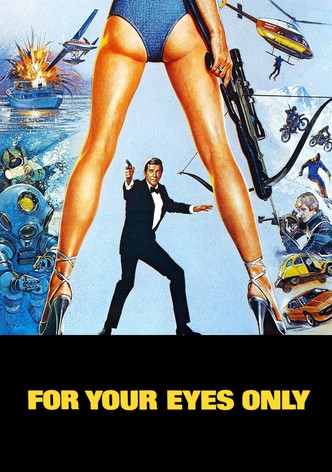
26. For Your Eyes Only (1981)
Roger Moore fans, be warned: you’ll be seeing a lot of him down here. So far, no Bond actor has been bad in the role, but despite his charms, Moore’s definitely the most de-fanged version of the rogueish agent. For Your Eyes Only is similarly not a bad film, but coming after the bombastic high of Moonraker, it falls very short.
If For Your Eyes Only was a bad film, in fact, it might be more memorable. As it stands, the Greek-set story of revenge and missile misuse is extremely thin on action, depth, or spark from Moore, who feels like he’s going through the motions after nearly a decade in the role at this point. The one saving grace? Margaret Thatcher talking to a parrot.
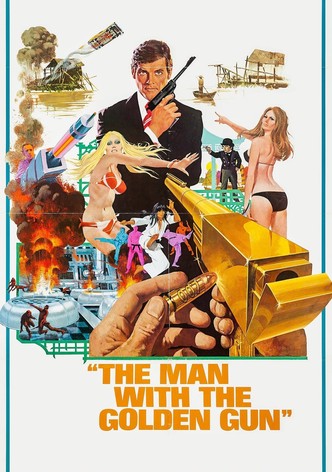
25. The Man With The Golden Gun (1974)
The presence of Hammer Horror icon – and future Lord Of The Rings and Star Wars alum — Christopher Lee as the titular villain is this film’s sole boon, and potentially my excitement about him led to this one feeling like such a letdown. The most disappointing part is the wasted potential of The Man With The Golden Gun, which draws an ideological line between Moore’s 007 and Lee’s Francisco Scaramanga: Bond kills for Queen and country; Scaramanga for the highest bidder.
The island hideout is one of the most inventive in the series, with Bond trapped in a fun fair-style maze, hunted by Scaramanga and his signature weapon, and an assassin small enough to hide in a box. If the movie leaned harder into their dynamic, it would’ve been much meatier; instead, it’s mostly flab.
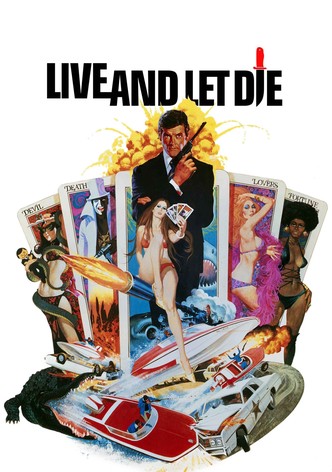
24. Live And Let Die (1973)
The best thing about Live And Let Die is a killer theme song, courtesy of Paul McCartney’s Wings (though I prefer the Guns ‘N’ Roses cover featured in Grosse Point Blank). This is Moore’s first outing as James Bond, taking over from Sean Connery, and he has a tough time living up to the man who originated the part on the big screen.
With Harlem gangsters, voodoo, and street-level crime, the film is very of its time in terms of African American on-screen representation. Putting that aside, it struggles to match the panache of how previous supervillains have been portrayed (this one is unimaginatively named Mr Big) or the stakes they set: Bond literally walks all over a crocodile trap. Got to say, though, death by inflation will stay with me for a while…
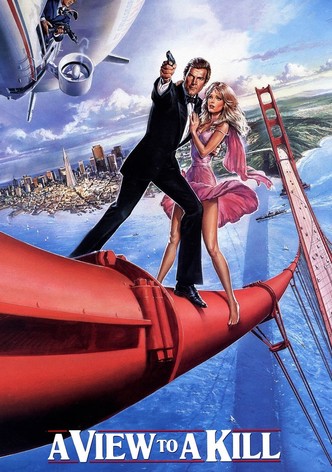
23. A View To A Kill (1985)
Christopher Walken and Grace Jones match each other’s freak in A View To A Kill, and for that reason alone, I wish I could put it higher on this list. Unfortunately, there are just too many weird, disconnected ideas in this one: something is going on with ex-Nazis drugging race horses, a woman ‘performs’ with live butterflies in an Eiffel Tower restaurant, and a detective called Achille Aubergine is nearly too French to function.
There’s an opening skiing scene (Bond loves to ski) with a Beach Boys needle drop that’s random and clunkily executed, which sort of sums the entire film up. Walken’s Silicon Valley autocrat villain feels horribly prescient; otherwise, this one’s a hot mess. Should you still watch it, though? Absolutely. That Duran Duran song is straight fire, too.
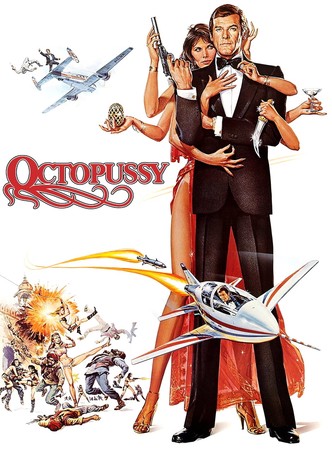
22. Octopussy (1983)
A movie title that is still wild to see written down, or say out loud to anyone asking what you’re planning to watch tonight. Octopussy is one of the late Cold War releases in which you can see the franchise struggle between a nuanced and black-and-white depiction of the Soviet Union, which Western forces were by this point much friendlier with.
Suitably, the main villain is a Soviet general gone rogue, funnelling stolen jewellery into a bid to disarm Kremlin enemies. In trying to have its Cold War cake and eat it, Octopussy feels hollow and the series bereft of new or interesting ideas. Neither bad nor good, but Moore seems to enjoy himself, er, more.
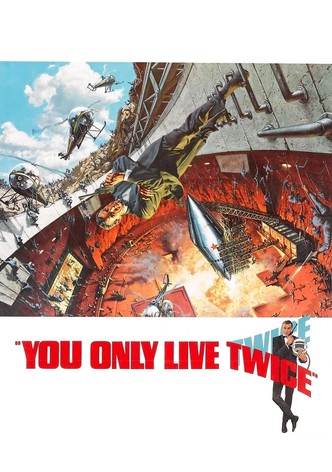
21. You Only Live Twice (1967)
The first appearance of Sean Connery on this list, and while I have a lot of affection for it, You Only Live Twice is another film that’s all over the place. In a feat of peak Bond absurdism, the opening kills off the character… Only to explain exactly what the nonsensical title means. Then we’re off to Japan, and if you don’t have much tolerance for racial insensitivity, you may want to skip suffering through Connery’s ‘Japanese disguise’ altogether.
Generally, this is the series at its lowest for cultural stereotyping and female objectification, especially of Asian women, but some pluses include the first face reveal of Bond’s most persistent adversary, Ernest Blofeld, and his incredible volcano spacecraft launchpad. The surprise piranha bridge dunk (which should be a cocktail name) never gets old, and I think the theme song is really underrated, too.
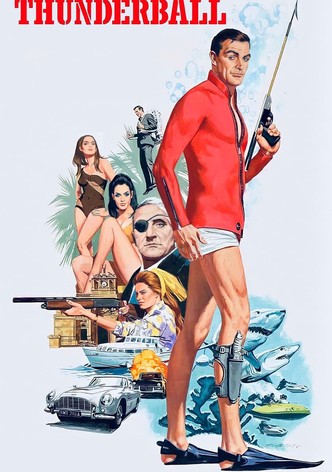
20. Thunderball (1965)
Perhaps best known for putting Connery in a jet pack, and worst known (by me) for its extensive underwater fight scenes. In Thunderball, Blofeld’s elusive organisation SPECTRE steal nuclear bombs from NATO and demands £100 million of diamonds in exchange for not using them. If you know your Austin Powers, this is the movie from which a lot of Mike Myers’ gags come, including an eyepatched ‘Number Two’ to Blofeld.
What bogs the film down are the aforementioned underwater scenes, which are technically impressive but incredibly bloated and dull to sit through: the water slows the fighting down, and it’s hard to make out who’s doing what through all the oxygen masks and flippers.
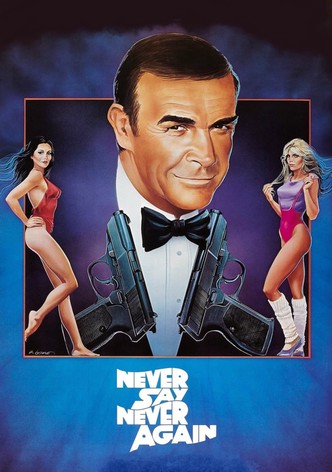
19. Never Say Never Again (1983)
This is the only technically ‘unofficial’ Bond film on the list, which are all Eon productions – a company formed specifically in 1961 to produce James Bond films. However, as it features Connery’s return to the role after leaving it in 1971’s Diamonds Are Forever, it feels worthy of inclusion, especially as it nearly gave the ‘real deal,’ Octopussy, a run for its money.
Never Say Never Again is a remake of the Fleming story that Thunderball was based on, with an added layer of meta-commentary on Connery’s age (meaning Bond’s age, too) and ability to still perform. He puts such aspersions to rest by being really good at video games and pleasing women (take that, haters), like the gloriously unhinged Fatima Blush. A mixed bag, overall, with more value as a franchise curiosity than a really solid entry.
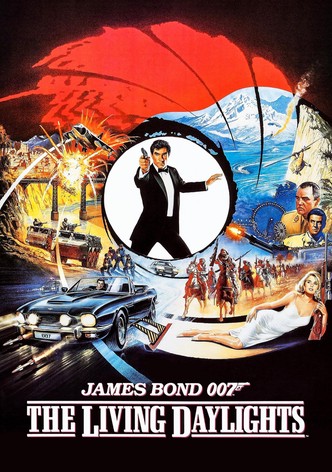
18. The Living Daylights (1987)
The first Timothy Dalton-led Bond, both in film chronology and on this list. Only starring in two 007 movies, the swarthy Welshman gets lost in the shuffle, being neither an infamous one-trick pony like George Lazenby (up next on the list), nor long-serving, like the rest. But post-Daniel Craig, Dalton’s brooding take on the character was clearly ahead of its time.
The story is one of the more convoluted in the series, but its focus on characterisation really shines, with Bond’s relationship with the KGB cellist he’s protecting feeling like something based on mutual affection rather than raw sexuality. The climactic desert battle is quintessential ‘80s bombast, but the rest lacks some of the sophisticated style of Connery and Moore’s eras.
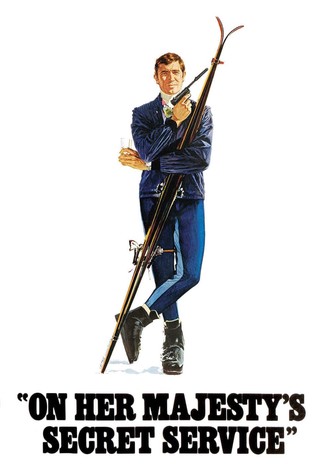
17. On Her Majesty’s Secret Service (1969)
I mentioned earlier that Bond loves to ski, and On Her Majesty’s Secret Service is the Bond ski movie. So much so, in fact, it apparently inspired fanboy Christopher Nolan’s inclusion of a similar scene in Inception. On Her Majesty’s Secret Service has lots of fans among modern directors, and when you watch it, you’ll see why.
Sandwiched between Connery, Moore, and Connery again, the sole Lazenby film is a tonal mishmash of slow and silly flights of fancy – like a harem of brainwashed babes on a snowy mountain – and brilliant high-stakes action. I particularly love Telly Savalas’ quietly confident take on Blofeld, and the jarringly tragic revenge he wreaks on Bond at the end. The repercussions of this ending have a lasting effect on the character far beyond Lazenby’s portrayal.
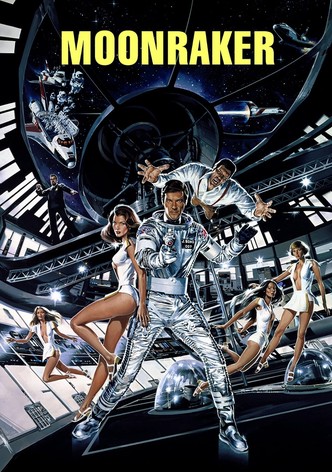
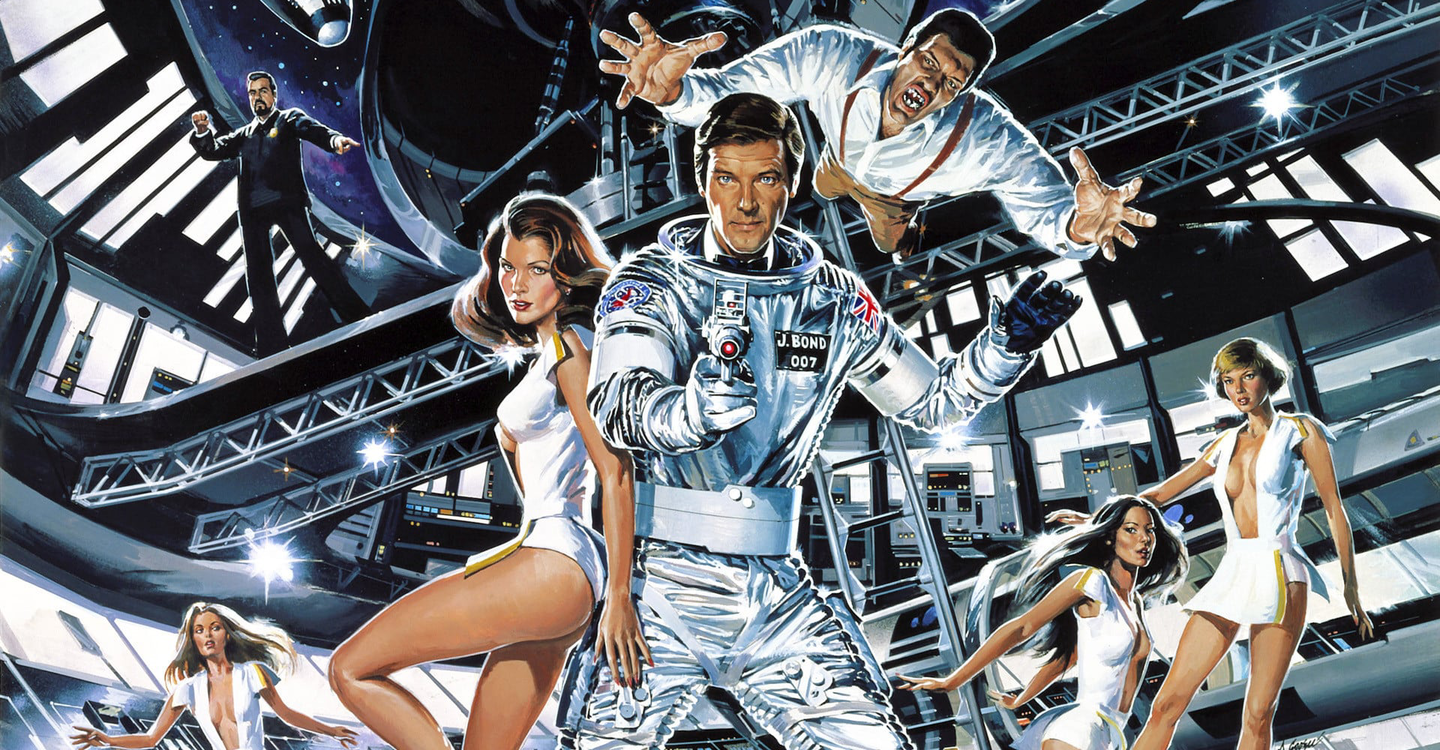
16. Moonraker (1979)
At a certain point in a franchise’s existence, you have to send your characters to space. It happens to Jason Vorhees, it happens to the Muppets, it happens to the Fast & Furious gang, and in Moonraker, it happens to James Bond. I don’t make the rules; I simply wait for the inevitability of leaving Earth’s atmosphere to unfold on the screen before me.
And you know what? It’s never not cool. Even though the majority of Bond villains are hellbent on doing awful things to our planet and the people on it, Moonraker’s baddie is the most ethically insidious: space shuttle thief Hugo Drax plans on taking the planet’s best and brightest off-world, and blowing up everyone who’s left behind. He has an iconic henchman in the silver-toothed Jaws, played by the 7’1.5” Richard Kiel, who also has an unexpectedly sweet redemption arc. It’s this attention to detail and the grand scale of this space-race adventure that make Moonraker one of the most memorable Moore films.
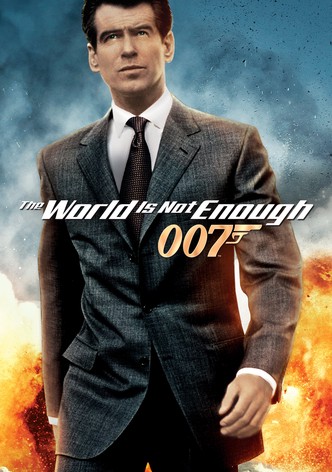
15. The World Is Not Enough (1999)
Pierce Brosnan was my generation’s Bond, so I have to admit nostalgia inevitably seeps into my judgment of his contributions to the franchise. The plot of The World Is Not Enough is convoluted at the best of times – let’s just say it involves the bad guys manipulating the price of petrol via nuclear meltdown, submarines, and kidnapping the daughter of a murdered billionaire.
The film is elevated and hampered by its respective Bond Girls: one, Elektra, is a deliciously duplicitous femme fatale, and the other is Denise Richards playing a nuclear scientist called Dr Christmas Jones, dressed, for some reason, like Laura Dern in Jurassic Park. Critics lambasted her for being miscast, which I don’t disagree with, but I actually find her earnestness a good counterbalance to Sophie Marceau’s bitter treachery. Super, super underrated theme song, too.
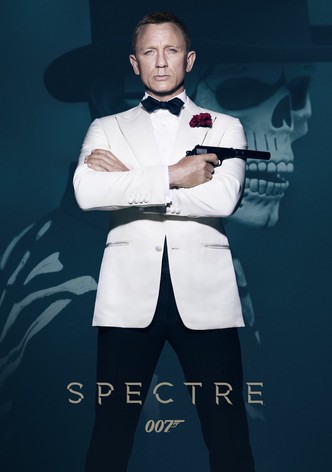
14. Spectre (2015)
We move on now to our first Daniel Craig film, and the worst of the actor’s five movie run, IMO – not helped by having to follow the masterful Skyfall. That isn’t to say that Spectre is a bad watch: Ralph Fiennes steps into Judi Dench’s shoes to play a leaner, meaner M, while Andrew Scott is wonderfully slimy as a government rival looking to prove the redundancy of the 00 programme in a world where wars are waged with keystrokes, not men in tuxedos.
The film’s title announces the return of the evil, shadowy organisation headed up by Blofeld, played by Christoph Waltz, which Eon recovered the rights for after a protracted legal battle with the company behind the offshoot Connery film, Never Say Never Again. Waltz’s introduction is spine-tingling, but this aura doesn’t quite sustain itself, and the complex threads of Spectre’s plot ultimately boil down to a slightly uninspired damsel-in-distress climax. Sam Smith’s theme song is a real stunner, though.
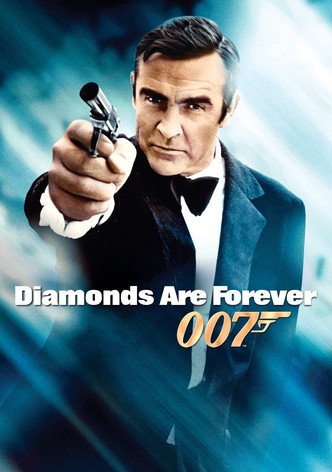
13. Diamonds Are Forever (1971)
Diamonds Are Forever is notable for being both Connery’s comeback 007 film following the sudden exit of his successor, George Lazenby. It’s also the original Bond actor’s last ‘official’ outing as the spy. It’s a shame, then, that Connery doesn’t bow out of the Eon series on a note as strong as the ones Shirley Bassey belts out for one of the best theme songs of all time. But as uneven as Diamonds Are Forever is, it’s at least one of the goofiest offerings.
The film boldly starts with Blofeld’s apparent death at Bond’s hands as vengeance for the supervillain murdering his bride in On Her Majesty’s Secret Service. Then, the agent heads to Vegas to thwart a diamond smuggling operation, which feels beyond his purview until it’s revealed they’re being used to power a giant space laser. (What else would you use diamonds for?) The most delightfully odd part is Wint and Kidd, a pair of eccentric assassins heavily implied to be a gay couple, who try to take Bond out by hiding a bomb in a cake on a cruise liner.
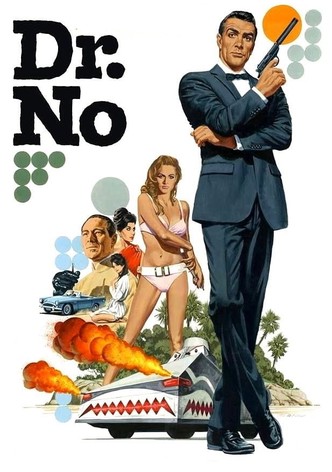
12. Dr No (1962)
Though there were some aborted TV attempts prior, this is the OG Bond film, and there’s loads to love about it: the lavish mid-century modern aesthetic, Connery’s effortless cool, its aspirational globetrotting, and its introduction of the character himself, which immediately emphasises 007 as being someone to pay attention to.
I also appreciate some of the simple spy tricks Bond does here without the high-tech gadgets he soon becomes synonymous with, as well as the dinner scene with the film’s eponymous supervillain, reminiscent of Count Dracula eyeing up his prey. Dr No is worth watching to see where it all began, even if later instalments blow it somewhat out of the water.
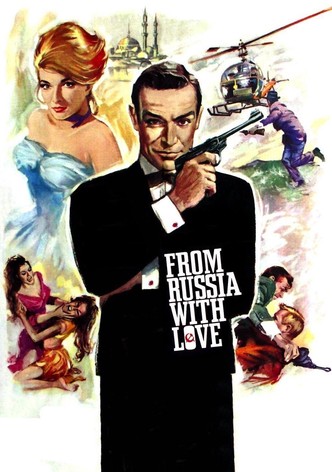
11. From Russia With Love (1963)
This is the second Bond film in the series, and also one of the most highly regarded. It follows on somewhat directly from Dr No, with SPECTRE out for James’ blood after the death of the aforementioned villain, and Bond himself tasked with facilitating a Soviet intelligence officer’s defection in Turkey. Her handler is Colonel Rosa Klebb, a counter-intelligence operative with a sadistic, sapphic edge and a blade hidden in her shoes to prove it.
Compared to the fantastical travelogue that is Dr No, From Russia With Love is a slower affair that leans more into the double-crossing side of espionage, as well as the tangled web of Cold War politics. If you like more grounded, modern spy thrillers like Tinker, Tailor, Soldier, Spy, this is the vintage 007 adventure that’ll appeal to you the most. My favourite moment is when Bond rumbles an undercover Soviet masquerading as an Englishman through his wine pairing aboard the Orient Express. A red with fish? Her Majesty would never.
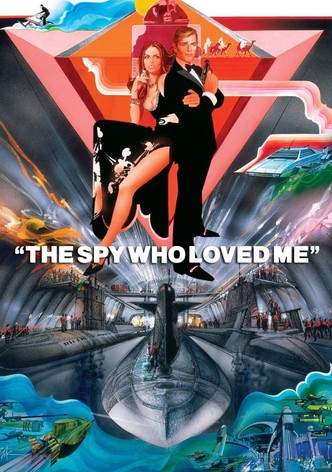
10. The Spy Who Loved Me (1977)
The Spy Who Loved Me is without a doubt the high point of Moore’s tenure as the MI6 antihero. Coming on the heels of the poor-performing The Man With the Golden Gun, this third entry in the Moore run needed to swim or risk sinking both star and franchise. Just as well Bond has a submarine car, perfect for thwarting a businessman’s plan to create his own underwater Atlantis and destroy everything on the surface.
With the Cold War cooling off, The Spy Who Loved Me has little tethering it to a tangible real-world threat, resulting in ambitious stunts, a wonderfully lavish villain lair and one of the most memorable henchmen, the metal-toothed Jaws. If you only watch one Roger Moore Bond film, make it this one.
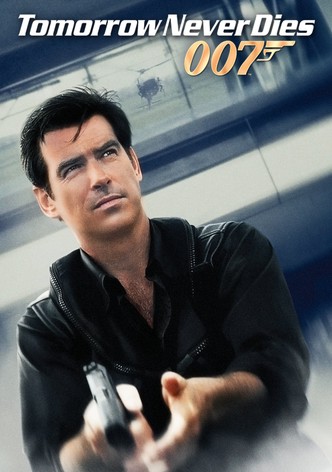
9. Tomorrow Never Dies (1997)
Tomorrow Never Dies is a time capsule of the encroaching new Millennium aesthetic, tone, and theme, the latter being anxieties around increased surveillance and clickbait-driven mass media that have only become more pronounced with time. Perhaps that’s why I’m placing it higher on this list than others might.
Despite being very overblown (a consistent critique of the Brosnan films), the casting makes up for its flaws: as well as Brosnan’s imitable charms, Jonathan Pryce is a scenery-chewing tech mogul with the black heart of Lex Luthor and the black costume of Steve Jobs; Michelle Yeoh gives James the runabout during a wild motorcycle chase in China, and Teri Hatcher is a seductive but tragic love interest. Pure entertainment.
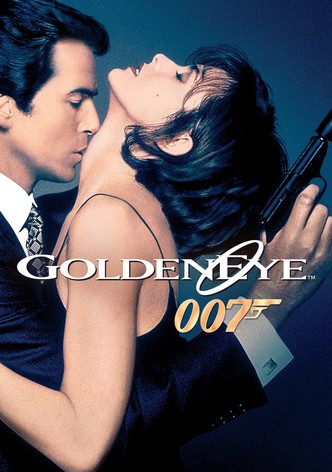
8. GoldenEye (1995)
More than just the source material for that really good N64 game, and named after Fleming’s Jamaican writing retreat, GoldenEye is also the first outing for Pierce Brosnan after a six-year hiatus for Timothy Dalton, and the first Bond film for director Martin Campbell, who went on to helm Casino Royale, and clearly has a knack for soft reboots.
GoldenEye didn’t have the crutches of Fleming’s stories or the Cold War to rely on for inspiration, which it ends up using to its advantage as a sort of meta-commentary on the character’s relevance. Sean Bean is in top form as an embittered MI6 agent-turned-terrorist, a twisted mirror to Brosnan’s effortlessly suave Bond. Their nail-biting fight dangling over a satellite dish still holds up against any modern action blockbuster.
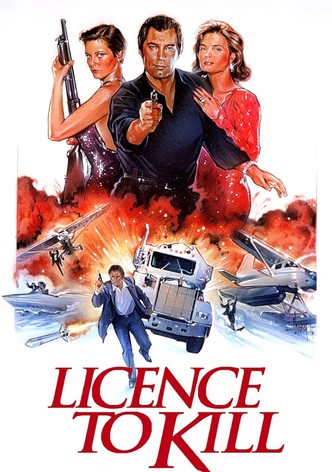
7. Licence To Kill (1989)
If you’re predominantly familiar with the Daniel Craig films, Licence To Kill, Timothy Dalton’s second and final stint as the iconic spy, really sets the stage for the brooding, loose cannon the character becomes. After an attack on his CIA buddy Felix Leiter, Bond rashly quits MI6 and goes on the warpath.
Naturally, this grimmer tone is divisive to this day among critics, fans, and even those in the film, but if you’re a fan of the bloody, oily, and sweaty machismo of the era – Predator and Rambo, for instance – you’ll likely enjoy it. Much like Craig, Dalton sharpens the edges and dirties the martini of Fleming’s quintessential antihero in a way I find satisfyingly appropriate for a man who kills with a quip and is trained not to form emotional attachments.
6. Quantum Of Solace (2008)
Quantum of Solace is the most-maligned of the excellent run of Craig films. The title, taken from a short story in a Fleming anthology, sounds like gibberish, and like Licence to Kill, it was deemed at the time of release to be too maudlin and messy compared to the classic caper feel of Casino Royale. While I can definitely see where its detractors are coming from, I’d urge anyone sleeping on Quantum to wake up to it.
Following his doomed romance in Casino Royale, 007 rebounds on another vengeance quest alongside fellow scorned agent, Camille, which, helpfully for the people of Bolivia, dovetails into stopping a plot to control the country’s water supply. As it became clear Craig’s tenure would be the first fully sequential story of the series, Quantum is retrospectively an important bridge from Casino Royale to Skyfall, allowing Bond time to lick his wounds and form an unusually sexless connection to a woman based on mutually beneficial revenge – one of the most dramatic and surprisingly tender conclusions to any of his relationships. It also establishes a closer relationship between him and Judi Dench’s M, which is crucial to the emotional bedrock of Skyfall.
5. Die Another Day (2002)
I knew when I started putting this list together that Die Another Day would come dangerously close to the top five for some fans’ liking – and here it is, right on the edge. And to those haters, I say: Do you really hate fun that much? Do you not like invisible cars? Halle Berry? Tundra chase scenes? Insane face reveals? Madonna as a dom-mummy fencing instructor? Have you no soul?
If you’re not too precious about a Bond film pushing the upper limits of realism into straight-up fever dream territory, Die Another Day is an absolute blast. The story, which you needn’t pay any attention to, involves 007 sniffing out a traitorous MI6 agent who has both a connection to a famous British industrialist and North Korea. I genuinely didn’t know about its wild plot twist, and it had me hooting and hollering at the TV. It’s a shame Brosnan’s final Bond film was so mercilessly lambasted, but I tip my hat to him for holding together this out-of-control snowmobile.
4. Casino Royale (2006)
As much as I’ll go to bat for Die Another Day, I have to admit, Casino Royale is a fantastic salve to its early ‘00s silliness. Introducing Daniel Craig and his heinously blonde hair to the franchise, the film is perhaps the biggest cultural reset in Bond history thus far, wiping the slate clean to redraw the character as both more book-accurate and more in-tune with the cynicism and paranoia of a post-9/11 world that Brosnan’s last film ignored.
Making Craig a younger, rougher iteration with less experience and more to prove as he infiltrates a high-stakes poker game was a smart move, as was the casting of Mads Mikkelsen as his inscrutable opponent in a ball-breaking, star-making turn. If previous Bond films have been criticised for either being too fantastical or too grounded, Casino Royale magically hits that sweet spot between the two – an instant modern classic.
3. No Time To Die (2021)
If Bond has to die, there’s no better way for him to do so than in No Time To Die. Having retired and parted ways with Spectre Bond girl Madelaine Swann, a secret daughter of the terrorist organisation, Bond is pulled back into action to help her escape a revenge plot by Machiavellian biochemist and SPECTRE enemy, Safin, played by a typically cold and calculating Rami Malek.
You’d expect the spy’s last adventure to be on the slower, sadder side, but No Time To Die delivers some of the best action sequences and set pieces of the entire series, from Blofeld confronting Bond via a bionic eye at a party in Cuba to infiltrating Safin’s brutalist fortress from the air. Ana de Armas and Natasha Lyonne’s supporting spies are worthy of their own spinoff adventures, and as the closer to the Craig run of films, the film ties everything together from the previous 15 years very cathartically.
2. Goldfinger (1964)
I had to give one of the classics its due this high up the list, and it really couldn’t be anything but Goldfinger. So much of Bond that is etched into the wider cultural zeitgeist either originates or is codified here: a raft of gadgets, incredible set pieces, elaborate kills, and most notably, the titular villain’s famous response to 007’s “Do you expect me to talk?” as a laser inches towards his crotch: “No, Mr Bond, I expect you to die!”
Goldfinger is so obsessed with the metal in his name, he devises an elaborate plan to rob Fort Knox of the stuff. Weaved into this is the only other censor-bothering name outside of Octopussy, Honour Blackman’s pilot Pussy Galore and her all-female flying troupe, his henchman Oddjob, who eschews a conventional gun for frisbeeing a sharp-edged Bowler hat, and a bucketload of disposable gangsters doing bad Al Capone accents. Greedy, psychotic and supremely confident, the only thing that could have made Goldfinger a more iconic villain would have been if plans to have Orson Welles play him had come to fruition. Connery, meanwhile, is at the peak of his powers as Bond – cool, calm, but with a hint of a knowing wink at the absurdity of it all.
1. Skyfall (2012)
I know many Bond fans would probably put Goldfinger as their number one, but for me, Skyfall is not only the best Bond film – it’s one of the best action films. Released in time to ring in the film series’ 50th anniversary, it’s a masterful capstone from director Sam Mendes, bringing not only the Craig movies to their zenith, but also incorporating enough nostalgic nods to feel like a fitting tribute to one of cinema’s longest-running franchises.
If we break Bond down into its key filmic elements as I did at the start, there’s no other film on the list that so easily ticks every box – and then some. Javier Bardem plays the ex-MI6 agent turned cyberterrorist, Raoul Silva, who has an axe to grind with Judi Dench’s M. It’s a backstory that’s been employed several times in the series, but never to such a raw, Freudian degree. Silva somehow embodies all the traits you want from a classic Bond villain while still being wildly unpredictable, keeping 007 on the back foot until the very end.
The stunningly realised Macau casino and London Underground chase scenes are wonderfully entertaining, but Skyfall becomes a very different beast when it reaches the shoot-out at Bond’s Scottish estate. Murky from midnight fog and heated by gunfire and burning rafters, Mendes’s finale is as gothic and brooding in aesthetic as it is operatic in tone. Bond has saved the world countless times, but fighting for the life of the closest thing he has to a parent, the stakes have never felt higher, and the myth that is the man becomes more human.