Forget 'Stranger Things', This TV Show Made Audiences Wait 26 Years For Another Season

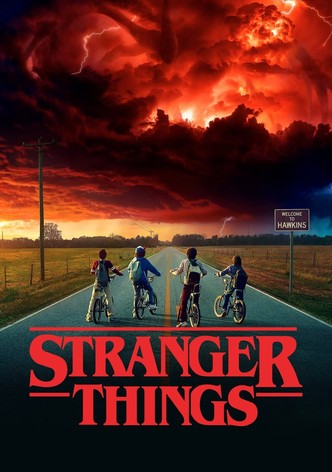
For all the frustration surrounding the wait for Stranger Things (2016) Season 5, there was still a comfort in knowing it would eventually arrive. Now that its final episode has aired, the series has officially closed the door on one of the most defining shows of the Netflix streaming era. The gap between Seasons 4 and 5 felt endless, amplified by various delays and the scale of what the Duffer Brothers were trying to achieve in one season.
But in hindsight, it was a familiar kind of waiting. Fans had trailers, interviews, and updates, which served as a constant reminder that Hawkins would be revisited. That's why the wait for Stranger Things felt fundamentally different from the one that defined Twin Peaks (1990). When the latter disappeared after its second season, no one knew it would ever return. And when the show finally came back 26 years later, it was a welcome surprise for everyone.
'Twin Peaks' Seasons 1 & 2 Changed Television Forever
Twin Peaks was created by filmmaker David Lynch and writer-producer Mark Frost, and from its first episode in 1990, it felt like nothing else on television. Set in a quiet Pacific Northwest town, the series opens with the shocking murder of homecoming queen Laura Palmer (Sheryl Lee). When FBI Special Agent Dale Cooper (Kyle MacLachlan) arrives to investigate, he doesn't just bring logic and procedure with him, but a strange intuition and a willingness to trust the unexplainable.
From the start, it feels clear that this won't be a typical crime story. Season 1 approaches Laura's death as a mystery, but slowly reveals a dark truth about her troubled double life, tarnished by addiction, abuse, and exploitation. The town also sort of becomes its own character, filled with eccentric figures. And what begins as a whodunit slowly turns into something a lot stranger. Season 2 expands the mythology and reveals that Laura's killer was someone close to home.
Twin Peaks was also a critical hit. Reviewers loved how the show mixed soap opera melodrama and surrealism into a single vision. The series also took home several awards, including the Golden Globe for Best Television Series – Drama in 1990. Although ratings declined in its second season, its influence only grew. The show proved that television could be cinematic, abstract, and unsettling, laying the groundwork for The X-Files (1993), Lost (2004), and True Detective (2014).
The 'Twin Peaks' Movie That Expanded The Mythology
After the series ended in 1991, Twin Peaks didn't disappear entirely. In 1992, Lynch released Twin Peaks: Fire Walk with Me, a prequel movie that chronicles the final days of Laura Palmer's life, focusing on her trauma and her abuse, as she desperately attempts to maintain control over a life that was already slipping away. At the time, the film was very divisive as many fans expected answers or closure and instead received a harrowing character study.
But over the years, Fire Walk with Me has been dubbed as one of Lynch's most powerful works. It humanizes Laura, turning her into a complete character as opposed to the dead girl plot device she served as in the series. The film also deepened the mythology of the Black Lodge, introducing the idea that time and memory operate differently in these spaces. This concept would later become essential to the third season.
Alongside the film, books like The Secret Diary of Laura Palmer expanded the world even further, turning the show into a multi-layered narrative ecosystem. There was no huge announcement of a revival. The story felt complete in its incompleteness. Fans thought of Twin Peaks as more of a cultural artifact rather than a franchise waiting to be rebooted. That made its eventual return feel special rather than obligatory.
'Twin Peaks: The Return' Set The Gold Standard For TV Revivals
When Twin Peaks Season 3 launched in 2017 as Twin Peaks: The Return, it refused to behave like a typical revival. Lynch and Frost wrote every episode, and Lynch directed them all. The story took place 25 years after Season 2, making the concept of time a central theme. The story follows Agent Cooper (MacLachlan), who remains trapped in the Black Lodge, while his doppelgänger lives in the real world, spreading violence and corruption.
Meanwhile, characters like Sheriff Truman's brother Frank Truman (Robert Forster), Bobby Briggs (Dana Ashbrook), and the Log Lady (Catherine Coulson) work to uncover what happened after Cooper vanished. It even includes a clever nod to Laura Palmer in the form of waitress Carrie Page (Sheryl Lee). Along with several returning cast members, the series also featured new additions like Naomi Watts, Laura Dern, and Matthew Lillard.
Will There Ever Be A 'Twin Peaks' Season 4?
For years after Season 3 ended, Lynch and Frost hinted at the possibility of another story. Lynch spoke of ideas involving Carrie Page and unfinished threads that still called to him. And MacLachlan repeatedly made his willingness to return known, calling Dale Cooper his favorite role of all time. But when Lynch died in January 2025, everything changed. Without him, Twin Peaks loses not just its director, but its soul. The series was never something that could exist without his vision.
While Frost remains, any continuation now feels complicated. Even if Season 4 never happens, Twin Peaks, which can be found on Paramount+, Prime Video, and Apple TV, is still one of the most complete artistic statements television has ever produced. It showed us that stories don't have to fear time and that aging characters can be their greatest strength in terms of expanding a story. In that sense, Stranger Things Season 5 might have benefited from the same bravery.