
This article has been updated by Rory O'Connor.
Ever since the first opening crawl appeared on cinema screens in Star Wars: Episode IV – A New Hope, most of the movie world has been obsessing over a galaxy far, far away. On that day in 1977, the Star Wars universe seemed to spring from the mind of George Lucas fully-formed, introducing viewers to entire star systems of alien creatures, quirky robots and political intrigue. The first film in Lucas' saga also established the galactic forces of good and evil in the Jedi and the Sith—two groups of warriors, each capable of wielding the powerful, mystical, and potentially ruinous energy known as the Force.
Spanning nine ‘Episodes’ and two standalone films (not to mention a whole world of games, books and animated and live action TV shows), the Star Wars universe is now as sprawling and seemingly ever-expanding as our own. Newcomers to the franchise need only focus on the movies to start with—either watching them by release date (IV, V, VI, I, II, III, VII, Rogue One, VIII, Solo, IX), as Lucas intended, or experiencing the Skywalker Saga from beginning to end, chronologically.
We’ve arranged the following list using the calendar of the Star Wars universe: which is structured around the climactic Battle of Yavin from A New Hope—with BBY meaning “Before the Battle” and ABY for “After”. Read on to discover more and use the guide below to find out where to stream them on Disney+, AppleTV, Prime Video and elsewhere.
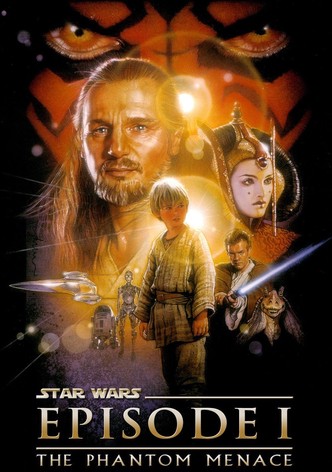
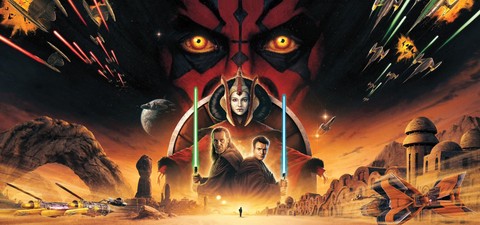
Star Wars: Episode I – The Phantom Menace (32 BBY)
The prequel trilogy (Episodes I–III, which were released between 1999–2005) provided both the context behind the rise of the Empire and the creation of the Rebellion as well as something that fans had always wanted: origin stories for Emperor Palpatine and, more importantly, Anakin Skywalker.
The first movie from the prequel trilogy, The Phantom Menace, was disregarded by some critics upon release—mostly for the unfortunate casting of Jake Lloyd as a young Anakin Skywalker—but it's now considered a flawed classic. This is thanks largely to a) the thrilling podrace sequence, b) Lucas’ phenomenally detailed world-building, c) the film’s iconic villain, Darth Maul, and d) the music. If you come to Star Wars in part for John Williams’ work (he also scored E.T. and Jurassic Park), The Phantom Menace boasts one of his most memorable scores.
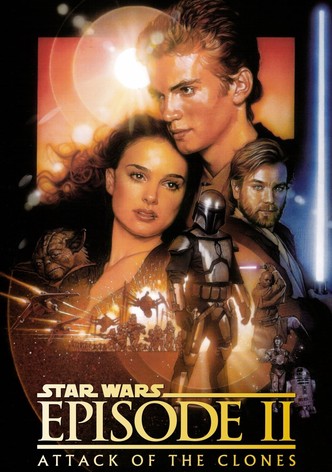
Star Wars: Episode II – Attack of the Clones (22 BBY)
Let’s be honest, before the release of Rise of Skywalker, Attack of the Clones was probably 99% of Star Wars fans’ least favourite addition to the franchise—but that’s no reason to skip it. This was one of the first films to be fully shot with digital cameras, and that sense of artificiality can be felt throughout the film—not least in the early sections on Coruscant—which was disappointing to anyone who'd grown up on the tactile worlds of the original trilogy.
Outside of that, Attack of the Clones certainly has its moments—some of which are still inspiring memes. The plot picks up ten years after Phantom, with Hayden Christensen taking over the role of Anakin—who, like most of the audience, falls dangerously in love with Natalie Portman’s Padme. The action builds to an epic battle on Geonosis and the beginning of the Clone Wars.
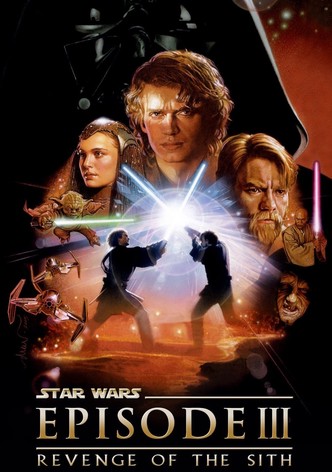
Star Wars: Episode III – Revenge of the Sith (19 BBY)
If you weren’t convinced by the prequel trilogy at the time when they were released, it’s well worth giving Revenge of the Sith another chance. This is the one when Anakin goes fully dark—and Lucas pulls no punches in showing what that kind of road can lead to. It was the first film in the series to earn a PG-13 rating—which, given the content of the plot, almost feels a little light.
The film also succeeded in drawing drama from the political manoeuvring on Coruscant—which is something that the previous films had roundly failed at. That level of political intrigue really wasn’t seen again until Tony Gilroy’s Andor—so if you were enjoying that show recently, I recommend going back to give this one another spin. This trilogy-capping conclusion ends in a literal volcano—where fates are duelled and scenery is eaten by both Christensen and (as Obi-Wan) Ewan McGregor.
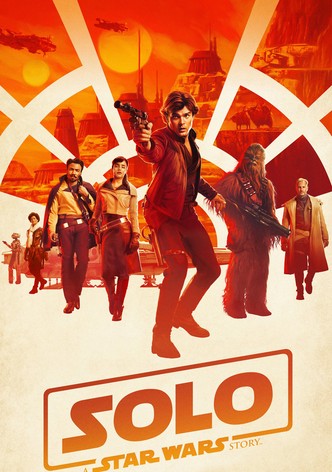
Solo: A Star Wars Story (13-10 BBY)
Released in 2018, Solo: A Star Wars Story went deeper into the origins of one of the franchise’s most beloved characters: the charismatic and sarcastic smuggler Han Solo—who was iconically played by Harrison Ford in the original trilogy. The daunting task of filling those shoes went to Alden Ehrenreich (Hail, Caesar!), who does a charming job in a film that ultimately lets him down.
Cursed with a troubled production—during which Phil Lord and Chris Miller (the duo behind The Lego Movie and both Spider-Verses) were replaced mid-production by Ron Howard—the film opened to middling reviews and was soon forgotten; but it’s much better than most people gave it credit for. Come for Ehrenreich’s performance but stick around for the thrilling train heist.
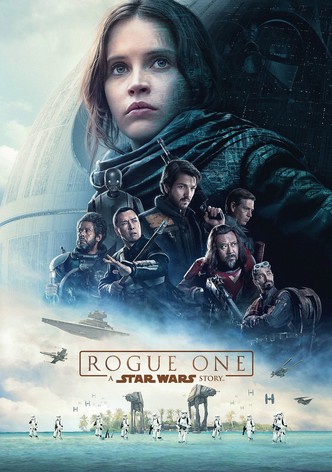
Rogue One: A Star Wars Story (0 BBY)
With the release of The Force Awakens reigniting fans’ passion for the franchise, Disney decided to release two standalone Star Wars features. The first, before Solo, was Rogue One: A Star Wars Story—a movie that detailed how the Rebellion stole the plans to the first Death Star. It also thrilled fans of the original by ending mere seconds before Episode IV begins.
Like Solo, Rogue One was subjected to some last minute rewrites but thankfully they were done by the great Tony Gilroy, who went on to flesh out one of the main characters, Cassian Andor (played by Diego Luna), in his critically acclaimed prequel series, Andor. If you’re a fan of that show, or Gilroy’s other movies like Michael Clayton, this is one you’ll want to see.
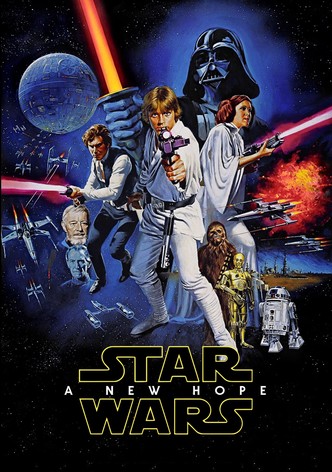
Star Wars: Episode IV – A New Hope (0 BBY/ABY)
And so we reach A New Hope, the place where it all began—kind of. Back in 1977, George Lucas started the original trilogy in media res, meaning audiences were thrust into the action with the battle between the Empire and the Rebellion already in full swing. This turned out to be a stroke of genius, as it established the futuristic world of Star Wars as a place was was already old and rusted and lived in—remember: “A long time ago…”, and all that.
The story, a classic hero’s quest, follows a young Luke Skywalker on a quest from a humble farm on Tatooine to the Rebel base on Yavin, picking up Obi Wan, Han Solo, R2D2, C3P0, Princess Leia and Chewbacca along the way. En route, he visits Mos Eisley and The Death Star, learns about the force, and has his first interaction with Darth Vader—not bad for a two hour movie.
For the look and feel of the film, Lucas drew inspiration from the Japanese director Akira Kurosawa; and if you’re curious about that history, check out The Hidden Fortress and Seven Samurai—you’ll be surprised how familiar they are.
Star Wars: Episode V – The Empire Strikes Back (3 ABY)
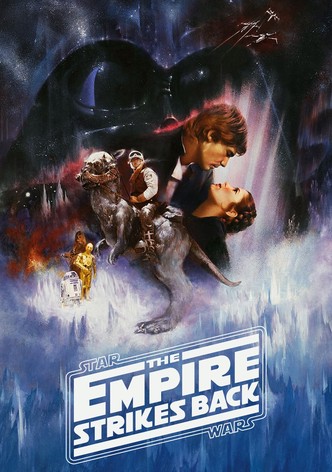
Pound for pound, The Empire Strikes Back remains the best film in the Star Wars franchise and one of the defining middle chapters of any trilogy in history. Beginning with a phenomenal battle on the snow planet Hoth, the movie takes you on a journey to the Dagobah system and, later on, to Cloud City, introducing legendary characters like Yoda, Boba Fett and Lando Calrissian along the way.
Written by Leigh Brackett and Lawrence Kasden, this is the Star Wars movie that really put the “Opera” in Space Opera—a story that builds to a dramatic showdown between Luke and Vader that has echoed throughout cinema ever since.
Star Wars: Episode VI – Return of the Jedi (4 ABY)
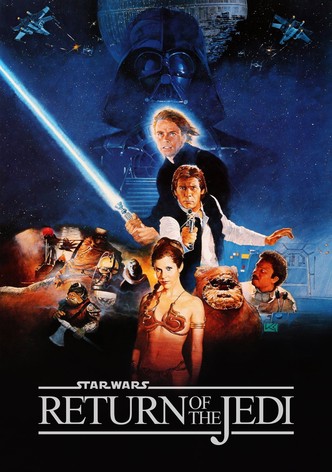
Lucas closed out the original trilogy with Return of the Jedi, a movie that, for better or worse, is probably best known for introducing the Ewoks to the franchise. The best scenes, however, come at the very beginning in Jabba the Hutt’s palace: think Leia in the metal bikini, Han coming out of the carbonite, and Luke fighting the Rancor—a beast that very much lived up to its name.
Whatever you might think of all the cutesy teddy bears, Return of the Jedi wraps the original trilogy up with plenty of drama and excitement.
Star Wars: Episode VII – The Force Awakens (34 ABY)
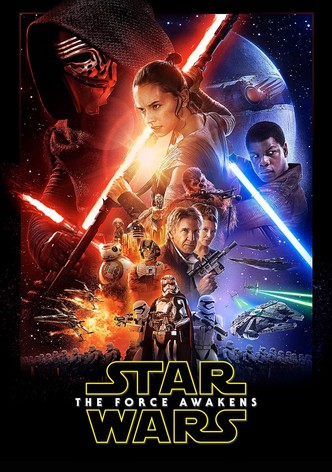
Helmed by Star Trek director J.J. Abrams, the final sequel trilogy (Episodes VII – IX, which were released between 2015–2019) brought the franchise back to life with a huge dose of fun and nostalgia—finding room for old favourites like Han and Chewie while introducing a new batch of heroes, led by Daisy Ridley’s Rey and John Boyega’s Finn.
Set 30 years after the events of Return of the Jedi, The Force Awakens finds the galaxy in a state of disarray, with the sinister First Order—led by Kylo Ren (Adam Driver)—looking to establish a new empire from the ruins of the old one.
Star Wars: Episode VIII – The Last Jedi (34 ABY)
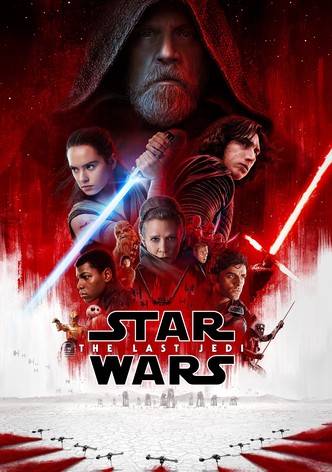
Considering all that came before it, it’s incredible that Rian Johnson’s inventive The Last Jedi is probably the most contested entry in the Star Wars franchise. This is the one where Luke is shown as a grumpy old recluse, wiling away his days on a remote island; where Rey discovers she might not be related to any famous bloodlines; and where Leia manages to move through space using the force—all of which proved enough to send some members of the fanbase into convulsions.
Whether or not you agree with the detractors, as a standalone piece the film itself is one of the best in the Skywalker Saga, with Rey getting to have her Luke on Dagobah moment as well as an incredible fight in a blood-red throne room late on—and come on, Laura Dern leading the rebel army in a cat and mouse chase across the galaxy? What's not to like? If you like Johnson’s work on Knives Out and Looper, you’ll probably appreciate his approach on this one, too.
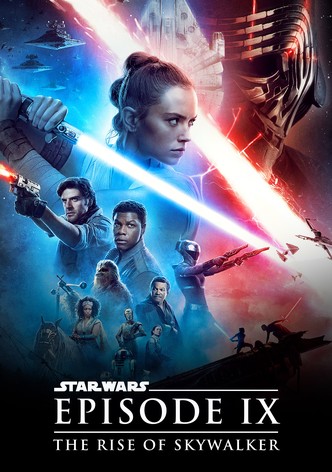
Star Wars: Episode IX – The Rise of Skywalker (35 ABY)
It’s sad to say, but Disney and Abrams really fumbled the ball with Rise of Skywalker—a saga conclusion that retro-actively erased some of Johnson’s storylines from The Last Jedi while also, for no apparent reason, bringing the Emperor back to life.
The film has some moments—Rey and Ren’s showdown amongst the waves is a highlight—but it’s unforgivable that the 40 year franchise closed out on what was easily the weakest and least loved instalment. If you are a completist, you have to see it—just don’t say we didn’t warn you.