Nosferatu 2: Is Eggers' New Werwulf Movie Actually a Sequel?

Fans of fantasy horror movies will no doubt have Robert Eggers’ next film sitting pretty high on their list of most anticipated releases for 2026. Indeed, Werwulf already sounds like another devilishly dark hit for the acclaimed filmmaker – but some suspect this could break the mould for Eggers.
He’s a director known for crafting unique and singular films that take us on a journey into the past. Eggers obviously has a penchant for mythology and the supernatural, but one thing we can’t imagine him doing is putting out sequels and building a franchise. It just doesn’t sit right with his indie roots.
However, is that about to change? The rumour mill is running overtime regarding Werwulf, with many theorising this upcoming release is tied to Eggers’ previous film Nosferatu. Let’s look at the evidence.
What We Know About ‘Werwulf’ So Far
We’ll start by breaking down the expectations around Werwulf. Mirroring all his past work, the film will be a period horror movie, this time set in 13th-century England. It will tackle classic folklore tales about werewolves, as you may have guessed, as a small countryside village is terrorised by a mysterious monster.
The bad news is that we will have to wait a while for Werwulf to hit our screens. In fact, it’s roughly a year away, with a release date set for Christmas Day, 2026. Still, as far as Christmas presents go, a new Eggers movie is a pretty great gift.
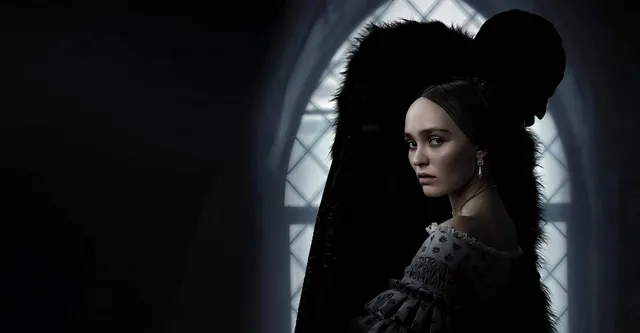
Werwulf reunites Eggers with screenwriter Sjon, who worked on his past hit The Northman. But it’s the talent in front of the camera that is pertinent to the Nosferatu theory, though. Aaron Taylor-Johnson will star, while Eggers' favourites Lily-Rose Depp, Willem Dafoe, and Ralph Ineson are also on board. Do you see the pattern here?
Is ‘Werwulf’ a ‘Nosferatu’ Sequel?
Yes, all of those actors were also in Nosferatu, which is one of the main reasons fans have been speculating about Werwulf being linked to Nosferatu. Given the personnel involved and the fact that Eggers is going from vampires to werewolves, it may even look like he’s secretly, and incidentally, resurrecting Universal’s plans for a Dark Universe.
What’s really interesting is that, in the extended edition of Nosferatu, there’s even a reference to werewolves as Count Orlok describes how, “Devil's magic bids the wolf to speak with tongues of men.” Throw in the fact that both movies are produced by Universal’s arthouse division, Focus Features, and it does feel like the company is covertly working on something bigger than we first thought. The clues are pretty convincing. However, Eggers himself has seemingly put that theory to bed.
Eggers has described Werwulf as a “spiritual sequel” to Nosferatu but stopped short of confirming anything official. In the past, when folk suspected The Witch and The Lighthouse were in a shared universe, he said: "It’s not like I’m trying to make a 'Robert Eggers Cinematic Universe'... Both films are me trying to commune with folk culture of my past and are me and my brother's take on New England folk tales. So they’re certainly companion pieces."
As it stands, the same applies to Werwulf and Nosferatu. But, we can dream, can’t we?
How Eggers' Films Echo Universal’s Failed ‘Dark Universe'
2017’s The Mummy, starring Tom Cruise, was supposed to be the first building block in Universal’s Dark Universe. Sadly, the poor critical reception and stuttering box office performance meant it turned out to be the nail in the coffin instead for those plans.
The slate for the Dark Universe reportedly included adaptations of Dr Jekyll and Mr Hyde starring Russell Crowe (who cameoed in The Mummy), The Invisible Man starring Johnny Depp, and rumours of a Van Helsing remake and a fresh Dracula movie.
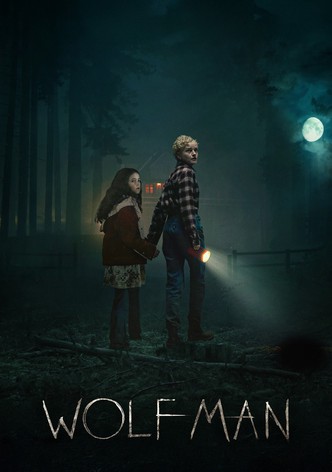
Since then, we’ve had a fantastic take on The Invisible Man (from Blumhouse) and a less impressive one on the Wolf Man, two Leigh Whannell movies that were standalone, while Eggers has taken things in a different direction. Given how brilliant Nosferatu was and the faith we have in Eggers and Werwulf, it does seem the (un)death of the Dark Universe was for the best.
Shared universes were all the rage a decade ago, but superhero movie fatigue has certainly seen studios rethinking that tactic. Instead, Eggers should be given the freedom to deliver an anthology of epic, distinctive mythological stories based on the tales we all know and love, without being burdened by forced connections and misplaced Easter eggs.