The 7 Best Directors Who Have Never Won an Oscar

The Oscars always seem to throw up a surprise winner every year, but the Academy has also left a few big names empty-handed over the years, too.
From Shakespeare in Love usurping Saving Private Ryan back in 1999, to Crash somehow trumping Brokeback Mountain to Best Picture in 2006, there’s always potential for an upset.
We’ve seen the likes of Leonardo DiCaprio try, try, and try again before finally taking home a little golden statue. Robert Downey Jr. had to wait 54 years from his on-screen debut to his eventual win in 2024 for Oppenheimer, too. Paul Thomas Anderson got his flowers after multiple close calls, thanks to One Battle After Another taking the top prize in 2026. Meanwhile, poor Glenn Close is still waiting for her moment in the spotlight, despite having eight acting nominations to her name.
But, what about those behind the camera who make the magic happen? Some of the most talented and revered filmmakers of all time have gone their entire careers without ever gaining recognition from The Academy. Here are seven of the very best directors who never won a single Oscar.
Stanley Kubrick

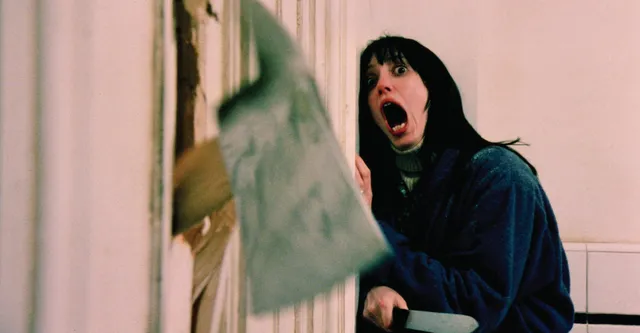
In my opinion, Stanley Kubrick is the greatest filmmaker to ever live. He truly mastered just about every genre during his career; The Shining is the best horror movie of all time, 2001: A Space Odyssey defined science fiction, Dr. Strangelove may be the smartest comedy ever made, while both Paths of Glory and Full Metal Jacket are astounding and very different approaches to the concept of a war movie.
Incredibly, by the time he died in 1999, Kubrick had 13 nominations to his name. The only award he could ever lay claim to was the prize for Best Effects for 2001: A Space Odyssey, but that’s not quite the glory we’re looking for here. His work also garnered nominations for A Clockwork Orange and Barry Lyndon, including Best Picture and Best Director, but they were both beaten.
Alfred Hitchcock

If you thought Kubrick’s 13 nominations were an unfair reflection of his body of work, then the fact that the legendary Alfred Hitchcock only got five is just a travesty. He was recognised as one of the nominees for Best Director for Rebecca, Lifeboat, Spellbound, Rear Window, and his iconic horror film, Psycho, but never nabbed the top prize.
All of them are brilliant films, of course, but it’s Rear Window that feels like the biggest snub of all. It wasn’t even nominated for Best Picture in 1955 and won no awards on the night from its four nominations (sound, cinematography, and writing, alongside Hitchcock’s nod). It’s a captivating mystery thriller that is guided so masterfully by Hitchcock, both in terms of narrative and visual elements. Of all his 53 movies, Rear Window is the most accomplished, and it’s ludicrous that Hitchcock was never up on that stage collecting an Oscar.
Sidney Lumet

Another prolific filmmaker, Sidney Lumet made 43 feature films, and yet still never got his flowers from The Academy. While Lumet was nominated for Best Director four times, for his work on 12 Angry Men, Dog Day Afternoon, Network, and The Verdict, he missed out on the win every single time.
While I believe 12 Angry Men to be one of the finest courtroom dramas, I can almost understand why Lumet might not have taken home the award for Best Director. It’s an adaptation of a television play, which even subconsciously could have detracted from the value of the taut, tense picture Lumet put together. However, the Dog Day Afternoon snub is one that baffles me. To tell a story with such high-stakes and with so many big moments so expertly is no mean feat. However, it’s also hard to deny Milos Forman the win for One Flew Over the Cuckoo’s Nest.
Agnes Varda

As far as female directors go, Agnes Varda was pretty much unparalleled. Her output was immense, and the quality of her work was sublime, and yet all she ever got from the Oscars was a nomination for Best Documentary and an honorary award in 2018. Simply put, that’s not good enough!
Varda’s crowning achievement was undoubtedly Cleo from 5 to 7. The 1962 French New Wave drama is a meditative and emotional study of one woman dealing with the harrowing ordeal of waiting for life-changing test results. It’s sumptuously made from a visual and aural point of view, and the lead performance from Corinne Marchand has to, at least partially, be attributed to the work of Varda behind the camera. How any of this wasn’t enough to get Varda a Best Director nomination is beyond me.
David Fincher

It would be easy to try and pin David Fincher down as the kind of filmmaker who simply doesn’t make the right films for the Academy to appreciate. Indeed, when you look at movies like Se7en, Zodiac, and Gone Girl – all brooding psychological thrillers – it’s fair to say that they are far more suited to entertaining cinemagoers than Hollywood’s elite. However, let’s not forget that Fincher has also made The Social Network and The Curious Case of Benjamin Button.
If we know anything about the Academy, it’s that they love biopics, epic personal studies, and period pieces. Indeed, Fincher was nominated for both of those films in the Best Director category, but he lost to Tom Hooper in 2011 and Danny Boyle in 2009. Admittedly, their films won Best Picture. Does that mean they deserved the director award, too? Not necessarily. If you put The Social Network against The King’s Speech, I would argue the former has far more flair and verve, and that should count for something.
Akira Kurosawa

When you look at the history of foreign language films, few directors have had quite the impact and influence on cinema as Akira Kurosawa. With a body of work that includes absolute classics like Rashomon, Seven Samurai, and Ran, it’s unthinkable that he only ever received one nomination (for Ran). Kurosawa was eventually given an honorary award in 1990, but that’s far too little, too late.
Kurosawa missed out on the Best Director award in 1986, with Sydney Pollack winning for Out of Africa. I’m sorry, but have you seen Ran? It’s a bright, dynamic, sprawling war epic which includes massive set-pieces as rival clans collide on the battlefield. There’s no way that any director was working on that level that year.
Wes Anderson

You’d be forgiven for thinking that someone like Wes Anderson would be an awards darling when it comes to the Oscars. After making films such as The Grand Budapest Hotel, Moonrise Kingdom, and The Life Aquatic with Steve Zissou – all gloriously embellished with a rich aesthetic and that trademark Anderson symmetry – it seems impossible that the Academy wouldn’t fall head over heels.
Even animated Wes Anderson movies like Fantastic Mr. Fox and Isle of Dogs must surely have garnered some attention? But no. The only Oscar Anderson has ever won is for his short film, The Wonderful Story of Henry Sugar. He has seven other nominations for his body of work, but is yet to be given that final seal of approval of a golden statue for any of his feature films.