Every Daniel Day-Lewis Method Acting Performance, Explained

Somewhere around the release of Suicide Squad, the idea of method acting jumped the shark. As it turned out, the world could only take so many stories about Jared Leto sending rats to his co-stars before the whole idea started to sound a little silly.
It’s a shame, as the basic idea of method acting has always been rather simple: dig up a traumatic memory, push it down again, annnnd action! Perhaps the only star who can still get away with it these days is Daniel Day-Lewis—an actor whose name has basically become synonymous with the idea of total dedication to the craft. Despite announcing his retirement after Lincoln, the actor will soon be back on screens in Anemone, a film directed by Ronan Day-Lewis—who, as you may have guessed, is his son.
In the list below, which is arranged in chronological order, we’ve looked back at the actor’s most famous (and infamous) techniques; how they amazed and enraged his co-workers; and how they ultimately enraptured everyone else. Read on to discover more about the actor’s best method moments, and use the guide below to find some of his greatest movies on services like AppleTV, Netflix, Prime Video and elsewhere.


The story goes that Stephen Frears was unsure about casting Day-Lewis (the son of a renowned poet) to play a working-class punk in My Beautiful Laundrette, but the actor managed to soothe his nerves—in a way—by writing him a letter explaining that if he didn’t get the role, he’d break his legs. Subtle.
The film itself is a classic of queer British cinema, and if you’re a fan of Andrew Haigh’s Weekend or James Ivory’s Maurice, it’s one you’ll want to seek out.


All things considered, the Frears story is a little low-key in the Day-Lewis canon. The first truly legendary prep that the actor did for a role came with Philip Kaufman’s adaptation of Milan Kundera’s The Unbearable Lightness of Being, a gorgeous romance set against the backdrop of the Prague Spring—and a movie that will delight fans of swoony historical epics like The Age of Innocence and The English Patient.
For the role of Tomas, a medical student whose heart becomes split between two women (played by Juliette Binoche and Lena Olin), Day-Lewis learned how to speak Czech, despite the fact that the movie was in English. In a later interview, the actor explained that he wanted his Czech accent to have a “kernel of truth.” Fair enough!



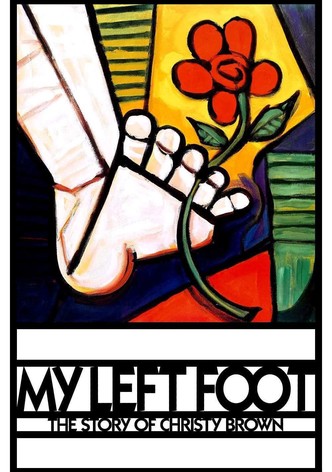
Of all the stories surrounding Day-Lewis’ performances, his behaviour on the set of Jim Sheridan’s My Left Foot might be the most notorious. This is a film based on the memoir of Christy Brown, an Irish writer and artist who was born with cerebral palsy, so he learned to produce art using his lower extremity instead. Despite the subject matter, it’s actually kind of a blast—a film closer in tone to something like The Snapper than The Theory of Everything.
Naturally, Day-Lewis went all-in for the role, travelling exclusively by wheelchair—to the point that many crew members later complained about having to carry the actor to and from the set—and having his food fed to him. He also won Best Actor at the Academy Awards.







Another classic in the Day-Lewis method canon was the actor’s meticulous preparation for his role in Michael Mann’s 1992 classic, The Last of the Mohicans. This is a brilliant historical epic, a movie that splits the difference between the detail and sentimentality of Dances With Wolves and the thrilling spectacle of Braveheart.
For the role of Hawkeye, a white man raised by a Mohican tribe, the actor spent months in the wilderness, built his own canoe, learned how to skin and cook animals, and became skilled at firing and reloading a flintlock rifle while running.




In 1993, Day-Lewis reunited with his My Left Foot director, Jim Sheridan, to bring Gerry Conlon’s memoir to the big screen. In the Name of the Father tells the story of four men who were wrongfully imprisoned for the IRA bombings in Guilford in 1974—and if you’re interested in that period of history (think Hunger, Say Nothing), I highly recommend it.
In preparation for the role of Conlon, who spent 15 years in prison before being cleared of the charges, Day-Lewis lost 50 pounds and spent almost 48 hours in solitary confinement without food or water. The performance earned him his second nomination at the Oscars, where he lost to Tom Hanks for Philadelphia.


Some say the reason why Day-Lewis makes so few movies is simply due to the time it takes him to prepare—any director who calls him up knows they may have to play the long game. This was certainly the case with The Boxer, the actor’s third collaboration with Sheridan and another story rooted in that period of Irish history. This one follows a man’s attempts to put his life back together after doing 14 years in prison—if you’re familiar with Cutty’s story arc in Season 3 of The Wire, you’ll know what to expect.
In preparation for this one, the actor trained for three years to get into the boxer’s mindset. When it eventually became time to roll cameras, his coach claimed that the actor could’ve competed professionally.


Having worked together on The Age of Innocence in 1993, Day-Lewis and Martin Scorsese reunited almost a decade later for Gangs of New York. The movie follows the early days of Irish immigration in America, and even though it’s not the director’s best, if you appreciate the period setting and mood of Scorsese’s Boardwalk Empire, or even the recent Netflix series House of Guinness, you’ll probably get into it!
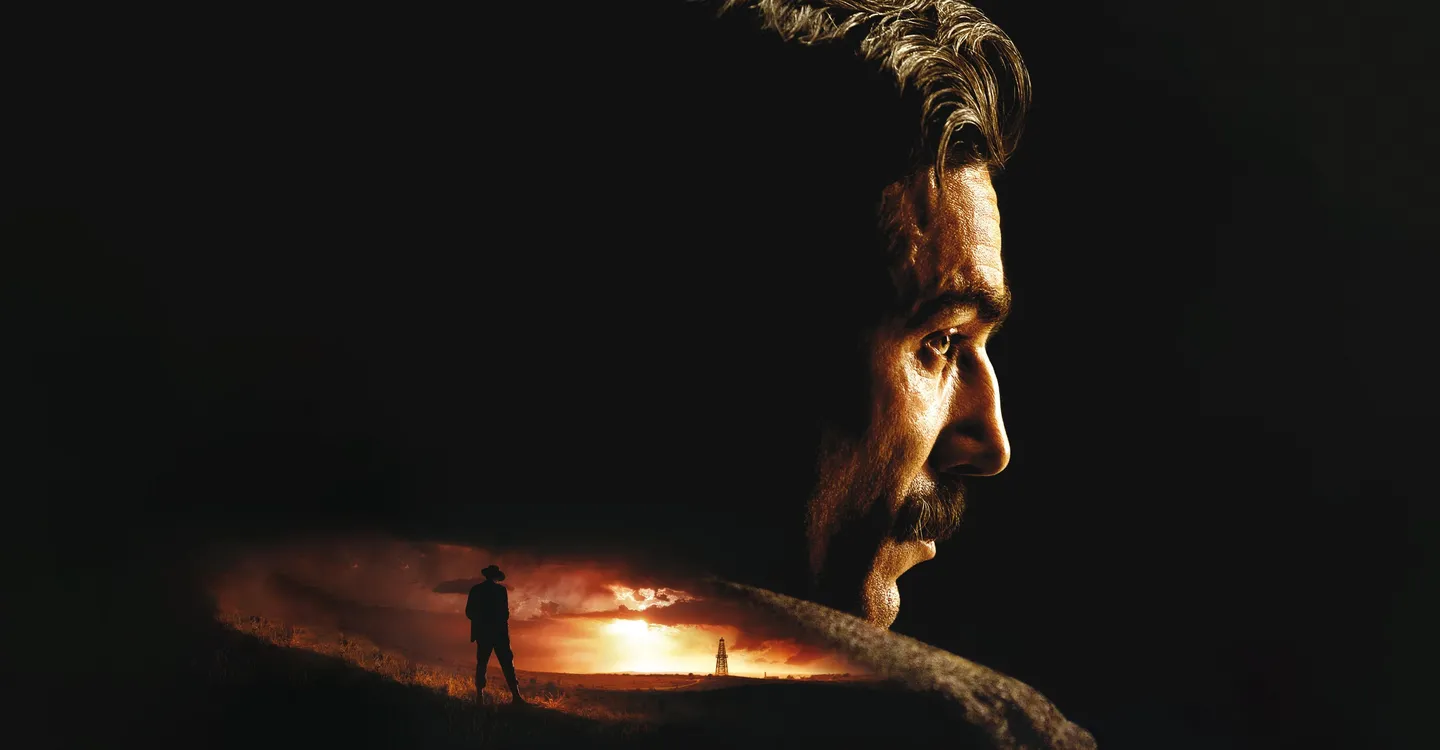
The movie stars Leonardo DiCaprio and Cameron Diaz, but there’s no doubt that Day-Lewis’ iconic Bill “The Butcher” steals the show. To prepare for the role, the actor apprenticed with a real butcher, studied 19th century New York dialects, and refused to take modern medicine when he caught pneumonia (having also refused to wear a modern winter coat.) Scorsese says that between takes, he would stalk the set while sharpening knives.
Of course, he got another nomination.


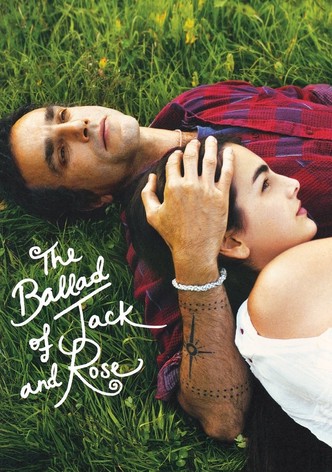

Anemone isn’t the first time that Day-Lewis has collaborated on a loved one’s film. In 2005, he starred in director Rebecca Miller’s (aka his wife’s) The Ballad of Jack and Rose. This is a tonally dark film about an ex-hippie raising his daughter on a secluded island off the coast of New England, where a commune once thrived—imagine a murky combination of Leave no Trace and Dogtooth and you might have some idea of what to expect.
This might be the most low-key film of Day-Lewis’ career, and yet, to no one’s surprise, it didn’t stop him from living alone in a shack without electricity or running water for the entirety of the shoot.


The level of accuracy that Steven Spielberg brought to his 2012 biopic, Lincoln, is already the stuff of legend—and if you appreciate the director’s historical work, like Saving Private Ryan or Empire of the Sun, this is one you’ll want to see.
The great sound designer Ben Burtt once told me that he travelled to the Smithsonian in Washington just to record the ticking of one of the late President’s actual wristwatches. It seems that by 2012, the actor had cooled it a bit with his on-set antics, but Day-Lewis still rose to the occasion: he worked meticulously on Lincoln’s voice and mannerisms, producing a more introverted version than anyone expected; he also allegedly signed off his text messages with “Abe” and asked the cast and crew to refer to him as “Mr. President”.
The role also won him a record-breaking third Academy Award. Say what you want, the guy gets results.