10 Ways Finding Nemo Is Actually a Retelling of The Odyssey

Cristopher Nolan’s The Odyssey might be selling out IMAX screens across the world this summer, but when it comes to adapting Homer, did you know that Pixar kind of got there first?
Outside of all the classic swords and sandals epics, like Troy or Jason and the Argonauts, there exists a whole sub-genre of movies that take the legends of Greek antiquity and give them a modern spin. For The Odyssey, squint hard enough and you can see elements of Homer’s story in everything from O Brother, Where Art Thou? to The SpongeBob SquarePants Movie, but few if any have managed to cover the main beats of The Odyssey with quite as much subtlety and humour as Finding Nemo.
If you’ve seen Nolan’s latest monumental movie and are curious how the story of an overprotective Marlin in the Pacific ocean might map onto the trials faced by Matt Damon’s bearded hero, check out the ten similarities we noticed below and tell us we’re not onto something.
1. It’s An Epic Journey of a Father Trying to Find His Kid

This one’s a no-brainer, even if it’s also technically the story of Taken and literally dozens of action movies. What makes Finding Nemo particularly Homeric is how daunting the journey itself becomes: Marlin is really going out into the unknown, with almost no hope of finding his way back, let alone his son.
The bravery of that mission is what puts him up there with the Greek heroes of old, but it’s also Marlin’s story as much as it is Nemo’s. Indeed, as Homer definitely didn’t used to say, sometimes the real Odyssey is the friends we make along the way.
2. The Name Nemo is a Reference to Odysseus’ Most Famous Line

At first glance, the movie’s title looks like it's been lifted from the sea captain of Jules Verne’s 20,000 leagues Under the Sea, but there’s a less obvious and actually more intentional Homeric reference in there, too.
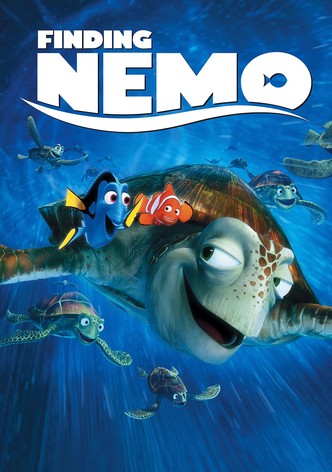
Some fans were disappointed that Odysseus’ most famous line, “I am no one” (or "nemo sum", to use the Latin), wasn’t spoken during his scene with the Cyclops in Nolan's movie, but in the Pixar version it’s almost up there on the poster.
3. Dory is Marlin’s Athena

Dory might not be gifted with the world’s best memory, but she certainly provides Marlin with spiritual support and motivation during some of his darkest moments—much as Athena does for Odysseus throughout both Homer’s poem and Nolan’s otherwise non-celestial movie.
Athena, the god of wisdom (amongst other things) isn’t really known for forgetting anything, but Dory’s forgetfulness in Finding Nemo does grant her a kind of emotional purity that’s almost otherworldly.
4. Bruce is Polyphemus

The next four entries on our list are basically like-for-like chapters in Marlin's and Odysseus’ quests. In The Odyssey, post-Troy, the first threat encountered by Odysseus and his men is of course Polyphemus, the one-eyed giant who inadvertently traps them in his cave before starting to pick them off.
For Marlin, the Cyclops is replaced by a great white shark named Bruce — who, luckily for him, has decided to stop eating his fellow ocean dwellers for moral reasons. This delicate policy unfortunately goes out the window at the slightest scent of blood, but Marlin and Dory manage to find a hiding spot in a submarine, escaping certain death by accidentally shooting Bruce with an old torpedo.
That sequence, to be fair, probably owes as much to Jaws: behind the scenes, the mechanical shark in Spielberg’s classic was nicknamed Bruce; while on screen, he also met his match with an explosive projectile.
5. The Jellyfish are the Sirens

The next stop for Marlin and Dory are the jellyfish, which are probably the closest comparison for the Sirens — although, admittedly, this one is a bit of a reach.
They are rendered quite beautifully in Finding Nemo, though — all soft pink hues and glowing strands — but they encircle Marlin and Dory more by accident rather than intentionally drawing them in.
6 & 7. The Anglerfish Sequence Covers Scylla and Charybdis in One Go

The scene in which Dory and Marlin come across the anglerfish in the deep sea trench is a pretty good stand-in for the many headed monster (Scylla) and deadly whirlpool (Charybdis) that Odysseus’ crew encounter in the straits of Messina, but might that little bulb in the darkness represent the call of the Sirens, too?
Either way, it’s the most terrifying part of Finding Nemo — mostly because it’s one of the only sea creatures that wasn’t anthropomorphised for the movie, making it all the more threatening and unpredictable.
8. Like Telemachus, Nemo is Also Trying to Find His Dad

In The Odyssey, Nolan uses his signature jumpy editing technique to bring the story back and forth from the battle of Troy to the present. He also tells the tale, like Homer, from two perspectives: one from Odysseus on Calypso’s island, the other from Penelope and Telemachus back on Ithaca.
In the Pixar version, Nemo’s mom dies tragically in the opening scene, so there’s no Penelope here for them to return to, but we do get Marlin and Nemo’s respective efforts to find each-other. This of course leads to them almost missing each other before their emotional reunion in Sydney harbour.
9. The East Australian Current is Like Poseidon in a Chill Mood

Like a large portion of the human race these days, fish probably don’t believe in gods — but if you were alive back in 700BC you probably thought they were responsible for basically everything, not least the weather.
This is a huge story point in The Odyssey, in which Odysseus and his men constantly feel that Poseidon is cursing them with the wild storms that are throwing them off course as a kind of retaliation for hurting the Cyclops (aka his son). At the end, when Odysseus gives himself over to the waves, the gods actually carry him back to Ithaca unharmed.
This is mirrored in the East Australian Current that helps Marlin on his way to Sydney and his way back home. This also makes the chilled out turtles a pretty close comp for the Phaeacians, a peaceful and hospitable group that help Odysseus on the last leg of his journey.
10. The Ocean… In General

If we can start with a no brainer, we can end with one, too. Almost everything in The Odyssey either takes place in the ocean or is affected by it in some way or another, as much of life in that part of the world probably was at the time, and the same goes for Pixar’s remarkable movie.
The vistas of the Aegean and Mediterranean in Nolan’s epic — though some parts were shot elsewhere — are some of the most stunning of his career. Both draw from that same Homeric tradition of making stories of the ocean into supernatural legends.
Nemo might take place a good bit to the South East of where Odysseus and co set sail, but at the end of the day both movies swim in similar waters.








Bundle 4k