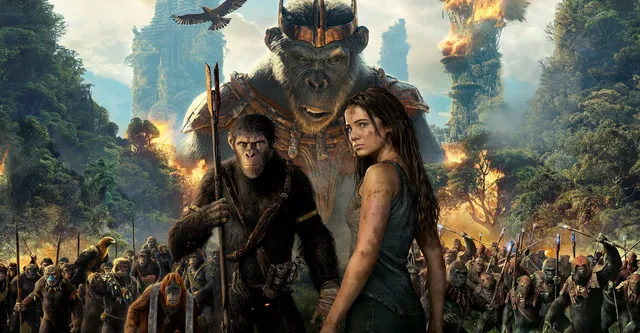
The Best Sci-Fi Franchise Of The Last 15 Years Is On HBO Max

Planet of the Apes (1968) still stands out nearly 60 years later as one of cinema’s most iconic sci-fi franchises. Based on the novel of the same name, the film’s version of a post-apocalyptic Earth that has been taken over by intelligent apes amid the collapse of humanity is a visually striking take on the “after the end” genre. The success of that first film generated plenty of sequels and spin-offs, many of which failed to reach the same level of complexity as that first movie.
That said, the modern iteration of the franchise has proven to be a genuine inheritor of that original legacy. Rise of the Planet of the Apes (2011), Dawn of the Planet of the Apes (2014), War for the Planet of the Apes (2017), and Kingdom of the Planet of the Apes (2024) form a resonant and emotionally engaging saga about the nature of power and humanity while also being really exciting action sci-fi films. With the four movies now on HBO Max, it is the perfect time to revisit one of the 21st century’s best sci-fi sagas.
The Modern 'Planet of the Apes' Movies Have Been Genuinely Great

Playing out over the course of four films and exploring the beginning, ending, and legacy of a massive revolution, the modern Planet of the Apes movies have shown how a complex sci-fi story can still work as a bombastic blockbuster. The series takes place centuries before the events depicted in the earlier movies, chronicling how humanity collapsed as the dominant species on the planet and was usurped by an increasingly intelligent variant of apes.
Rupert Wyatt’s Rise of the Planet of the Apes is a character drama, a slow-burn revolution movie gradually focusing on Caesar’s growing frustrations. Matt Reeves took over for Dawn of the Planet of the Apes, which is a much more action-packed war film about humanity’s desperation, even while Caesar tries to keep the more violent groups in his faction of apes from repeating humanity’s cruel mistakes. War for the Planet of the Apes is a much more somber film than either that came before, with a returning Reeves undercutting bombastic expectations by keeping the focus more on a mourning Caesar, who juggles his desire for revenge with his responsibility to the tribe and pity for the fading away humans.
Wes Ball gave Kingdom of the Planet of the Apes a more fantastical touch by moving the plot forward hundreds of years, with warring tribes and a keen eye for the impact of legacy. Together, they depict the long and bloody road to freedom while also playing with themes about how well-intentioned and sympathetic acts can spiral into conflict. Each of them is terrific in their own ways while also carrying forward an overarching narrative anchored by a tour-de-force central performance, a genuine rarity in a cinematic landscape where movies can feel more like episodes instead of their own stories.
Ceaser Is One of the 21st Century's Most Complex Franchise Leads

Throughout, Caesar stands out as the complex core of the series. Brought to life by Andy Serkis and a team of world-class VFX artists, Caesar gets the kind of arc that few cinematic characters ever get the chance to explore. Introduced as a young chimp, the events of the first film make him a forceful and clever leader who nevertheless wrestles with his empathy. The second film depicts him as a leader and a father, growing into both while learning the price of leadership during wartime. Growing older and mourning the innocents lost in his fight against the lingering human tribes, Caesar’s arc in War of the Planet of the Apes is a genuinely powerful meditation on the soul withstanding the non-stop challenges the world presents.
It’s also arguably one of Serkis’ best performances, taking the physicality he refined for The Lord of the Rings films and imbuing it with a ferocity and melancholiness that delivers the character. Even though Caesar doesn’t really appear in Kingdom of the Planet of the Apes, his legacy looms large over the world, especially with Proximus Caesar taking the wrong lessons from his legend and attempting to co-opt it. As such, Ceasar is a fascinating lead, a heroic leader who may form bonds with certain humans but never truly knows peace in his time.
Now's the Perfect Time to Revisit 'Planet of the Apes'

The modern Planet of the Apes films proved to be a solid success, earning rave reviews and strong box-office returns. There’s something to be said for the movies working just as popcorn entertainment, with the clear direction, clever writing, and fantastic performances delivering some very entertaining films. What makes them more than just blockbusters is the core storytelling throughout. All four films have a genuine sense of sorrow baked into the storytelling. While the eventual death tolls become insurmountable on a larger scale, the films never lose sight of the personal losses that define and motivate us. The movies also never let that somber edge completely define them, either, with unexpected bonds giving audiences dynamics to root for.
Caesar, in particular, gets a terrific arc where he has to confront his friends, with the climax of Dawn of the Planet of the Apes forcing him to come to blows with one of his greatest allies over their differing views on how to treat their enemies. There’s a real sense of complexity in the politics of these Planet of the Apes movies, even when they do firmly establish the line between good and evil. With the movies now all collected on HBO Max, the time is just right to revisit one of the best modern examples of how morally compelling a wild sci-fi concept can be in the long run.