

5 Movies You Probably Didn't Know Were Shot In IMAX

Christopher Nolan shooting the entirety of The Odyssey (2026) on IMAX is bringing forth a lot of conversation about the filmmaking process. Naturally, questions are arising about why it hasn't happened before, how filmmakers are alternating between them, and curiosity about what films used IMAX cameras before that we weren't talking about as widely.
The biggest thing to understand is that the reason it wasn't done before is that they have limited film in them, so directors can't shoot beyond three minutes at a time, and they're loud. Yes, loud. Nolan had to find ways to work around them during some of the more intimate scenes in The Odyssey, and while he proved that it can be done, it might not always be the most accessible method.
Still, a sequence shot on IMAX always looks incredible, and here are some of the films that utilized it that you can now stream on various platforms like Netflix, HBO Max, and more.

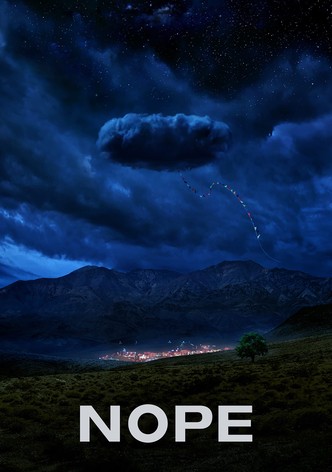


There are countless moments in Jordan Peele's Nope that are remarkable, and everything about it feels revolutionary in more ways than one because of his filming techniques. A bit different from his other films, Get Out (2017) and Us (2019), some of the sequences shot in Nope feel more genre-bending as the story itself explores alien forces amongst them.
Peele's cinematographer in this, longtime collaborator with Nolan, Hoyte van Hoytema, was the one who suggested IMAX filming for various sequences, and it works exceptionally on the big screen. It's not a movie for every kind of viewer, but for those who want a more tamed horror, look no further.









This one might be the most shocking for fans, but yes, parts of The Hunger Games: Catching Fire, the second in the dystopian trilogy adapted from Suzanne Collins' best-selling novels, were shot in IMAX. Particularly, it's the prominent elevator sequence where Jennifer Lawrence's Katniss Everdeen rises to the new arena for the titular games.
The film's director, Francis Lawrence, thought it'd be a great way to showcase the scale of the new arena, and with it, they could also heighten the stakes since these games are twice as dangerous and bigger than the ones we see in The Hunger Games (2012). Unfortunately, though, because this is a sequel, you can't watch it without tuning into the first movie, but it's a franchise worth its salt in every way.





While a movie centered around space using IMAX cameras isn't surprising, Damien Chazelle's First Man being so underrated makes it a riveting surprise. The film's moon landing sequence is the one shot on IMAX, and Chazelle describes the choice as one where he wanted the emotions elevated alongside the visuals.
And the choice works exceptionally well because that scene doesn't just look big, but it feels enormous in scale and simultaneously intimate, so when you take into consideration the shifts in directing, it looks incredible. It's a scene that—pun intended—sticks the landing. If you loved Ryan Gosling in Project Hail Mary (2026) and want to see him in space again, check out First Man.



You'd think that more of Daniel Craig's James Bond movies would've been shot on IMAX with the availability, but the final film in the franchise, No Time to Die, is actually the first. Director Cary Joji Fukunaga played with the IMAX camera to capture some of the action and landscape sequences, resulting in about 40 minutes of the feature involving an IMAX camera.
Interestingly, while the film itself isn't the strongest conclusion, it's undoubtedly the most gorgeously shot for a number of reasons, which is fitting considering the techniques utilized for it. If you compare it to the others, the quality of the cinematography is astounding, which makes the directorial choices work incredibly well.




There are a few Christopher Nolan movies outside of The Odyssey that were shot using IMAX cameras, like Interstellar (2014), Oppenheimer (2023), and even The Dark Knight (2008), but the one that might be most shocking is The Prestige, which is particularly interesting to look back on in 2026 as it reaches its 20th anniversary.
Using an IMAX camera for the sequence where Christian Bale's Alfred has his finger chopped off was essentially Nolan's means to test the camera to see how much of it could be used later. It's not something that's noticeable right away when watching the move in one go, but when you look back at it afterward with awareness, it's riveting to catch the details.


