10 Beloved Movies That Secretly Tell The Same Story (And Why)

Movies borrow from other movies all the time. Sometimes it is obvious, and sometimes it takes a second viewing to realize that two completely different films, made many years apart, are actually telling a very similar story. That doesn't necessarily mean that one movie copied the other. There are only so many basic story ideas, and filmmakers have been finding new ways to tell them for decades.
Sometimes the similarities exist because one film inspired the next. Other times they just happen to be the result of two people coming up with a similar idea. This list puts some of these movies side by side and looks at what they actually have in common. Some are pretty obvious, while others require someone to point out the link. They can all be found on platforms like Netflix, HBO Max, and Disney+.


Released in 1990, Dances with Wolves follows Union soldier John Dunbar (Kevin Costner), who is sent to a remote outpost in the American frontier, where he slowly becomes accepted by the local Lakota people. He develops a relationship with Stands With a Fist (Mary McDonnell), falls in love with her, and eventually starts seeing the people he was sent to live among very differently.
The 2009 movie Avatar shares an eerily similar plot. The story begins when former Marine Jake Sully (Sam Worthington) arrives on Pandora and becomes part of the Na'vi community. He falls in love with Neytiri (Zoe Saldana) and eventually turns against the military forces he came with. Once you lay the two stories out like that, the similarities are pretty hard to miss.
Both movies ask viewers to look past divisions created by those in power and consider what happens when you get to know the community you've been told is the enemy. That idea has stayed relevant for decades because people are often introduced to other cultures through stereotypes, conflict, and fear. Stories like these give people a chance to see what happens when those assumptions fall apart.



















Point Break focuses on FBI agent Johnny Utah (Keanu Reeves), who goes undercover to investigate a group of surfers believed to be responsible for a series of bank robberies. He slowly becomes close to the group's leader, Bodhi (Patrick Swayze), and starts to understand why the criminals live the way they do. The Fast and the Furious is basically Point Break with cars instead of surfboards.
The movie follows undercover cop Brian O'Conner (Paul Walker), who infiltrates Dominic Toretto's (Vin Diesel) street-racing crew, becomes friends with Dom, and eventually lets him get away. Bodhi has a dangerous charm that makes it easy to understand why Utah becomes fascinated with him. Conner and Dom develop a similar relationship in 2001's The Fast and the Furious.
Both these movies have a broad appeal because Johnny and Brian meet people who make them feel like they belong, which they weren't expecting. The friendships they form make it harder to simply walk away, especially when the line between right and wrong starts to blur. But the fantasy isn't just about breaking the law and getting away with it. It's about finally finding people who understand you.


















The 1954 movie Rear Window chronicles the day-to-day life of photographer L.B. Jefferies (James Stewart), who is stuck in his apartment with a broken leg. Out of pure boredom, he starts watching his neighbors through the windows across the courtyard and becomes convinced that one of them has murdered his wife, although he has no way of knowing for sure.
Disturbia (2007) puts the same basic idea in a modern setting, with teenager Kale Brecht (Shia LaBeouf) stuck at home and watching his neighbors until he becomes convinced that Robert Turner (David Morse) is a murderer. This is probably one of the easiest comparisons on the list because Disturbia clearly takes a lot from Rear Window and adds a little teenage angst to the mix.
Both movies tap into the feeling of going stir-crazy when there's nowhere to go. With so much time spent watching other people, ordinary things start to look suspicious, and both characters begin filling in the gaps with their own assumptions. That plays into a very real fear of the unknown, where not knowing what is happening can sometimes be more frightening than actually seeing it.



Star Wars: A New Hope follows Luke Skywalker (Mark Hamill), a young farm boy who lives with his aunt and uncle on the desert planet of Tatooine. Luke dreams of leaving his boring life behind. But everything changes when he meets Obi-Wan Kenobi (Alec Guinness) and becomes involved in the fight against the Galactic Empire.
Harry Potter and the Philosopher's Stone (2001) follows Harry Potter (Daniel Radcliffe), who's spent most of his childhood living with his aunt, uncle, and cousin without knowing much about his parents. Everything changes when Harry discovers that he's a wizard and is invited to attend Hogwarts School of Witchcraft and Wizardry and learns about his past.
The movies tell a similar story about young boys who discover that their lives are far from ordinary. Luke and Harry both start out feeling like they don't really belong where they are. So watching them enter a new world and find their purpose is a big part of the appeal. It's especially popular because who hasn't imagined that their life could suddenly become a lot more interesting?








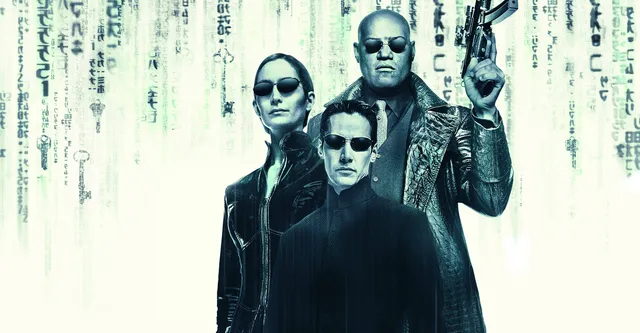
The Matrix follows Thomas Anderson (Keanu Reeves), a computer programmer who secretly works as a hacker called Neo. He's always felt that something is off about the world, and that feeling leads him to Morpheus (Laurence Fishburne), who reveals that the reality Neo knows is actually a computer simulation created by machines.
The Lego Movie (2014) focuses on Emmet (Chris Pratt), an ordinary construction worker who spends his days following the rules and instructions that tell everyone in his world how they're supposed to live. After finding the Piece of Resistance, Emmet is pulled into a much bigger adventure and has to learn that life isn't as straightforward as he thought.
The similarity comes from each movie starting with an ordinary person discovering that the world around them isn't what it seems. As a result, Neo and Emmet have to stop accepting everything they're told and start making their own decisions. Both stories appeal to the same feeling that there might be more to life than simply doing what everyone else expects.